Destination, hotel name or experience

Boutique Hotels in Finland

Introducing Finland

Finland is a country defined by its geography more than its history — Europe's eighth-largest by area, with a population smaller than London, distributed across 188,000 lakes, 168,000 forested islands, and a landmass that runs from the Baltic coast at 60°N to the Arctic Ocean's reach above 70°N. The result is a tourism proposition organised around space rather than around cities. There are no Italian-style cultural circuits, no French wine routes; the country's defining experiences are the sauna culture (one sauna for every two Finns), the wilderness of the inland lake districts and northern fells, the Aurora Borealis in the dark winter months, the midnight sun in summer, and the Sámi indigenous culture of the far north. Helsinki and its capital region — including Espoo, Finland's second-largest city — hold roughly a fifth of the national population and most of the country's contemporary design and architecture inheritance, including the substantial output of Alvar Aalto, Eliel Saarinen and the broader Finnish modernist tradition.


What unifies Finland as a destination is the seasonal extremity. The country runs four genuinely distinct seasons, with the difference between the December nadir (4 hours of daylight in Helsinki, polar night in Lapland) and the June apex (19 hours in Helsinki, 24-hour midnight sun above the Arctic Circle) sharper than anywhere else in mainland Europe. Most Finnish travel decisions begin with which seasonal extreme the visitor is choosing, not which region.

Browse on Map — Finland

Explore 2 exceptional boutique hotels hand-picked in Finland. Click a pin to discover each property.

Regions in Finland

Hotels in Finland

Arctic Light Hotel

Finland, Rovaniemi

Arctic Light

The 1949 former Kauppalantalo of Rovaniemi, redeveloped by the Gröhn family in 2015 as a 57-room boutique hotel — Paavo Tynell lighting…

€135.30

Price for 1 night from

Haltia Lake Lodge

Finland, Espoo

Haltia Lake Lodge

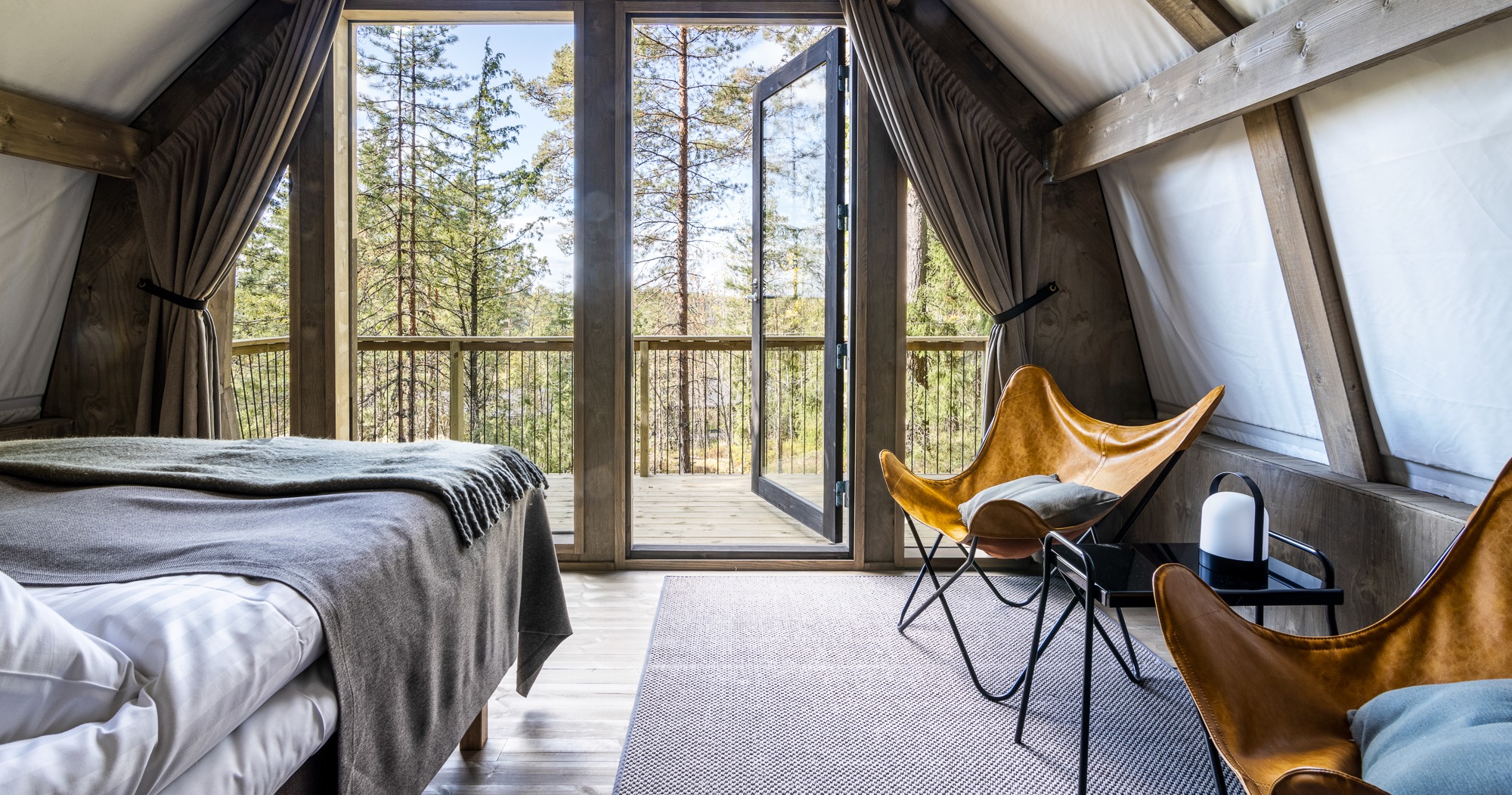
A nature lodge on Lake Pitkäjärvi inside Nuuksio National Park, 35 minutes from Helsinki — 20 boutique rooms plus 5 glamping tents…

Finland Guide

Espoo and the Helsinki Capital Region

The southern coast holds the urban-cultural concentration of the country. Helsinki and its western neighbour Espoo — Finland's second-largest city — sit on the Gulf of Finland with 58 km of Baltic coastline and 165 offshore islands in the Espoo archipelago alone. Espoo runs polycentrically across five separate district hubs (Leppävaara, Tapiola, Matinkylä, Espoon keskus, Espoonlahti) rather than a single centre, with Aalto University's Otaniemi campus, Nokia's headquarters, the Tapiola garden city as a mid-century urban-planning showcase, and the EMMA Museum of Modern Art at the WeeGee house. The city's northern third is Nuuksio National Park — 53 km² of forest, more than 80 small lakes and ponds, the Siberian flying squirrel population that gives the park its emblem, and eight marked hiking trails. Haltia Lake Lodge sits inside the park on Lake Pitkäjärvi — a hybrid 20-room boutique hotel and 5-tent glamping resort with the 2025 Maisemakammi Scenic Hut, 35 minutes from Helsinki and from Helsinki-Vantaa Airport.

Rovaniemi and Lapland
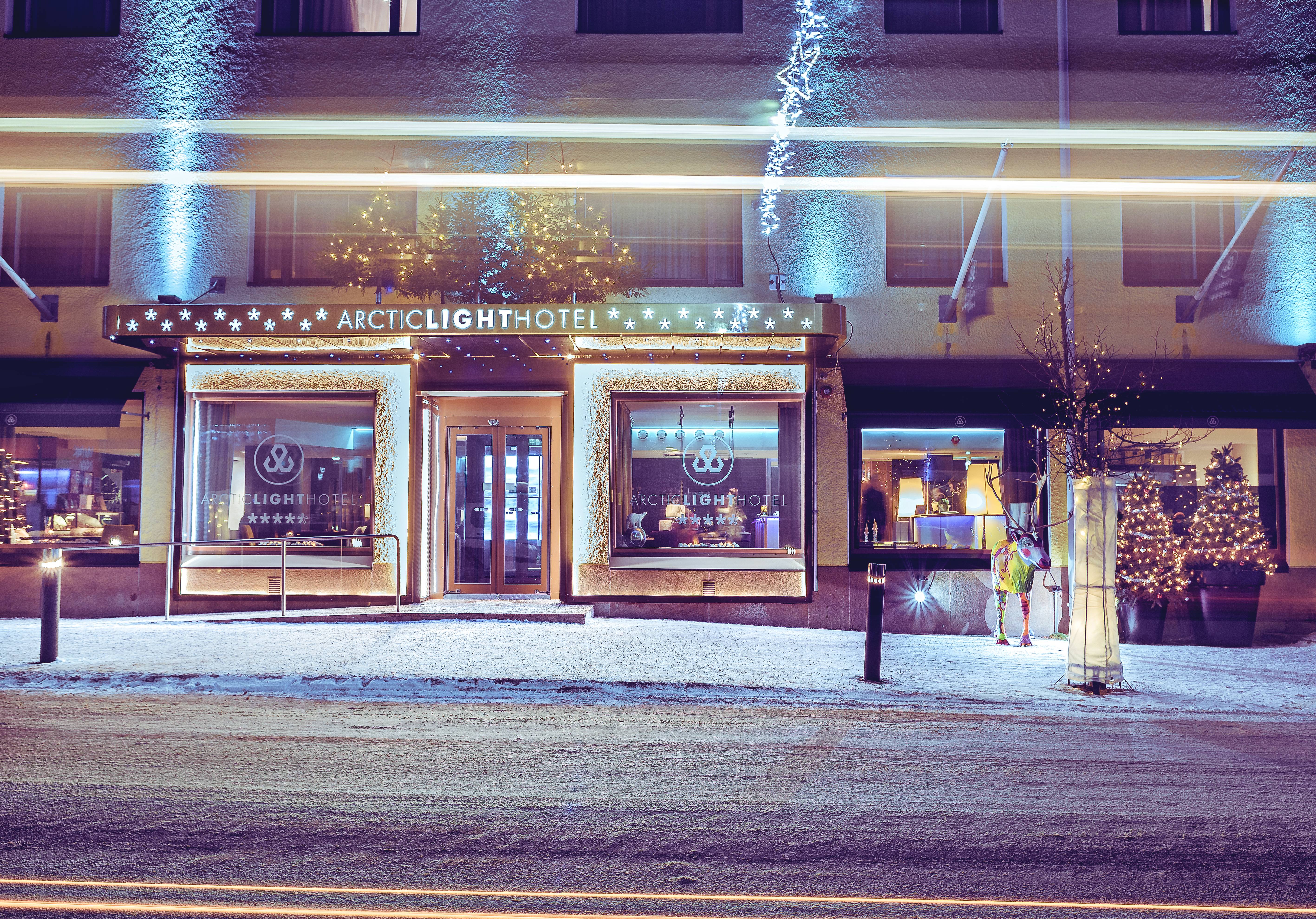
Arctic Light Hotel winter night view from Valtakatu, Rovaniemi, with festive lighting along the central pedestrian street 📍

Rovaniemi and Lapland

The Arctic Circle runs through the northern edge of Rovaniemi, the administrative capital of Finnish Lapland and the southern gateway to the wider Arctic wilderness. The city was 90% destroyed in October 1944 by retreating German forces during the Lapland War; the post-war rebuild is the work of Alvar Aalto (who designed the urban plan in the shape of a reindeer's head and antlers) and his contemporary Ferdinand Salokangas (who designed the major public buildings). Arctic Light Hotel occupies Salokangas's 1949 Kauppalantalo — Rovaniemi's former Market Town Hall, converted into a 57-room boutique hotel in 2015 by hotel architect Jaakko Puro, with Paavo Tynell lighting preserved in the former city council meeting room. The city is the most accessible point in Lapland for first-time visitors: direct flights from Helsinki and several European hubs, Santa Claus Village on the Arctic Circle eight kilometres north of the centre, and onward access to Pallas-Yllästunturi National Park, Levi, Saariselkä and the Sámi cultural heartland around Inari.

When to visit

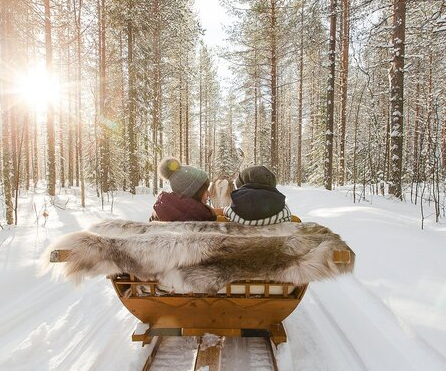
Winter (December-March) runs two distinct propositions. In Lapland it is the Aurora Borealis season (reliably visible on clear nights from late August to late March), with snow-secure ski-touring conditions, husky and reindeer safaris, and the Christmas peak at Santa Claus Village from mid-November through early January. In Helsinki and Espoo it is shorter daylight (4 hours in late December), Christmas markets, the design-museum season, and Tapiola's ice park. Spring (April-May) is the transition: melting snow, returning daylight, lower visitor numbers, and reduced seasonal activities. Summer (June-August) is the midnight-sun season, with 24-hour daylight above the Arctic Circle, full hiking and canoeing access across the lake districts and Lapland fells, and warm-water lake swimming. Helsinki, Espoo and the coast run their festival calendars (April Jazz, Espoo Ciné, the Helsinki Festival). Autumn (September-October) brings the ruska autumn-colour season across the birch and pine forests — the photographer's editorial sweet spot — and the first Aurora opportunities of the new season from mid-September.

Frequently Asked Questions about Finland

Icon of Here for You
Here for You
Icon of Free Extras on Arrival
Free Extras on Arrival
Icon of Best Price Guarantee
Best Price Guarantee
Icon of Personally Approved Hotels
Personally Approved Hotels
Icon of Exclusive Offers
Exclusive Offers
Icon of New Finds Every Month
New Finds Every Month