

€376.50 for 1 Night





24/7 Support
 Looking for help choosing or for a property we don't list? Message our Private Rates Concierge on WhatsApp for member rates and insider knowledge on the right stay
€376.50/ Night
24/7 Support
Looking for help choosing or for a property we don't list? Message our Private Rates Concierge on WhatsApp for member rates and insider knowledge on the right stay
A 16th-century Torlonia palazzo turned hotel in 1845, the Grand Tour's literary address by the Spanish Steps — freshly restored, with a new rooftop bar over the Tridente rooftops.
Collections:

Free extra on us
Complimentary room upgrade on arrival (subject to availability)
Need To Know
- 88 rooms and suites, including a penthouse with a private terrace over the rooftops; the recent restoration kept the palazzo's original marble, high ceilings and frescoes
- Our Favourite Rooms: the upper-floor junior suites with small private balconies onto Via Bocca di Leone, the cobbles below and the Trinità dei Monti over the rooftops; skip the lower courtyard-facing rooms — the light and views are the point
- Pets welcome; valet parking (the centro storico has no street parking)
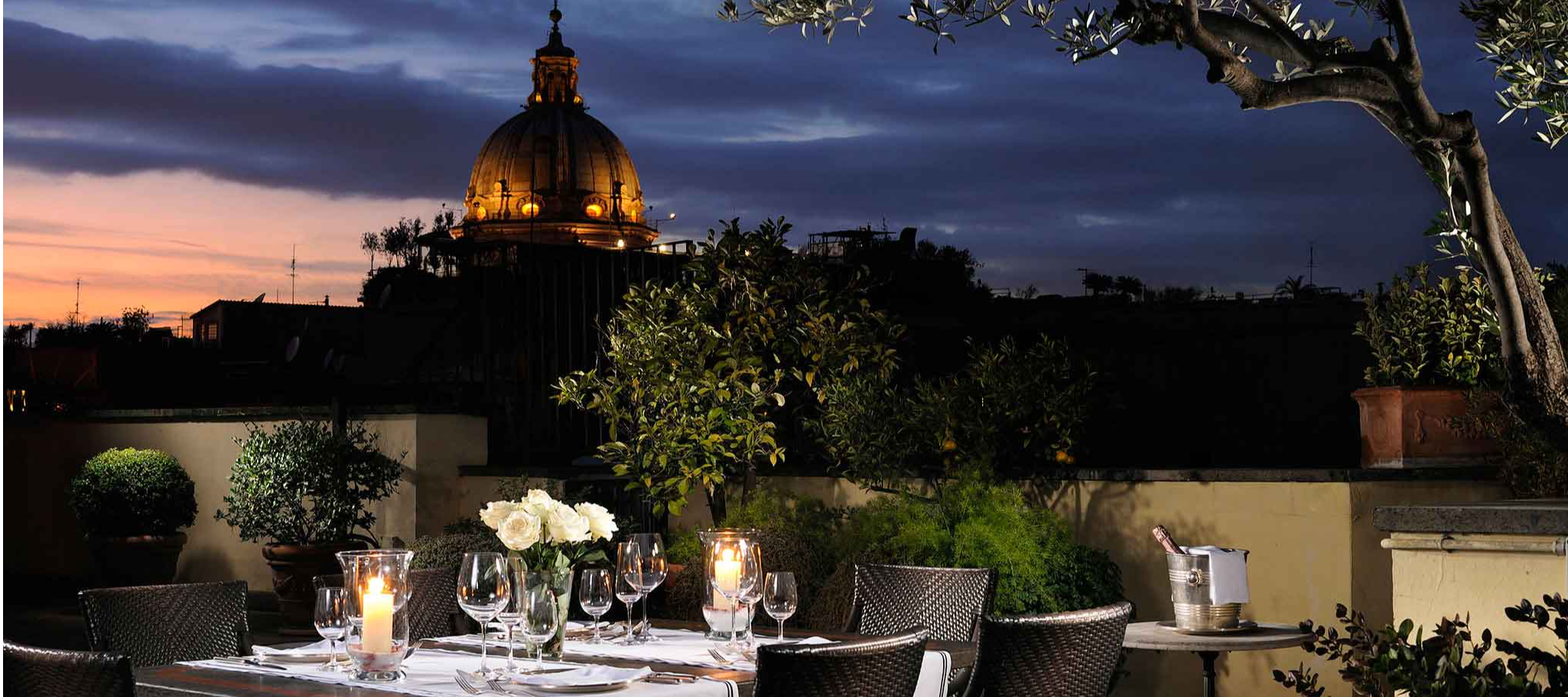
- Café Romano restaurant and lounge bar on the ground floor; the new Terrazza Romana rooftop cocktail bar above
- Spa Suite with jacuzzi, sensorial cabin and a Technogym gym (open 24 hours); spa access by treatment booking
- Spagna metro a five-minute walk; the Tridente, Trevi and Pantheon all on foot
Check in - Check out
Check in from 14:00; check out before 12:00.
We Love
- Cocktails on the new Terrazza Romana rooftop — the Trinità dei Monti near enough to touch and the Tridente rooftops running south toward the Trevi.
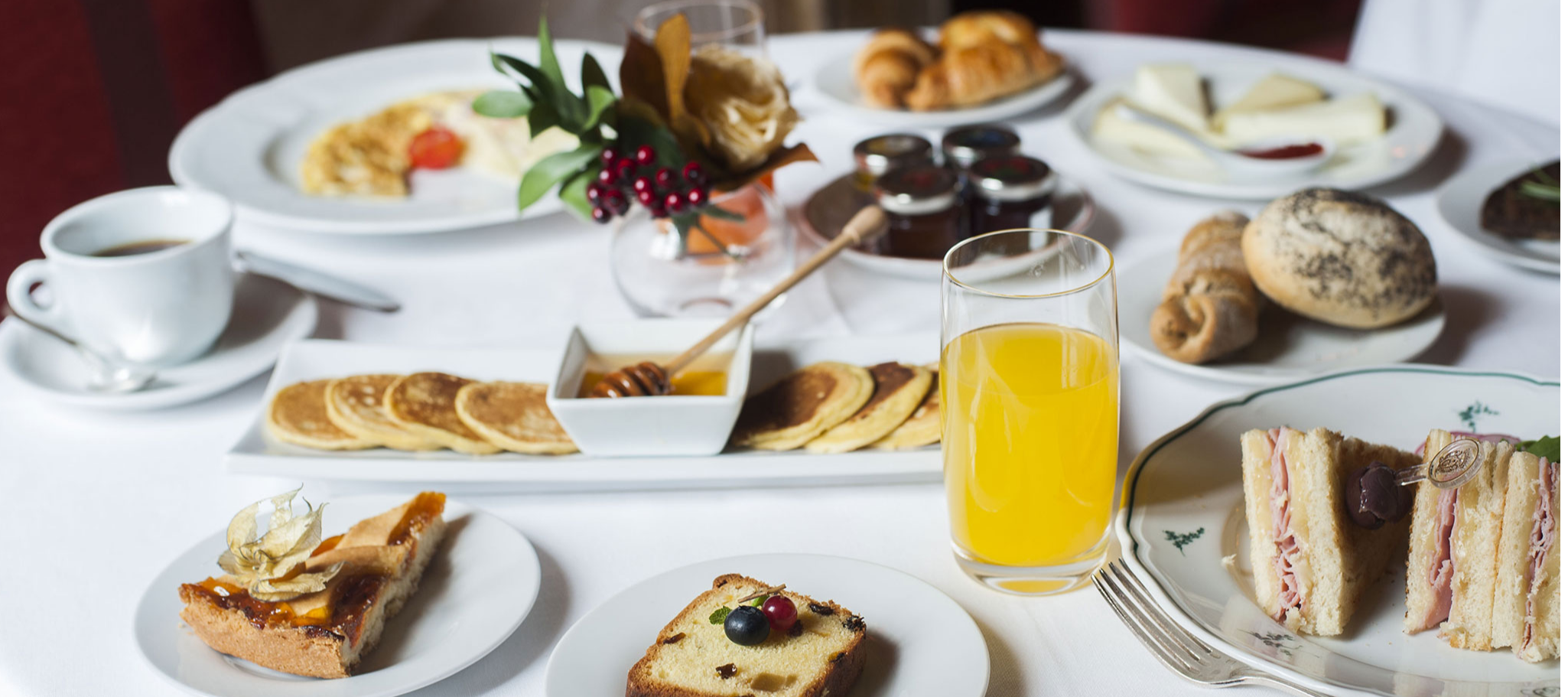
- Café Romano — the kitchen working the four canonical Roman pastas, carbonara to gricia, seasonal primi beside them, and one of the better Sunday brunches in the centre.
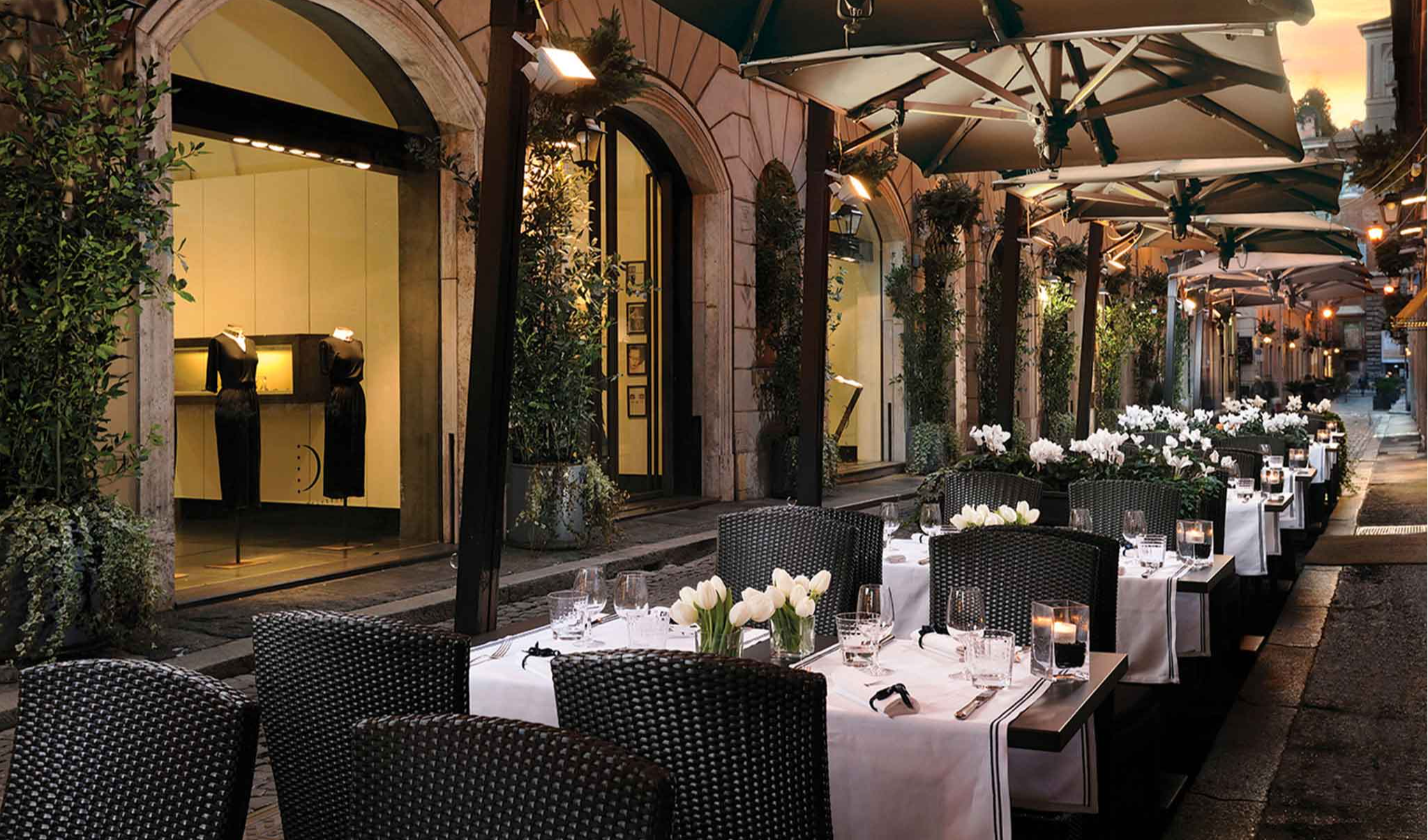
- The Via Bocca di Leone address — a quiet lateral off Via Condotti with the fashion flagships at the corner, three minutes to the Spanish Steps, six to the Trevi, ten to the Pantheon.
- The guest book — Liszt, Andersen, Twain, Wilde, Hemingway and Henry James among 180 years of writers who made this their Roman base, the British among them giving it its English name.
- The new Spa Suite — travertine and vaulted ceilings, KamiSpa's Eastern-influenced treatments, the right cure for an evening after a day on Rome's cobbles.
Key Features








Book Your Stay at Hotel d'Inghilterra
€376.50 for 1 Night
Location
Address
Via Bocca di Leone, 14, 00187 Roma RM, Italy
Travel Info
Fiumicino is about 30 minutes by taxi, Ciampino 26, and Roma Termini two kilometres away. Spagna metro is a five-minute walk, and the Tridente, Trevi and Pantheon are all reachable on foot. Valet parking on arrival.
Last Updated: 2026-06-08

Expert Review
Origins
Hotel d'Inghilterra began as someone else's guest wing. The sixteenth-century palazzo on Via Bocca di Leone was built to house the visitors of the Torlonia family, the Roman bankers whose palace stood directly across the narrow street; by the fifteenth century this quarter already held the city's best lodgings, and the Torlonia guesthouse was its grandest. In 1845 it became a hotel in its own right, named Hôtel d'Angleterre — England — for the British Grand Tourists who filled it, its logo borrowing the lion and unicorn of the royal arms. The Italian rendering, d'Inghilterra, stuck.
The name drew the names. Keats had spent his last years in these streets, with Byron and Shelley nearby, and the hotel became the Roman base of a remarkable literary procession — Franz Liszt, Hans Christian Andersen, Mark Twain, Henry James, Oscar Wilde, Ernest Hemingway, Ezra Pound and Italo Calvino among them — before the Dolce Vita years added Elizabeth Taylor, Richard Burton and Gregory Peck. The property keeps the record itself, in a Grand Tour Collection book published in 2024 that traces the house from the Torlonia to the present.
That present arrived in 2024, when Starhotels reopened the palazzo after a thorough restoration for its Collezione tier. The work was conservative by intent — the entrance marble, the high ceilings and the frescoed motifs left as they were, modern comfort layered over rather than through them — and it added the things the building had never had: a top-floor cocktail terrace, the Terrazza Romana, looking across the Tridente rooftops, and a Spa Suite cut into the historic walls below. One of Rome's oldest hotel bars still pours from a list that goes back to 1845; the hotel simply gave it a roof with a view.
Top Secret
A plaque on the facade marks the stay of Henryk Sienkiewicz, the Polish writer who lodged here in 1893 and went on to win the Nobel Prize for Quo Vadis, his epic of Nero's Rome — written, fittingly, by a guest who had slept a few streets from the Forum. Most visitors walk straight past it; ask which window was his.
The Review
The pleasure of Hotel d'Inghilterra is the address. Via Bocca di Leone is a quiet lateral off Via Condotti — Rome's most concentrated fashion street, the flagships a few doors from the hotel — and the palazzo behind the discreet facade has been a hotel longer than any other in the Tridente. The recent restoration treated the building gently: the entrance marble is original, the ceilings are high and original, the frescoed motifs in the suites are the building's own. What is new sits lightly on top — contemporary fabrics and lighting, the Spa Suite below, the Terrazza Romana cocktail bar opened above in 2024.
Café Romano, on the ground floor, is both the breakfast room and the evening destination — the cooking properly Roman, the four canonical pastas on the menu, abbacchio and saltimbocca among the secondi, and a Sunday brunch that ranks with the better ones in the centre. Above it, the rooftop puts the Trinità dei Monti at eye level and the city at your feet for the aperitivo hour.
The rooms divide simply. The upper floors carry the light and the balconies — the ones worth booking, the cobbles below and the rooftops beyond; the lower courtyard rooms trade the view for absolute quiet, which some travellers will prefer. Either way the draw is the same: a literary house that has kept its eighteen-forties soul through every renovation, in the part of Rome where the Grand Tour came to stay. Forbes Travel Guide gave it four stars in 2026, but the guest book made the case a century and a half earlier.


