Giotto called Rome "the city of echoes, the city of illusions, and the city of desire" — and boutique hotels here cluster across the centro storico, the historic core inside the Aurelian walls, where two and a half thousand years of architectural layering produce the city that almost every other capital in the West has at some point tried to imitate. Rome is not a comfortable destination in the way Florence is. It is bigger, dirtier, louder, more contradictory. The reward for staying with it is that no other place rewards return visits in quite the same way — the layers keep producing themselves, the small piazzas keep revealing churches you missed on the previous three trips, the trattorias in Testaccio and Trastevere keep serving the four canonical Roman pastas (carbonara, cacio e pepe, amatriciana, gricia) at the standard against which every Italian-American imitation should be measured.
The geography of staying in Rome resolves into two questions. Which side of the Tiber, and which proximity to the centro. Most first-time visitors stay near the Spanish Steps and the Trevi area — the Tridente, the dense lattice of streets between Piazza del Popolo and Piazza Venezia. Returning visitors often choose the area around the Colosseum and the Forum, the Monti neighbourhood above it, or Trastevere across the river. Our Rome collection sits across three of these — the Tridente, the elevated quarter between Via Veneto and the Borghese Gardens, and the imperial spine running east from the Forum to the Colosseum.
The Tridente — Piazza di Spagna and Via Condotti
The lattice of streets running south from Piazza del Popolo through the Spanish Steps to Piazza Venezia is the densest and most central part of the centro storico — eighteenth-century Grand Tour Rome, where Stendhal wandered until he wrote himself dizzy in 1817 and where every literary traveller from Keats to Henry James kept a Roman pied-à-terre. The Pantheon is a ten-minute walk west; the Trevi Fountain five minutes south; the Galleria Borghese fifteen minutes north through the gardens.
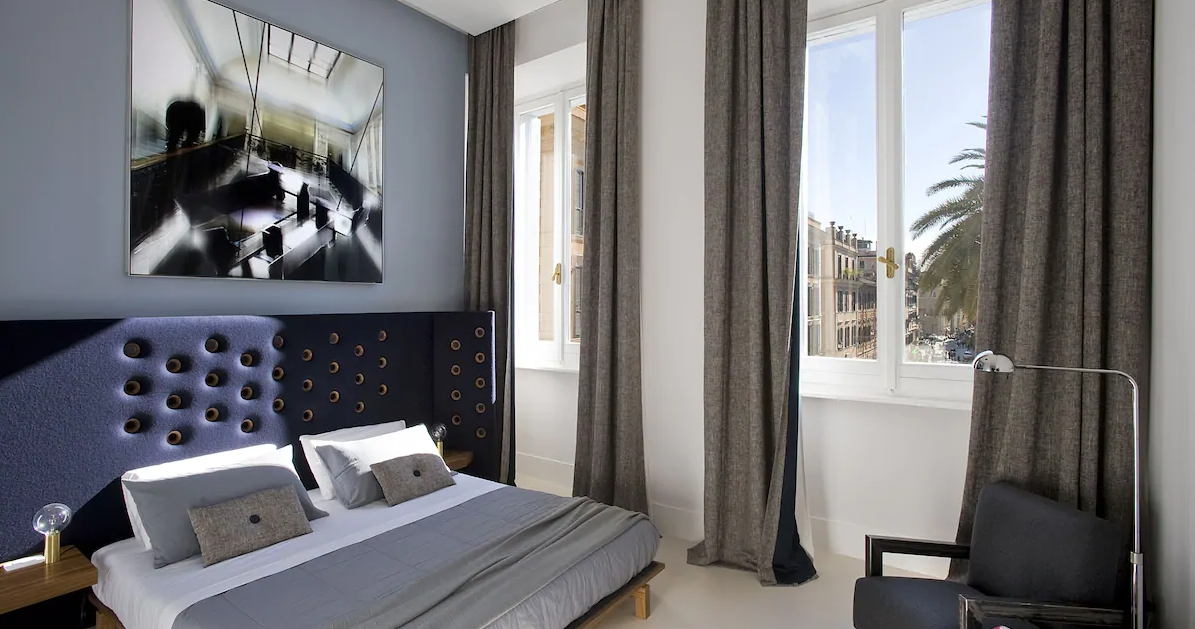
Piazza di Spagna 9 occupies the central address on the square itself — number 9, directly at the foot of the Spanish Steps. The metro is ninety metres away (an unusual urban advantage in central Rome, where most addresses are five to ten minutes from the nearest stop). The property runs a small spa and the rooftop has the Trinità dei Monti at eye level.
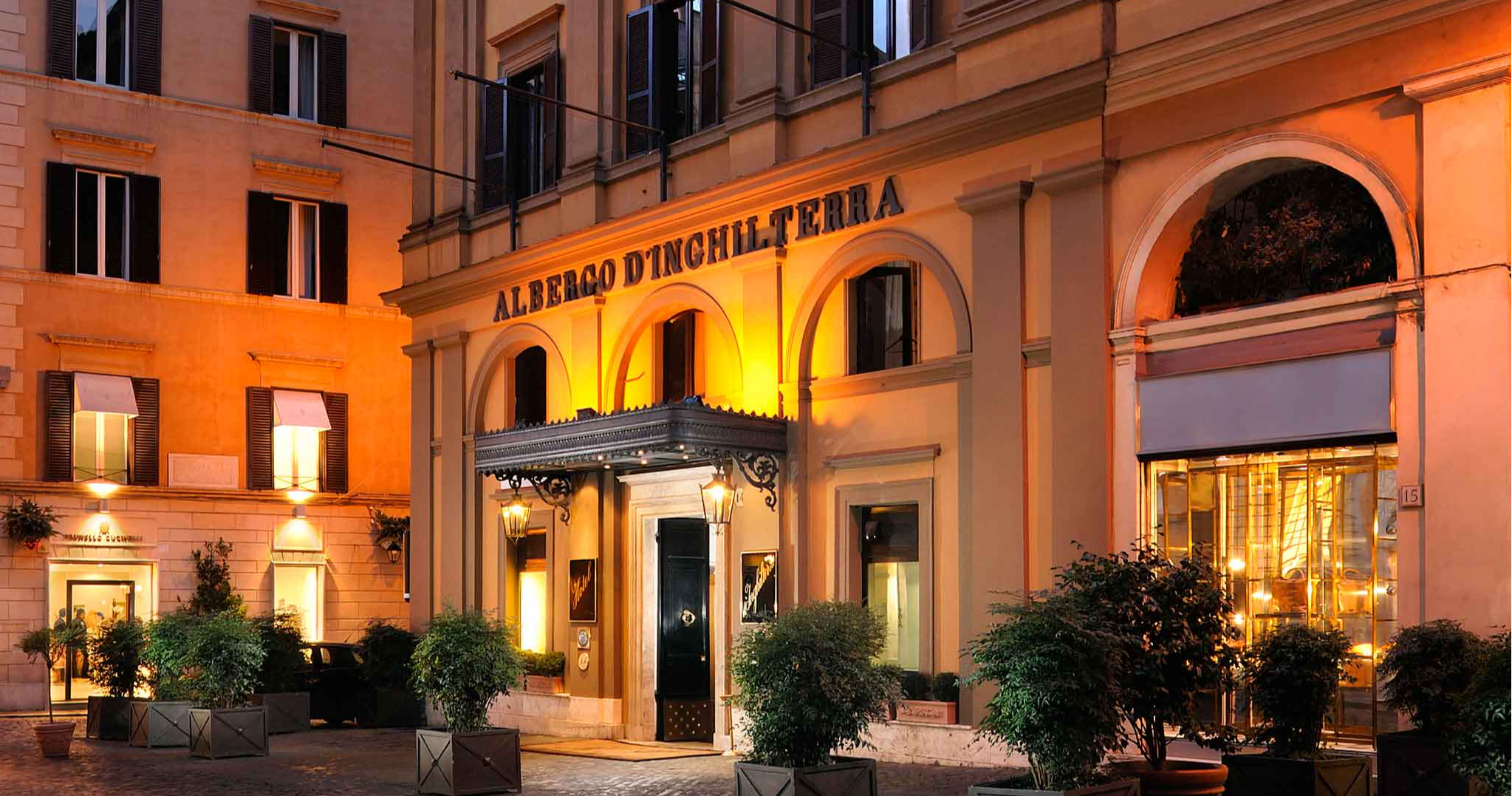
Hotel d'Inghilterra sits on Via Bocca di Leone — the small lateral off Via Condotti — and has functioned as a hotel since 1845, when it opened to receive English Grand Tour travellers. The roster of writers and film-era stars who used it as their Roman base is unusually long — Mark Twain, Henry James, Oscar Wilde and Ernest Hemingway among the writers, Elizabeth Taylor and Gregory Peck through the 1950s film era. The Terrazza Romana rooftop opened in 2024 with views to the Trinità dei Monti. Forbes Travel Guide Four-Star.
The Borghese quarter — Via Veneto and the gardens
The elevated residential quarter between Villa Borghese and Via Veneto is where the nineteenth-century Roman aristocracy lived — quieter than the Tridente, with the Borghese Gardens functioning as the neighbourhood's back garden. The Galleria Borghese (advance booking essential) is fifteen minutes' walk through the park; the Spanish Steps six minutes south; the centro storico opens westward from Via del Tritone.
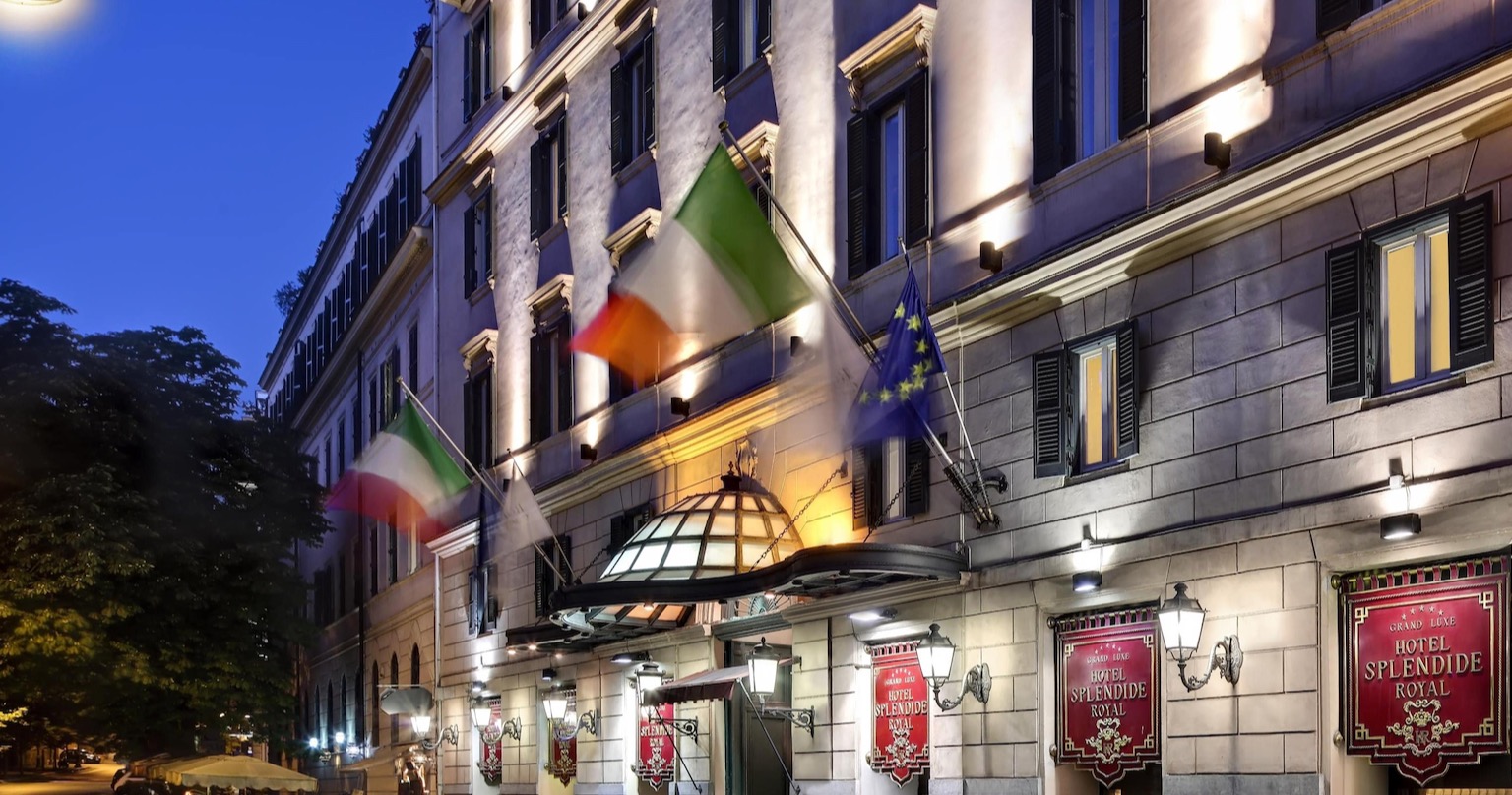
Hotel Splendide Royal occupies the original guesthouse wing of the Ludovisi-Boncompagni palace, restored by Roberto Naldi in 2001-2003 and preserving the building's original frescoed ceilings, Venetian furnishings, and Murano chandeliers. The eighth-floor Mirabelle rooftop is a gourmet destination in its own right, and offers what may be the most concentrated view of Rome from any hotel terrace in the city — St Peter's dome, the Quirinale, the Trinità dei Monti and the Vittoriano all visible from one point. Travel + Leisure World's Best Awards 2025: Best City Hotel in Rome, tenth-best in Europe.
The imperial spine — the Colosseum and the Forum
The eastern half of the centro storico runs from Piazza Venezia south-east through the Roman Forum, the Palatine, and the Colosseum, then up to the Oppian and Caelian hills above. This is monumental imperial Rome — the most concentrated archaeological landscape in the world. The Monti neighbourhood directly above the Forum is the city's oldest residential quarter, with narrow lanes, family-run trattorias and an artisan culture still partly intact.
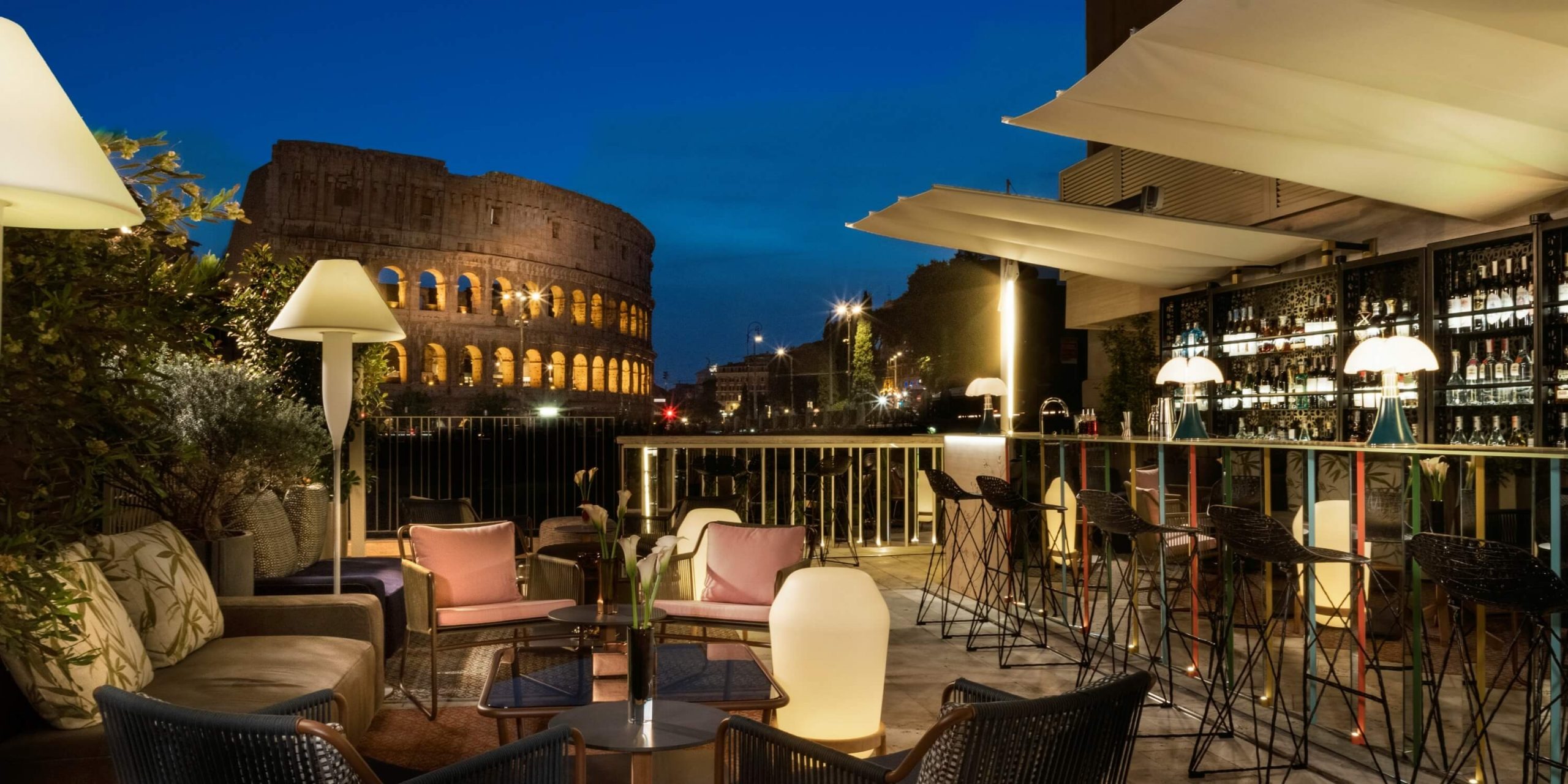
Palazzo Manfredi sits on Via Labicana directly opposite the Colosseum — the bedroom views are of the amphitheatre itself, lit at night, with the Arch of Constantine in the same frame. The roof terrace is the property's defining feature, with Aroma restaurant operating under a Michelin star against the most photographed building in Europe. The Capitoline Hill is a four-minute walk; the Forum entrance six.
Three-quarters, three Romes: the Tridente for the Grand Tour city, the Borghese for its quiet aristocratic edge, the imperial spine for the ruins at the window. Pick the one that matches the trip.