

€0.00 for 1 Night





24/7 Support
 Looking for help choosing or for a property we don't list? Message our Private Rates Concierge on WhatsApp for member rates and insider knowledge on the right stay
€0.00/ Night
24/7 Support
Looking for help choosing or for a property we don't list? Message our Private Rates Concierge on WhatsApp for member rates and insider knowledge on the right stay
A lakeside castle on the Wörthersee where Bisazza mosaics, two hundred artworks and a heated pool set inside the lake itself reframe what an Austrian schloss can be
Collections:
Need To Know
Total rooms & suites: 67, individually designed
Closed dates: January through March
Check in - Check out
Check in from 15:00; check out before 12:00.
We Love
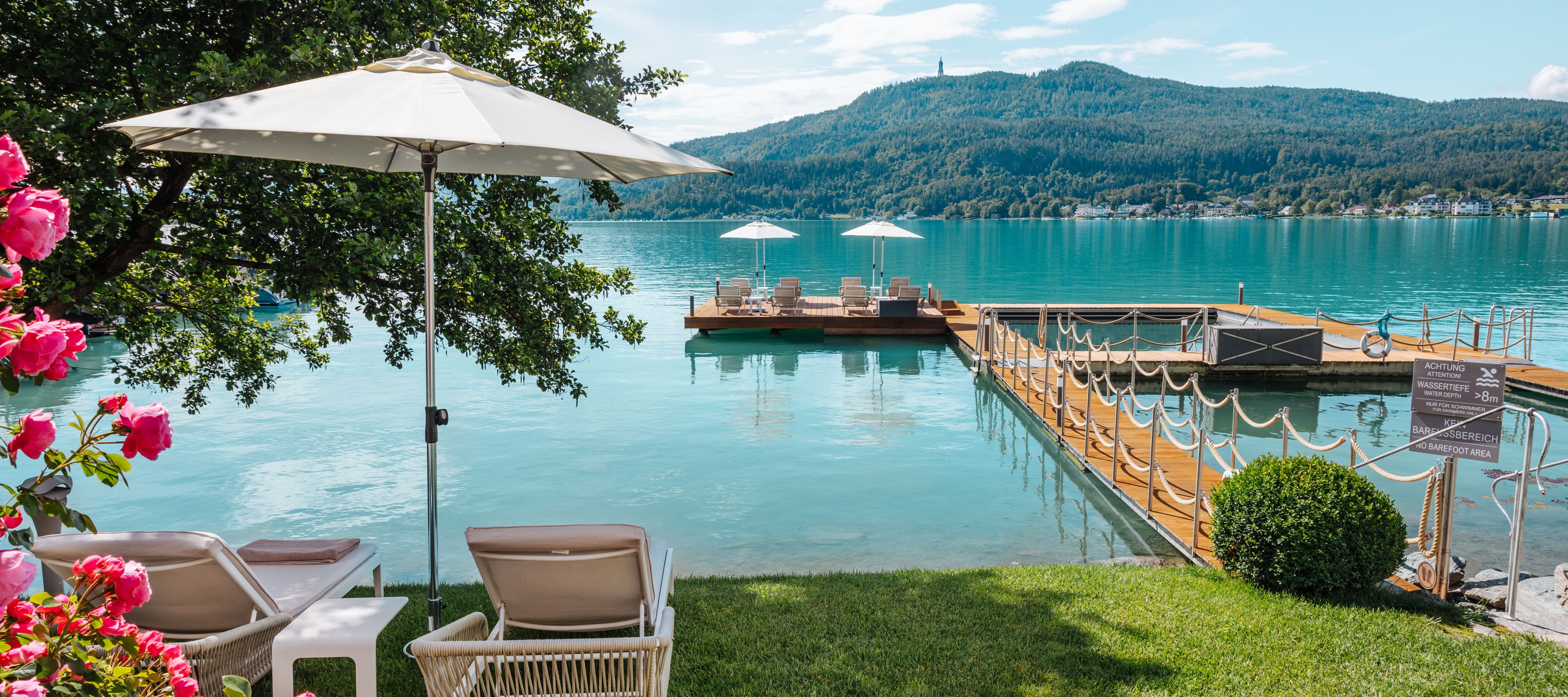
- The heated pool extending into Lake Wörthersee itself — kept at 28°C, swimmable in steam off the surface in October when the village shuts for winter
- Billi Thanner's neon Himmelsleiter ascending the schloss tower after dark, the property's most photographed and most argued-about object
- Breakfast served on bespoke Augarten porcelain on what is, defensibly, the loveliest restaurant terrace on the Wörthersee
- Boat drivers Moritz and Simon running guests across the lake to the golf course, a glass of Bollinger sometimes coming aboard for the return leg
Key Features








Book Your Stay at Hotel Schloss Seefels
€0.00 for 1 Night
Location
Address
Hotel Schloss SeefelsTöschling 1, 9212 Pörtschach am Wörthersee, Carinthia, Austria
Travel Info
Klagenfurt Airport (KLU) is a 20-minute drive. Vienna (VIE) is just 3.5 hours by car or train via Klagenfurt Hauptbahnhof. The hotel can arrange airport transfers on request.
Last Updated: 2026-08-06

Expert Review
Origins
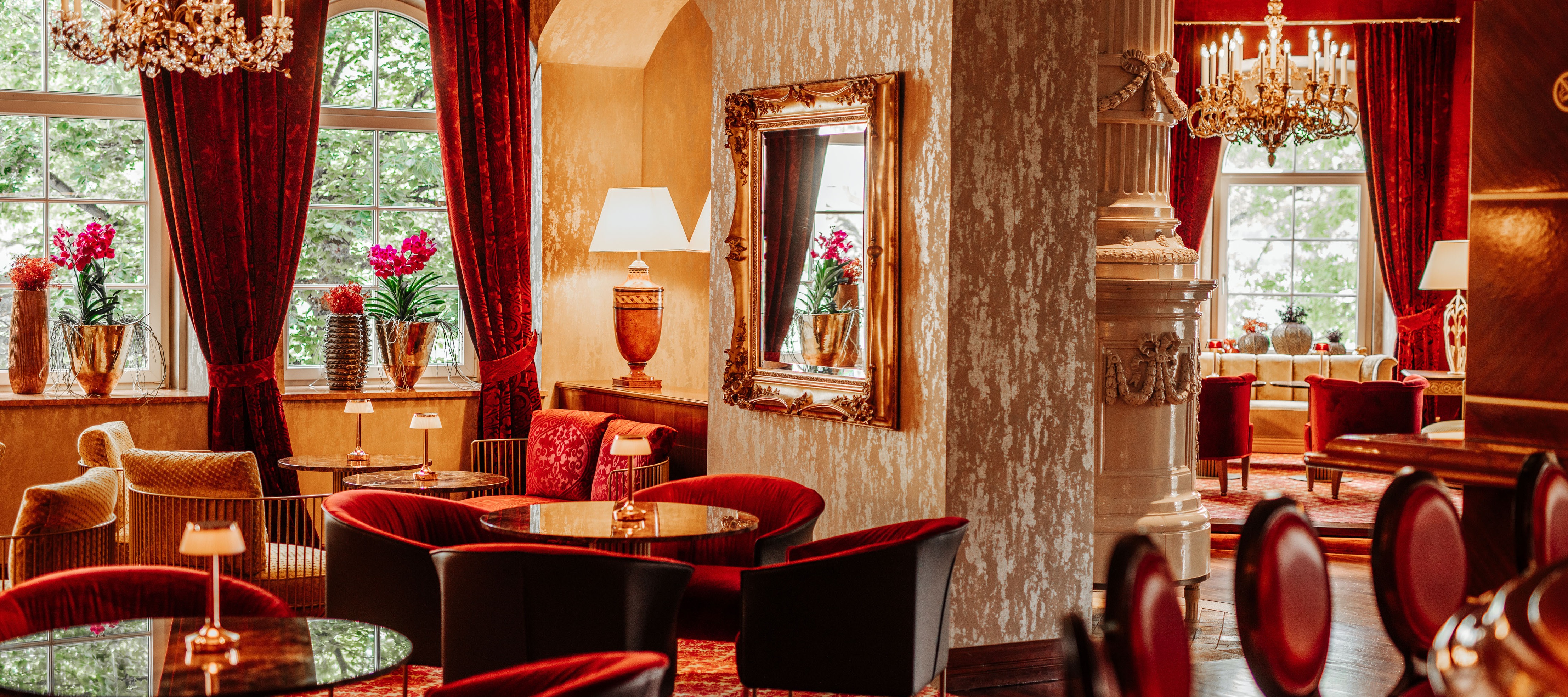
Schloss Seefels was built as a lakeside villa in 1860 and now operates as what its team calls a HOseum — a hotel that doubles as a working museum. The art collection at Schloss Seefels is part of the private Haselsteiner art collection. There's a true personal touch to the design, character and art throughout the property, the work of CEO Helena Ramsbacher, the visionary behind all of it.
Top Secret
The wine room at La Terrasse holds the property's collection of red, white and Champagne in a climate-controlled chamber lit by Christian Ploderer. Ask to dine inside it. Three Gault Millau toques, four Falstaff forks, head chef Richard Hessl in a Lohberger kitchen. Few guests realise the room takes private bookings.
The Review
Schloss Seefels has been sitting on the Wörthersee since it stopped being a castle in 1860. The pool is why people come, or should be — fourteen by ten metres, built into the lake itself, held at 28 degrees so you can swim in October while the Wörthersee around it goes cold. Steam comes off it at breakfast. You reach it down a wooden dock, and there are heated robes waiting on the terrace when you climb out, which tells you someone thought about the walk back.
The art isn't decoration here. Two hundred works from the Haselsteiner collection run through the public rooms — Baselitz, Lassnig, Nitsch — and Billi Thanner's Himmelsleiter climbs the tower in neon, 21 rungs up 21 metres. Rooms are all different: Lacroix fabrics in one, fitted carpentry in the next. Ask for a lake terrace above the water.
Eat at La Terrasse, where Richard Hessl pulls most of the kitchen from within 70 km — fish caught that morning, Wagyu from the Lavanttal. Or Porto Bello down by the marina for the Alpine-Adriatic stuff. The Seefels Egg — sturgeon and caviar — is the room's showpiece if you want one.


