

€358.20 for 1 Night





24/7 Support
 Looking for help choosing or for a property we don't list? Message our Private Rates Concierge on WhatsApp for member rates and insider knowledge on the right stay
€358.20/ Night
24/7 Support
Looking for help choosing or for a property we don't list? Message our Private Rates Concierge on WhatsApp for member rates and insider knowledge on the right stay
A 16th-century palazzo on the site of Ostuni's castle, at the summit of the White City — 15 vaulted rooms, a citrus courtyard, and a wine cellar carved into an ancient cistern.
Collection:

Free extra on us
Welcome drink
Need To Know
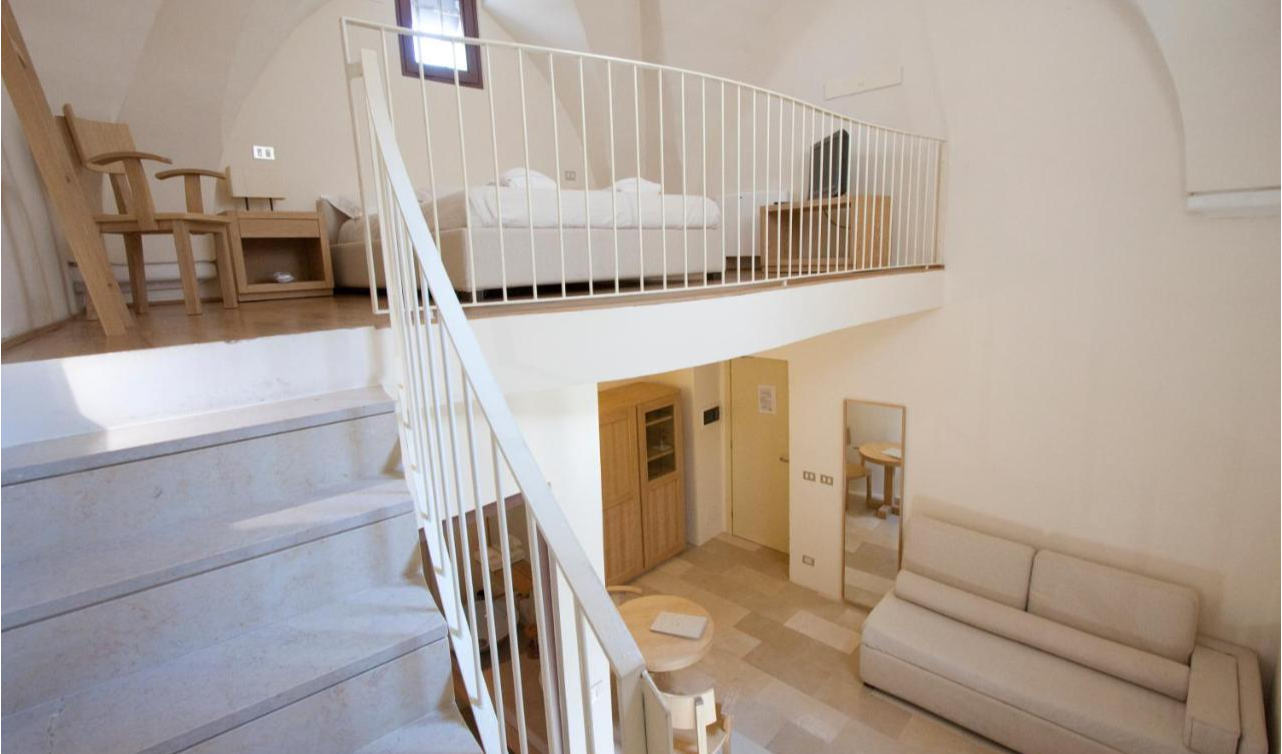
- 15 rooms and suites in the restored palazzo: vaulted ceilings throughout, sea- and garden-view balconies on some, skylit interior rooms on others, and a two-level family studio under an original 13th-century grille
- Families and pets welcome
- Our Favourite Rooms: a Deluxe with balcony over the citrus groves toward the sea; the family studio for the mezzanine and that grille
- Cielo serves a modern Apulian menu under the vaults and, in summer, in the Spanish garden; the Garden Bistrot runs lighter lunches and the Terrazza Belvedere takes the aperitivo
- Wellness corner with sauna, hammam and massage rituals, built where the palazzo's 18th-century oil mill stood
- The old town is pedestrian: the hotel meets you at an agreed point, escorts you to parking and shuttles you in
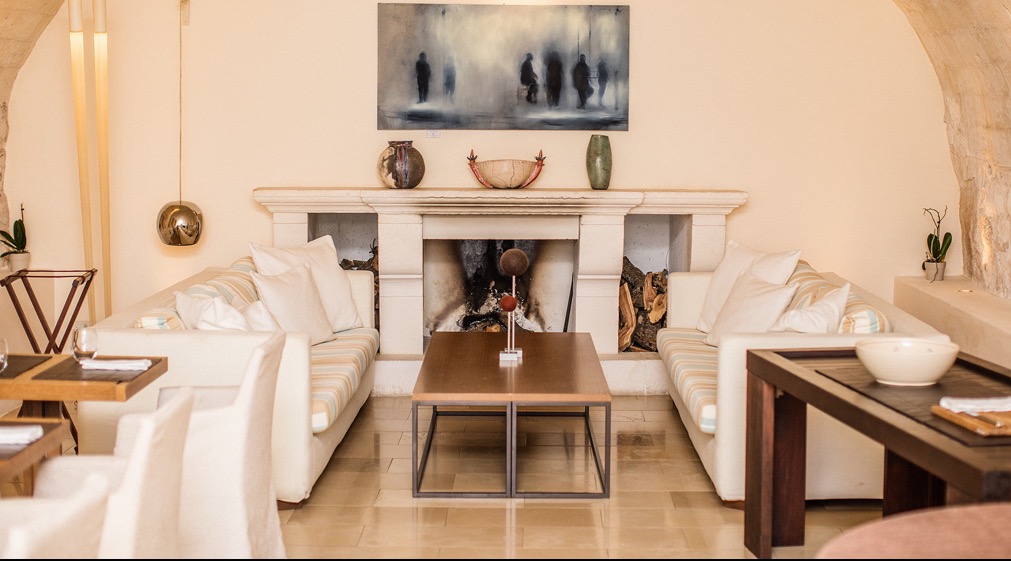
- Weddings and events use the Fireplace Room, the panoramic lounges and the Spanish garden (70 inside, 100 out)
Check in - Check out
Check in from 14:00; check out before 12:00.
We Love
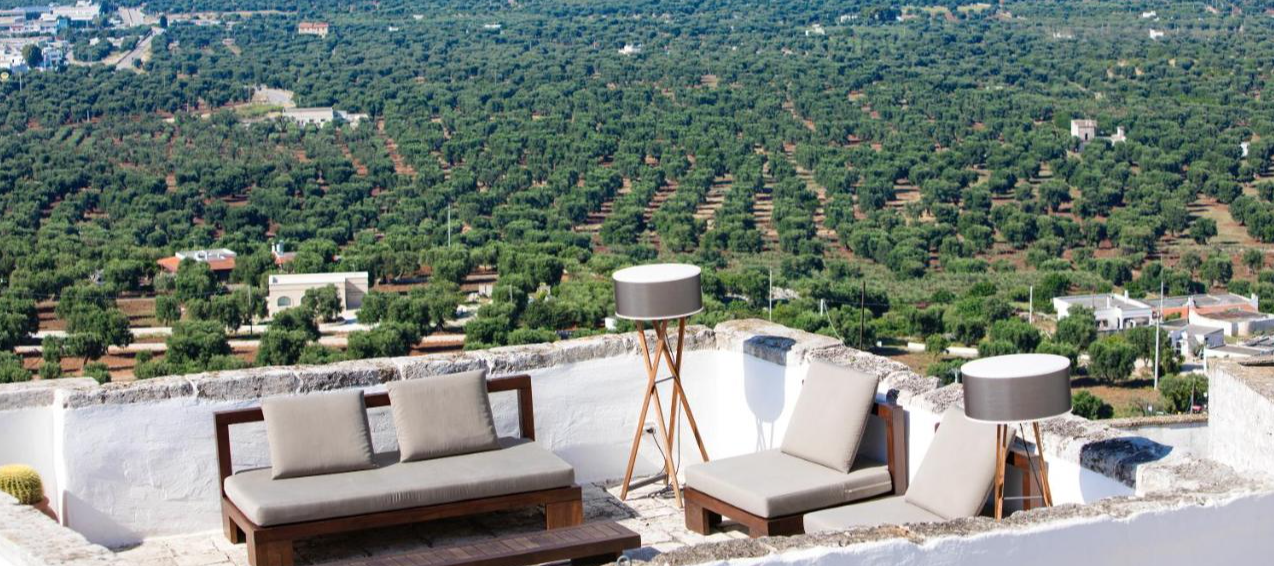
- The Terrazza Belvedere at sunset — the olive plain running twenty kilometres to the Adriatic, the day-trippers already heading down the hill, the light going copper over the white roofs.
- Cielo — summer dinners among the citrus trees of the Spanish garden, barrel vaults indoors, and plates like catalogna with grilled lamb offal and the White City almond dessert.
- The cellar in the cistern — sixteenth-century stone walls that once held the olive harvest, now holding Puglian wines and champagnes, with a private table for tastings and intimate dinners.
- The vaulted rooms — star and barrel vaults in Apulian stone, earthy tones, some balconies facing the citrus groves and sea, the interior rooms lit by skylights through the castle-thick walls.
- The address itself — a pedestrian summit beside the cathedral where the only sounds are bells and pigeons, with the whole medieval town beginning at the front gate.
Key Features












Book Your Stay at La Sommità Relais
€358.20 for 1 Night
Location
Address
Via Scipione Petrarolo 7, 72017, Ostuni Italy
Travel Info
Brindisi airport is about 45 minutes, Bari roughly an hour and a quarter. Ostuni's old town is pedestrian and ZTL-restricted: the relais meets you at an agreed point, escorts you to parking outside the walls and shuttles you to the door.
Nearby Places
Brindisi - Salento Airport
31700m
Port'Alga
40400m
Grotta Stampagnata
41000m
Last Updated: 2026-06-06

Expert Review
Origins
La sommità means the summit, and the name is literal: the palazzo stands at the highest point of Ostuni, on the footprint of the old castle that once watched the coast for invaders. The history runs through grand hands — the Zavallo dukes of Ostuni held it until their tyranny got them overthrown, the estate passed to Bona Sforza, the Sforza duchess who became Queen of Poland, and the Palmieri family restored it and added the Baroque portal that still admits you. By the eighteenth century the residence had taken in an olive-oil mill; its stones now form the wellness rooms, and the cistern carved into the rock below, where the oil was stored, is today the wine cellar.
The hotel is the work of an Apulian entrepreneur and self-confessed bon vivant who set one goal for his sixteenth-century inheritance: hospitality as an art, never forced. The restoration kept the building's defensive bones honest — star and barrel vaults, castle-thick walls, interior rooms lit by skylights because a fortress gives few windows, one of them still covered by a 13th-century iron grille — and a renewal completed in 2025 brought the fifteen rooms, the restaurant and the wellness corner to their current form.
Ostuni itself is the final amenity. Pasolini described the White City as "that slender cluster of white houses", and the palazzo sits at the top of the cluster, beside the cathedral whose bells mark the hours, in a pedestrian quarter where the loudest interruption is pigeons. Whitewashed lanes spill downhill in every direction from the gate; the olive plain — some of its trees older than the town — runs twenty kilometres east to the Adriatic, and from the terraces you can watch the two of them meet.
Top Secret
The Terrazza Belvedere opens after the day-trippers have gone down the hill — come up at the copper hour and the sunset over the olive plain to the Adriatic is usually yours alone. Then ask for the cellar: the cistern that held the olive harvest for four centuries now takes private tastings, and a table for two among the bottles.
The Review
Staying inside Ostuni's old town — rather than at the masserie on the plain below — buys you proximity, and La Sommità holds the best of it: the cathedral, the bishop's palace and the lanes where the evening passeggiata gathers all begin within five minutes of the gate. The geometry keeps you honest — every outing is a downhill stroll through white limestone alleys, every return a climb — and the reward at the top is a quarter so quiet you hear the bells count the afternoon.
The restoration presents the sixteenth century rather than dressing it. The Spanish garden sits at the building's heart, citrus and olive trees inside white walls; the rooms above run on star vaults, Apulian stone and earth tones, contemporary furniture introduced sparingly — some with balconies facing the groves and the distant sea, the interior rooms glowing under skylights the fortress walls allow. The wellness corner below works sauna, hammam and slow rituals out of the old mill's stones.
Cielo is the strongest single argument. The Michelin-starred kitchen reworks the Puglian repertoire with nerve — catalogna with grilled lamb offal and sweet-sour lampascioni, ravioli of gratinated mussels, pasta cooked in spicy tomato water with raw red mullet, the White City almond dessert as the closing statement — served under the barrel vaults in winter and among the courtyard citrus in summer, with the cistern cellar pouring Puglia's best alongside the French. Lunch runs lighter at the Garden Bistrot, the terrace takes the sunset, and the town waits at the door for the walk down. The climb back up, after a meal like that, is the only bill that feels steep.


