

€0.00 for 1 Night





24/7 Support
 Looking for help choosing or for a property we don't list? Message our Private Rates Concierge on WhatsApp for member rates and insider knowledge on the right stay
€0.00/ Night
24/7 Support
Looking for help choosing or for a property we don't list? Message our Private Rates Concierge on WhatsApp for member rates and insider knowledge on the right stay
Lánchíd 19 — 48-room boutique design hotel on the Danube riverbank at the foot of Buda Royal Castle, with a glass façade and medieval water tower atrium.
Collection:
Need To Know
- 48 rooms across five categories — Standard Double room (city, land, or river view), and the Panorama Suite with private wooden-decked terrace and glass-walled bath overlooking the Danube
- Operating year-round — no seasonal closure
- Family-friendly — children welcome; pet-friendly — pets permitted at the property
- Our Favourite Rooms — the Panorama Suite (40 sq m, King bed) for guests wanting the river-and-Castle position fully open to the room, with the wooden-decked terrace running around the corner and the glass-walled bath positioned directly over the Danube; the Standard Double room with river view for shorter stays seeking the Danube anchor at lower-tier pricing
- Designer signature — distinct designer chairs in each of the 48 rooms as the room's editorial anchor; wall art commissioned at inception from young Hungarian artists; soundproof windows throughout
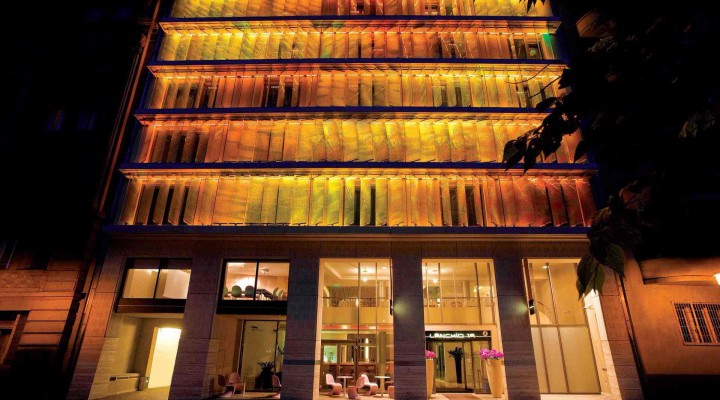
- Architectural signature — moveable glass façade reconfiguring through evening; preserved medieval water tower encased in glass at the central atrium
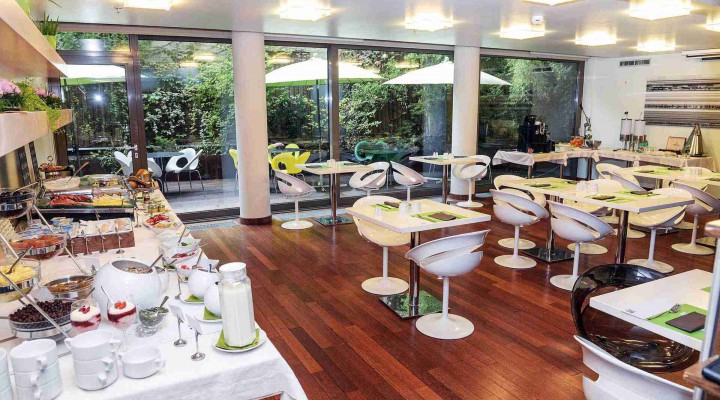
- Dining and amenities — on-property restaurant (international), lobby bar, rooftop terrace, on-property coffee shop, continental buffet breakfast served in a sheltered courtyard at the foot of the Castle hillside
- Two meeting rooms — corporate-and-leisure guest mix runs roughly even
- Free Wi-Fi, bike rentals on-property, parking nearby (surcharge)
Check in - Check out
Check in from 14:00; check out before 12:00.
We Love
- The moveable glass façade — the property's architectural signature opens and reconfigures through the evening, blurring the boundary between the building shell and the Danube riverbank position. Recognised by the European Hotel Design Awards 2008 for
- The medieval water tower preserved at the central atrium — encased in glass, integrated into the building rather than removed during construction. The clearest single architectural anchor for what the property is built around.
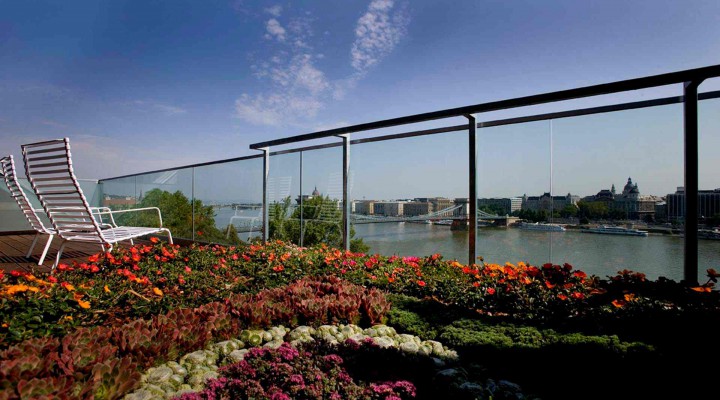
- The Panorama Suite's glass-walled bath — overlooking the Danube and the Pest skyline. The wooden-decked terrace runs around the corner of the suite, opening onto the river view directly.
- The corner views the property holds at the foot of Buda Castle — front rooms onto the Danube and the Chain Bridge crossing; rear rooms into the Castle gardens and the wooded hillside rising behind. The dual orientation is structural to the building's
- The breakfast courtyard at the foot of the Castle hill — the sheltered position takes the continental buffet out of a conventional restaurant setting and into a courtyard that reads as part of the Castle landscape.
Key Features


Book Your Stay at Lanchid 19 Design Hotel
€0.00 for 1 Night
Location
Address
Budapest, Lánchíd u. 19, 1013
Travel Info
Budapest Ferenc Liszt Airport (BUD) ~18-22 km from the property (~30-min drive). Castle District position walks to major Buda landmarks; Pest reached via Chain Bridge or short tram. Parking nearby (surcharge); bike rentals on-property.
Nearby Places
By car: 15-20 minute drive from the Budapest airport or main railway station, By train: Nearest railway station in Keleti, By plane: Budapest airport is connected to most international cities
250m
Last Updated: 2026-06-02

Expert Review
Origins
Lánchíd 19 was conceived from the start as a creative vehicle — an architectural and design project shaped to bring young Hungarian artists, designers and architects into the hospitality discipline rather than around it. The property opened in 2007 at Lánchíd Utca 19 on the Buda riverbank at the foot of the Royal Castle, in the District I-Várkerület UNESCO heritage zone, and it carries that founding curatorial position visibly into the building today.
The architectural signature was recognised early. The European Hotel Design Awards named the property Best Architecture in 2008 — a year after opening — and the design programme that earned the award is built around two structural anchors that distinguish Lánchíd 19 from the wider Budapest hotel inventory. The first is the moveable glass façade, an accordion-style operable curtain that reconfigures through the evening and changes the property's relationship with the Danube riverbank across the course of a single dinner service. The second is the preserved medieval water tower at the centre of the building — encased in glass within the central atrium rather than demolished during construction, the way a tooth might be set into a ring.
The interior programme follows the same curatorial line. Independent designers were brought in to hand-pick every furnishing item; distinct designer chairs were placed in each of the 48 rooms — not as set-dressing but as the room's editorial anchor; young Hungarian artists were commissioned at inception to create wall art that extends a deliberate dialogue across the property. The Panorama Suite reads as the room category where the curatorial line is most legible, with a wooden-decked terrace and a glass-walled bath positioned so the river view dissolves the boundary between the interior and the Danube.
Top Secret
The Panorama Suite is the room category where the architectural signature lives — the wooden-decked terrace runs around the corner and the glass-walled bath positions the bather directly over the Danube. Worth requesting at booking. The rear-facing rooms onto the Buda Castle gardens carry a different quality of view altogether — fewer photographers, more cello-and-organ music drifting down from the hillside in the evenings. The breakfast courtyard is the property's quiet anchor; arrive early before the corporate guests appear and take the continental buffet under the Castle hill shade rather than indoors.
The Review
Lánchíd, in Hungarian, reads "chain bridge" — the name of the Széchenyi suspension bridge that crosses the Danube from Buda to Pest, the most photographed of Budapest's bridges and the one the property stands almost rubbing shoulders with. Lánchíd 19 Design Hotel takes its name directly from that bridge. The position is structural: the property functions as a vertical jetty on the Buda riverbank, with the front-facing rooms opening onto the river and the bridge crossing the water below, and the rear-facing rooms opening into a different view altogether — the Buda Castle gardens, the wooded hillside rising behind, and the cello-and-organ music that drifts down from the Castle district in the evenings.
The architectural programme was conceived as a creative vent for young Hungarian designers, artists and architects, and the building reads as such throughout. The moveable glass façade reconfigures through the evening — opening, closing, blurring the boundary between the building shell and the riverbank position. The medieval water tower at the centre of the building was preserved in place and encased in glass within the central atrium, integrated into the building rather than removed during construction. Each of the 48 rooms carries a distinct designer chair as its editorial anchor; the wall art was commissioned from young Hungarian artists at inception and extends a deliberate dialogue across the property's interior.
Five room categories distribute the inventory: Standard Double rooms organised by view — city, land, river — and the Panorama Suite, the building's most fully realised room, with a wooden-decked terrace running around the corner and a glass-walled bath positioned so the Danube and the Pest skyline fill the bathing line of sight. The guest mix runs corporate and leisure in roughly equal measure; the property carries two meeting rooms that stay regularly active. Dining anchors the on-property restaurant, the lobby bar, the rooftop terrace for evening drinks, and the on-property coffee shop. Breakfast is a continental buffet, with the option to take it in a sheltered courtyard at the foot of the Castle hillside — a quieter alternative to the conventional restaurant setting and the editorial high point of the property's morning programme.
The Castle District position carries one of the strongest single-property anchors in Budapest's accommodation map. Buda Castle sits a minute's walk away; the Castle History Museum and the Castle Garden Bazaar are within five hundred metres; the Széchenyi Chain Bridge is the same distance and remains the primary crossing to Pest. The Gellért Thermal Bath is reached within two kilometres; St. Stephen's Basilica within a kilometre and a half. The Clark Ádám tér tram stop sits two hundred metres from the front of the property; Budapest's Ferenc Liszt International Airport reaches in approximately thirty minutes by car. The position is the property's defining anchor, but the architectural programme is what distinguishes it from the wider Budapest accommodation inventory — a 2007 design-led project that the European Hotel Design Awards recognised in 2008, and that has carried the architectural signature consistently since.


