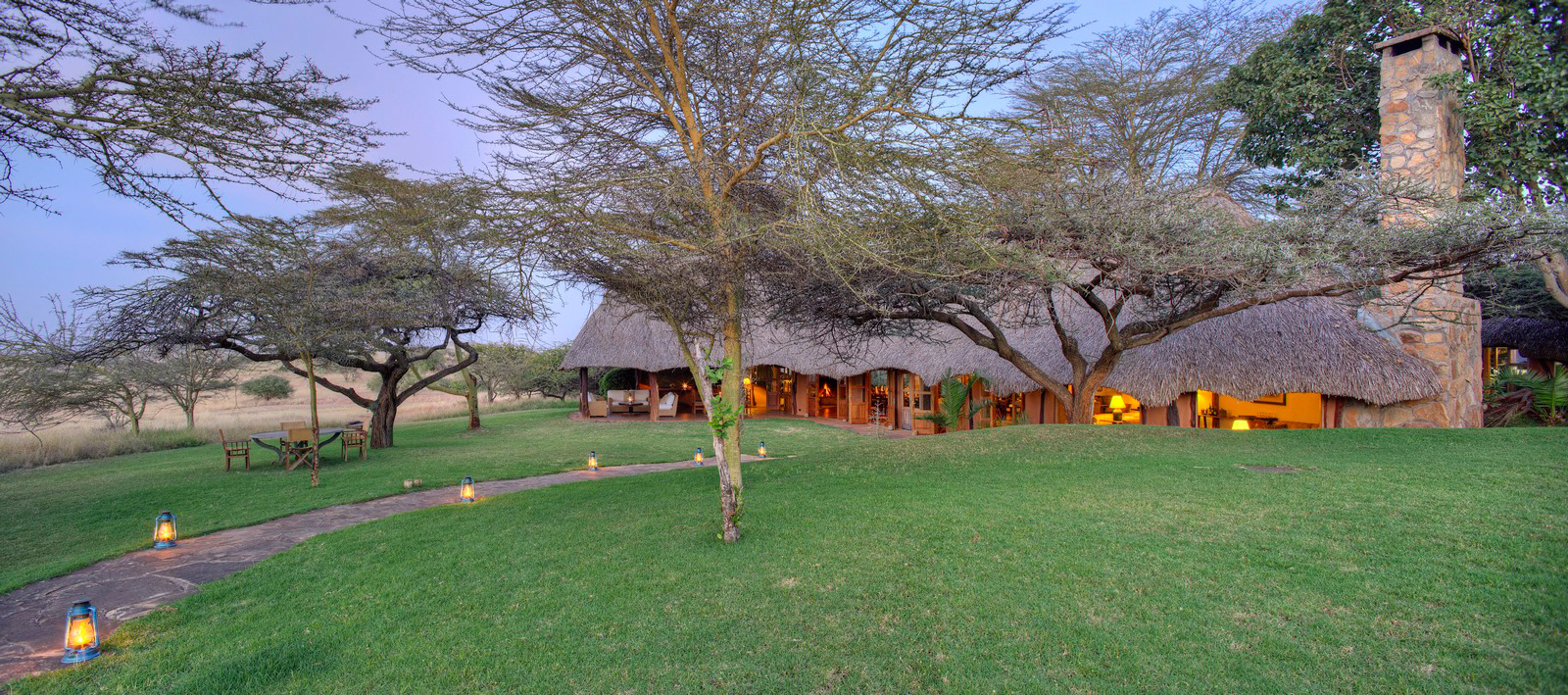
The fence around this conservancy has two gaps in it, left there on purpose. At Lewa they face north and west, and the elephants use them as they please, coming and going by a corridor of their own between the plains and the forests of Mount Kenya. The rhinos, for whom the fence went up, stay in. We have not found out how this was explained to the rhinos.
One of them had things explained to her in person. Samia, an orphaned black rhino, was reared by Anna Merz, whose savings helped pay for the fence, until she was six and went off to live as a rhino. After that she brought her own calf to call on Merz every day, as a grown daughter might. She died in 1995, aged ten. Everything on this ground is here because of what was being done to rhinos outside it.
The land inside runs from dry acacia country at about 1,400 metres up to the Ngare Ndare Forest, with the mountain about 40 kilometres to the south. It holds both kinds of rhino and the world's largest single population of Grevy's zebra, along with reticulated giraffe, gerenuk and beisa oryx, the animals of the dry north that a visitor to the Masai Mara does not see. Lewa is a working conservancy first and a place to stay second. Three nights is the least we would give it. The rhinos are what everyone looks for on the first drive. By the second it is the zebra's ears, and by the third morning nobody in the vehicle has noticed the fence for days, apart from the elephants, who know where the gaps are.