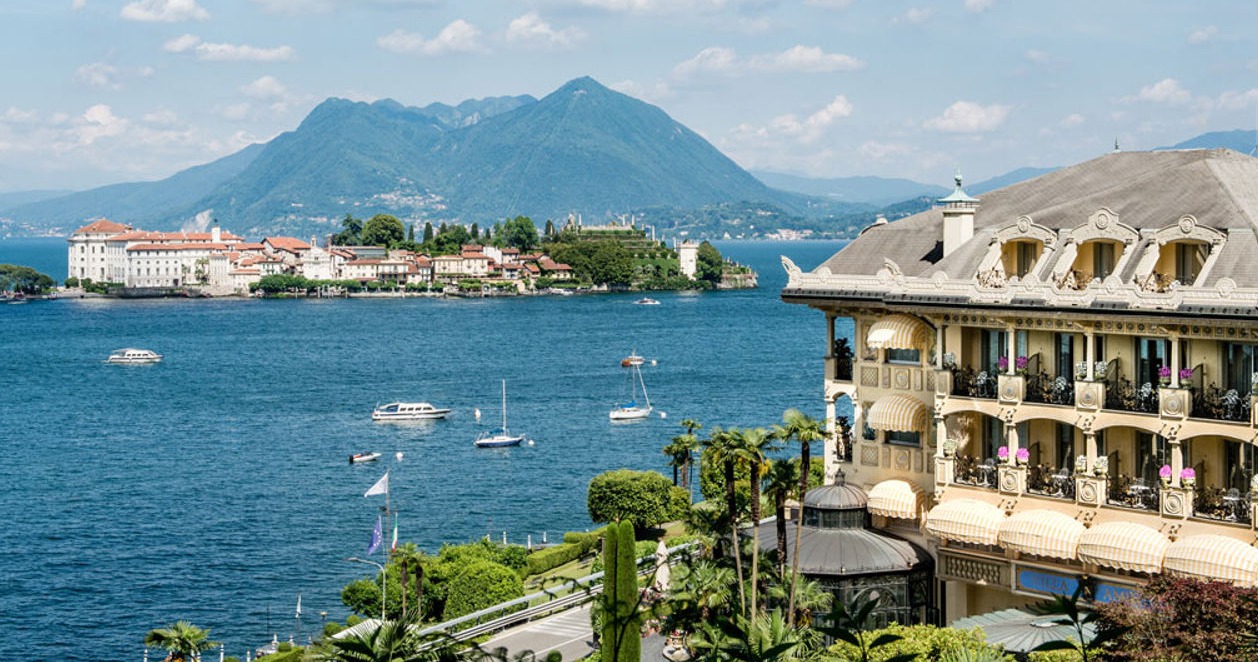
Lake Maggiore is the lakes' quiet aristocrat. Second in size only to Garda, it runs sixty-five kilometres between Piedmont and Lombardy and keeps going — its northern end is Swiss, finishing at Locarno under the Ticino mountains. The lake's centre of gravity, though, is the Borromean Gulf at Stresa, where one family shaped the scenery for four centuries: the Borromeo dynasty turned three islands into theatre — a baroque palace and ten terraced garden tiers on Isola Bella, a botanical park on Isola Madre, a fishing village turned lunch table on Isola dei Pescatori — and the lake has been receiving admirers ever since.
The Grand Tour put Stresa on its itinerary, the Simplon railway sealed it, and the visitors' book runs deep: Hemingway convalesced here in 1918 and later rowed his hero across this water to Switzerland in A Farewell to Arms, and in 1935 Europe's leaders convened the Stresa Conference in the Borromeo palace on Isola Bella. Maggiore's modern advantage is more practical — it is the easiest Italian lake to reach, fifty minutes from Milan Malpensa with a mainline station at Stresa — yet it stays calmer than Como or Garda: a lake of gardens, ferries, Belle Époque hotels and long views rather than crowds.