Destination, hotel name or experience

Boutique Hotels in Azores

Introducing Azores

The Azores are Europe's wildest frontier — nine volcanic islands scattered across the mid-Atlantic, a thousand miles from Lisbon and adrift in their own green silence. They rose from the ocean floor along the mid-Atlantic ridge, and it shows: crater lakes in extinct calderas, hot springs and fumaroles, black-rock coasts, hydrangea-lined roads and a perpetual, rain-fed green that has earned them the nickname of the Atlantic's garden. For somewhere this remote, they are remarkably easy to reach, with direct summer flights from Europe and North America into a landscape that feels at the edge of the map.


This is not a beach destination in the ordinary sense, and that is the point. People come to the Azores to walk the calderas, soak in geothermal pools, dive and whale-watch in some of the Atlantic's richest waters, and eat food cooked by the earth itself. São Miguel, the largest island, holds most of the drama and the few luxury hotels; Pico has its volcano and its UNESCO vineyards; Faial, Terceira, Flores and the rest reward the island-hopper. Slow, green and elemental, the Azores are for travellers who want nature at full volume and crowds nowhere in sight.

Browse on Map — Azores

Explore 1 exceptional boutique hotel hand-picked in Azores. Click a pin to discover each property.

Hotels in Azores

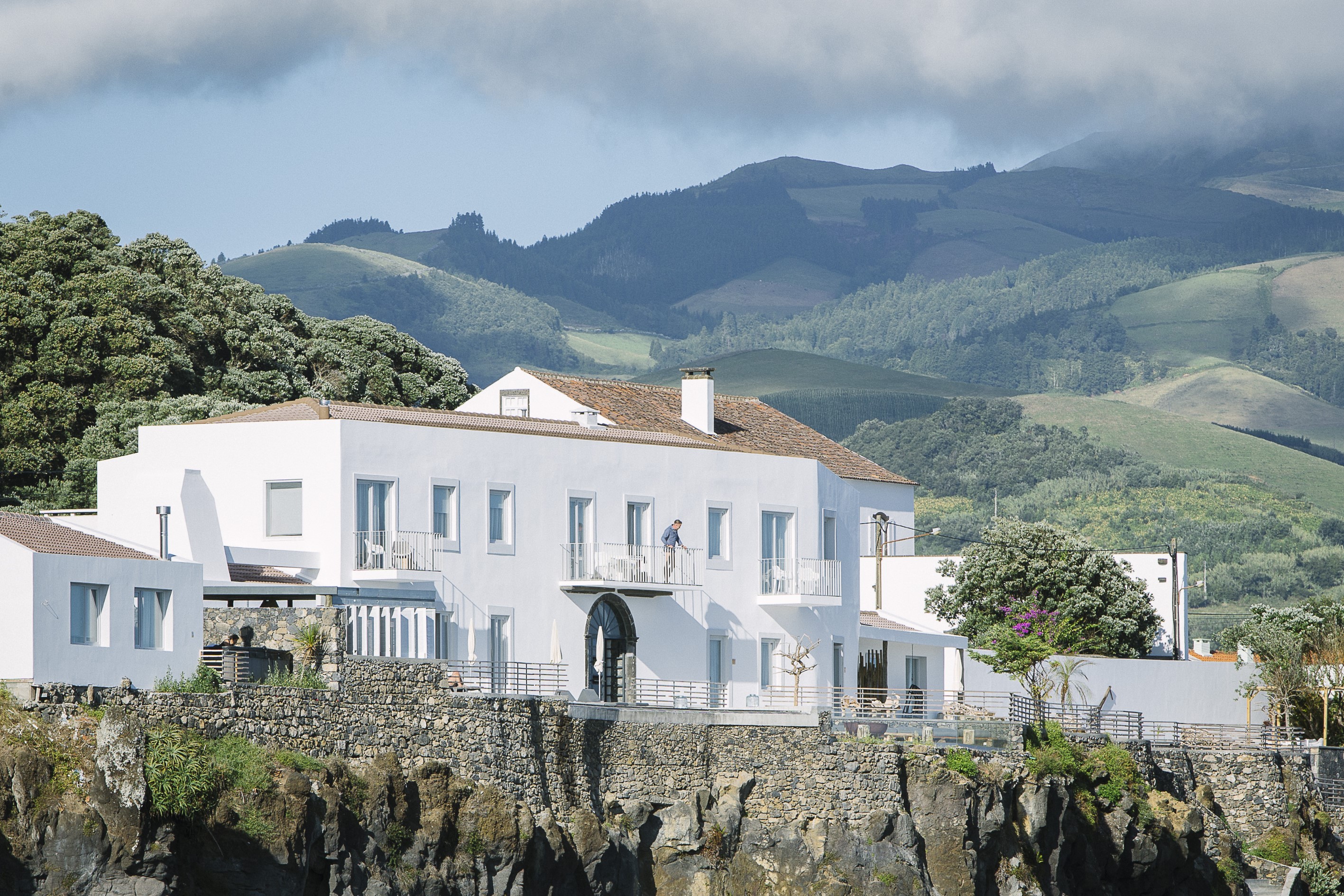
White Exclusive Suites & Villas

Portugal, Azores

White Exclusive Suites & Villas

A small clifftop design hotel on São Miguel in the Azores — nine sea-view suites and two villas above the Atlantic, an infinity pool and…

€154.20

Price for 1 night from

Azores Guide

The islands, and which to choose

Nine islands make up the Azores, in three groups, and most first visits begin with São Miguel — the largest and most varied, and the one with the international airport, the best hotels and the headline sights. Its crater lakes at Sete Cidades and Lagoa do Fogo, the geothermal valley of Furnas, the tea plantations and the whale-watching make it a full trip in itself, and for many travellers it is the whole of the Azores they see.


Beyond it, the archipelago opens up for the island-hopper. Pico is dominated by its namesake volcano, Portugal's highest peak, and ringed by the black-lava vineyards that hold UNESCO World Heritage status; neighbouring Faial has its yacht-harbour town of Horta and a moonscape volcanic caldera; Terceira holds the handsome UNESCO old town of Angra do Heroísmo. The remote western pair, Flores and Corvo, are the wildest and greenest of all. Short flights and ferries link them, but distances and weather mean island-hopping suits time and a flexible plan.

What to do

The Azores are made for the outdoors. The walking is the heart of it — trails around the crater lakes of Sete Cidades and Lagoa do Fogo, the climb up Pico, coastal paths and old irrigation routes through the green interior. The sea is the other half: the waters here are among the best in the Atlantic for whale and dolphin watching, with resident and migrating species year-round, and the diving and snorkelling — off the Vila Franca islet, a flooded crater near São Miguel — are exceptional.


Then there is the geothermal life of the islands. At Furnas, on São Miguel, cooks bury pots of cozido stew in the volcanically heated ground in the morning and dig them out, slow-cooked by the earth, at lunch; the same valley has hot springs and mineral pools to bathe in. The food beyond it is honest and island-bound — fresh Atlantic fish and shellfish, beef from green pastures, island cheeses, pineapples grown under glass, and the volcanic white wines of Pico. It is a destination of doing and eating rather than lying still.

When to go

The Azores have a mild, oceanic climate with no real extremes — and changeable weather year-round, four seasons in a day being the local truth. Summer, June to September, is the most reliable: the warmest, driest months, the best for hiking, swimming and boat trips, and the peak of the whale-watching and the island festivals, though even then a shower is never far off. Spring and autumn are green, quiet and often lovely, with the hydrangeas at their height around June. Winter is mild but wet and windy, the sea dramatic and the islands at their emptiest. Pack for rain whenever you come; the green is rain-made, and the weather is part of the place rather than a flaw in it.

Frequently Asked Questions about Azores

Icon of Here for You
Here for You
Icon of Free Extras on Arrival
Free Extras on Arrival
Icon of Best Price Guarantee
Best Price Guarantee
Icon of Personally Approved Hotels
Personally Approved Hotels
Icon of Exclusive Offers
Exclusive Offers
Icon of New Finds Every Month
New Finds Every Month