


Walking the layers of history
The single best thing to do in Chester is also free: walk the walls. The most complete circuit of Roman and medieval city walls in Britain runs for about two miles around the old town, passing most of the major sights and giving long views over the rooftops, the River Dee and, on a clear day, the Welsh hills. The natural starting point is the Eastgate Clock, the ornate Victorian clock — built for Queen Victoria's Diamond Jubilee and said to be the most photographed in England after Big Ben — that stands where the Roman fortress once had its gate.
Within the walls, the Rows are Chester's great curiosity: 700-year-old galleried walkways that stack a second tier of shops above the street, a medieval arrangement found nowhere else in the world, now full of independent boutiques and cafés. Chester Cathedral, a former abbey founded in 1093, is worth a proper visit — the medieval choir stalls and stained glass are exceptional, and the adventurous can take the tower tour up through its roof spaces for the view. Just outside the walls lie the Roman Amphitheatre, the largest uncovered in Britain, and the River Dee, where the riverside promenade of The Groves and a rowing boat make for a gentle afternoon. Grosvenor Park, with its summer open-air theatre, is a short stroll on.
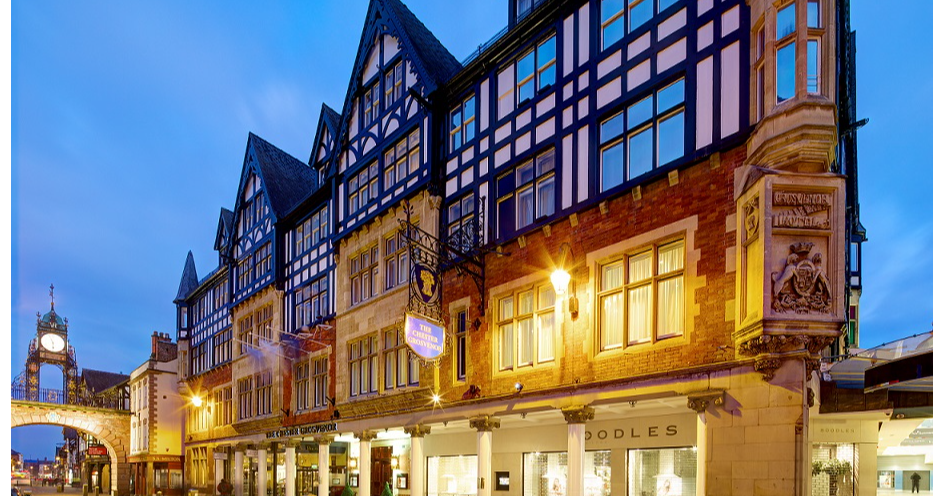
Beyond the centre, two big draws are worth a second day. Chester Zoo, a couple of miles north, is among Britain's most visited attractions and a serious conservation institution; and the city's position on the Welsh border makes it a fine base for North Wales, its coast and mountains. For where to stay, the club's choice could not be more central: The Chester Grosvenor, the city's landmark grand hotel, stands on the Eastgate beside the clock and the steps up to the walls, with the Rows, cathedral and river all a short walk away.


