

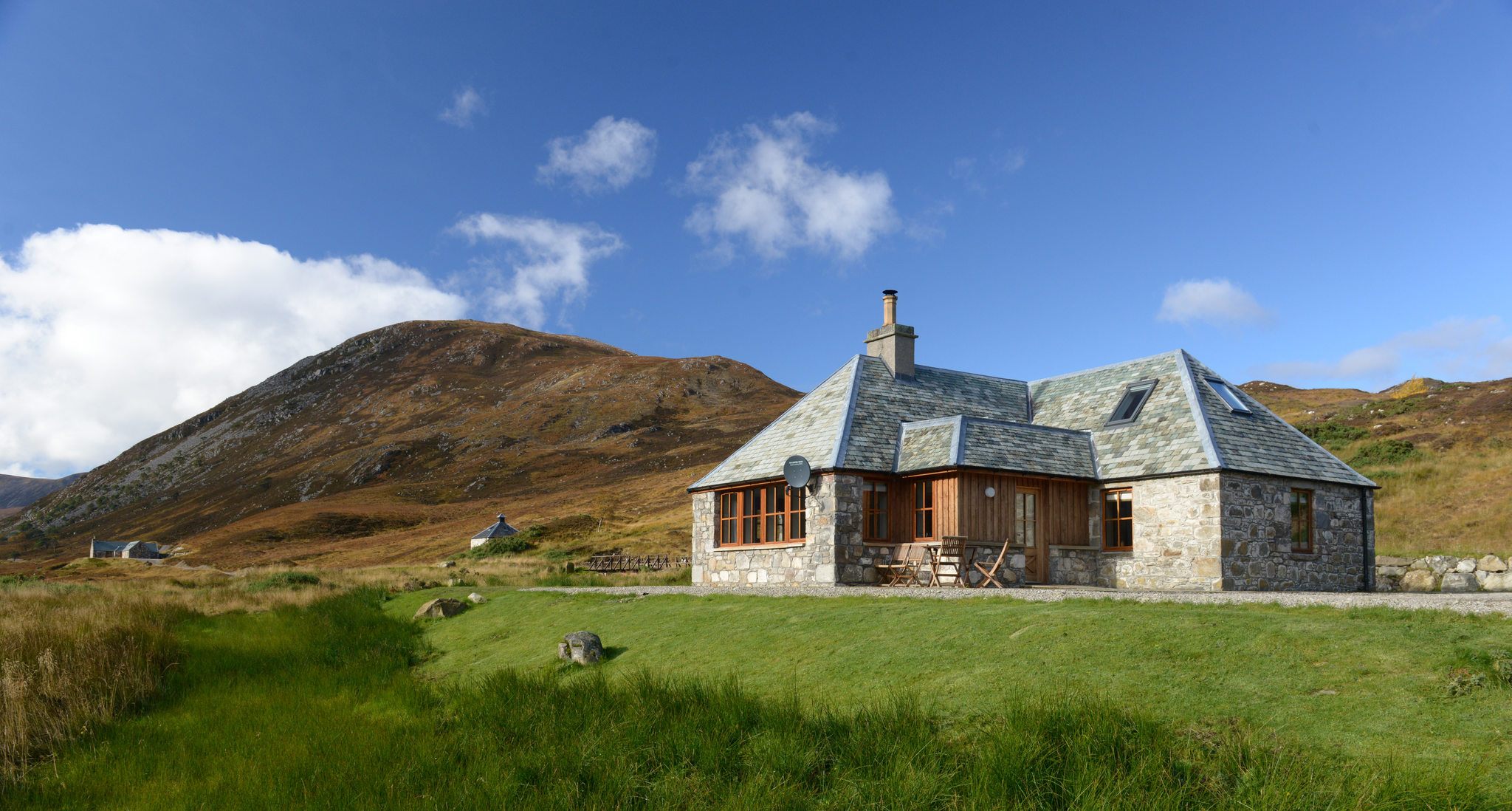

Two coasts, ancient rock and a road between them
Most visitors meet Sutherland through the North Coast 500, the touring route that loops the northern Highlands, and the county supplies its most dramatic miles. The west is the showstopper: the lunar peaks of Assynt — Suilven, Stac Pollaidh, Quinag — rising in isolation from the moor, and the North West Highlands Geopark, where some of the oldest rock on earth meets the sea. Lochinver and Kylesku make good bases, the latter famed for the seafood at its old ferry inn, and white-sand bays like Achmelvich and Clachtoll lie just off the road.
The north coast is wilder still, running out to Durness, the Smoo Cave and remote Cape Wrath, the very corner of mainland Britain, by way of Balnakeil and some of the emptiest beaches in the country. The gentler east coast, along the Dornoch Firth, is where the towns cluster: handsome Dornoch, with its thirteenth-century cathedral and the championship links of Royal Dornoch, where golf has been played since the seventeenth century; Brora and Golspie; and Dunrobin Castle, the fairy-turreted seat of the Dukes of Sutherland, remodelled by Sir Charles Barry, the architect of the Houses of Parliament. Clynelish and other distilleries repay a detour, and the Lochinver larder is worth the drive for its pies alone.
This is, above all, walking, climbing and wildlife country: Munros like Ben Hope, Britain's most northerly, and Ben Klibreck, golden eagles and red deer, salmon rivers and cold-water lochs, and long-distance trails for those with the legs. It repays patience and a full tank, and it is best not rushed — this is some of the least crowded country in Britain, and the single-track roads set their own gentle pace. For where to stay, the club's choice sits deep inland in a glen of its own: Alladale Wilderness Reserve, a 23,000-acre rewilding estate with exclusive-use catered lodges, where the long work of bringing the forest and its wildlife back is slowly reversing the very emptiness the Clearances left behind.


