

€346.80 for 1 Night





24/7 Support
 Looking for help choosing or for a property we don't list? Message our Private Rates Concierge on WhatsApp for member rates and insider knowledge on the right stay
Château Bouffémont
€346.80/ Night
24/7 Support
Looking for help choosing or for a property we don't list? Message our Private Rates Concierge on WhatsApp for member rates and insider knowledge on the right stay
1860 Beaux-Arts seat of the Empain family (the dynasty that built the Paris Métro), restored 2012, 20 min from CDG. Exclusive-hire for 27 across nine suites
Collection:
Need To Know
- 2,000 m² across four floors with lift access throughout; sleeps up to 27 across nine suites, with five reception halls and 5 hectares of grounds (3 hectares of formal gardens). 80-vehicle on-site parking
- Whole-property exclusive hire only — minimum three-night stay
- Service team: General Manager Sarp Gogebakan (Institut Supérieur de Marketing du Luxe alumnus), live-in butler and housekeeper, maîtres d'hôtels, cleaning and maintenance staff. Private chef arrangeable for the entire stay; kitchen access is to the guest kitchen rather than the professional kitchen. 24-hour concierge and chauffeur on request
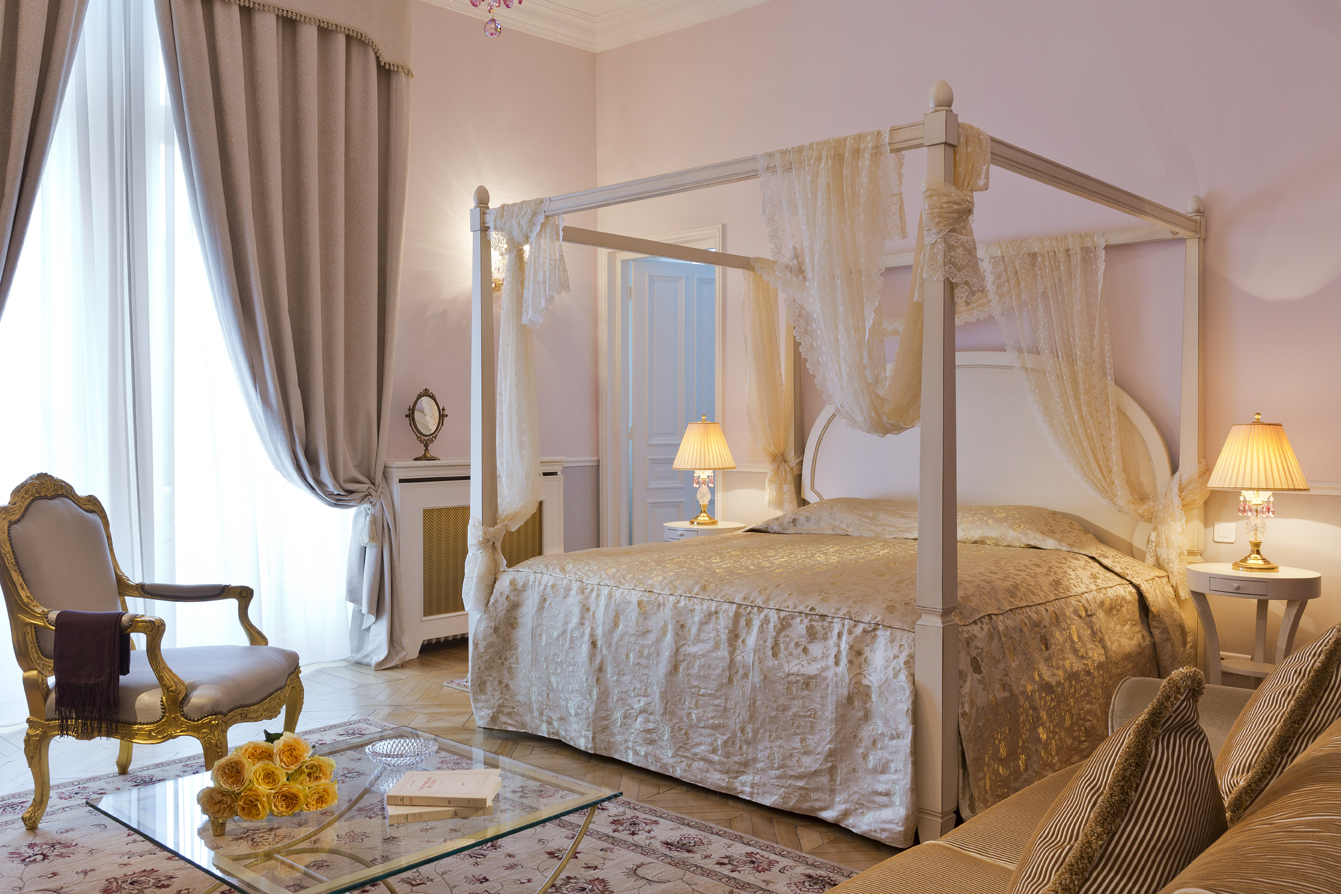
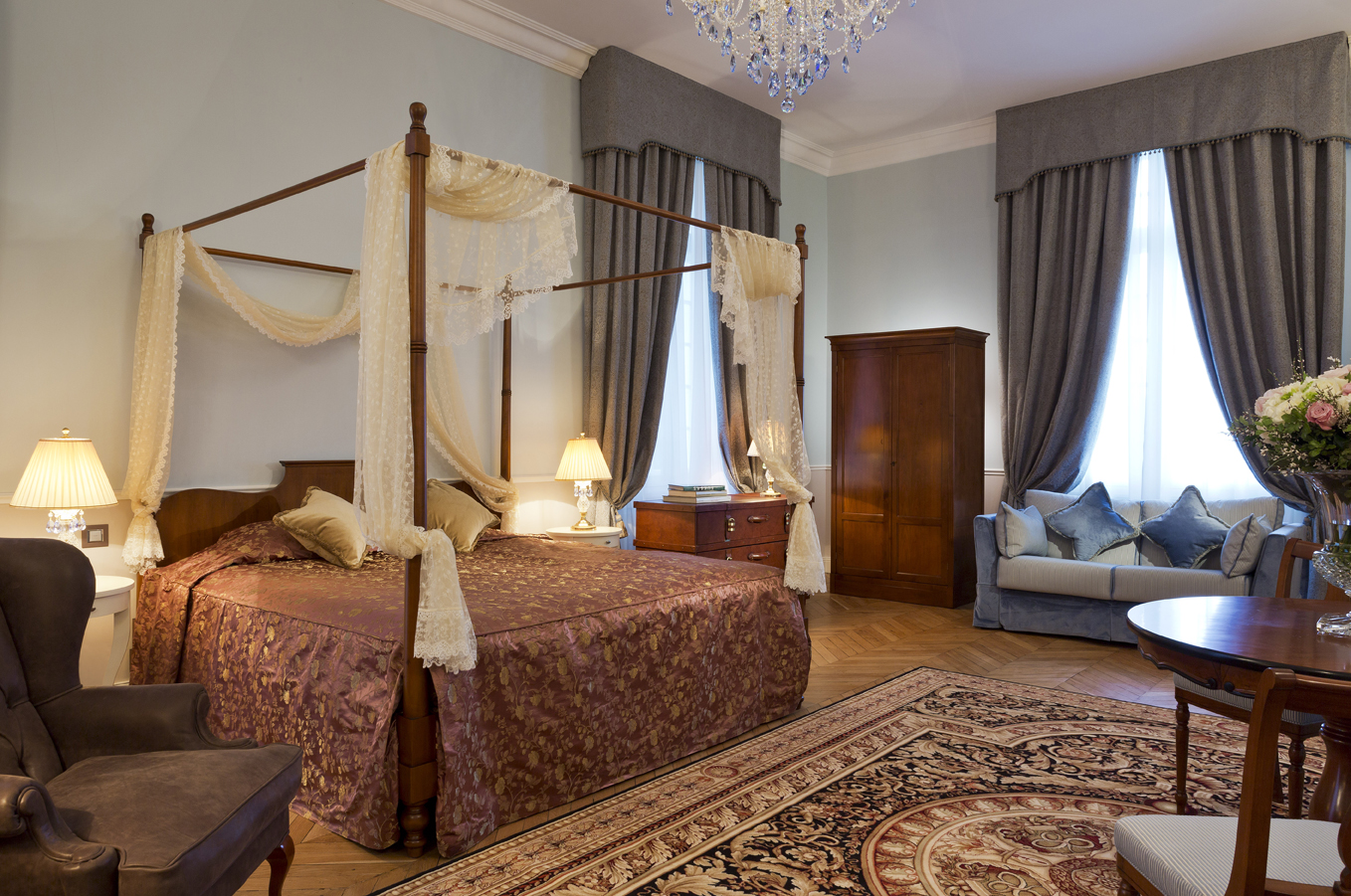
- Master Suite (Room 4, 70 m²) on the second floor: emperor bed, fireplace, full bathroom with shower and bathtub, private terrace with Montmorency Forest views. Central Suite (Room 5, 45 m²): emperor bed, garden and golf course view. Seven further suites and rooms from 34-47 m² distributed across the first and second floors, all en-suite, configurable for emperor / queen / twin beds
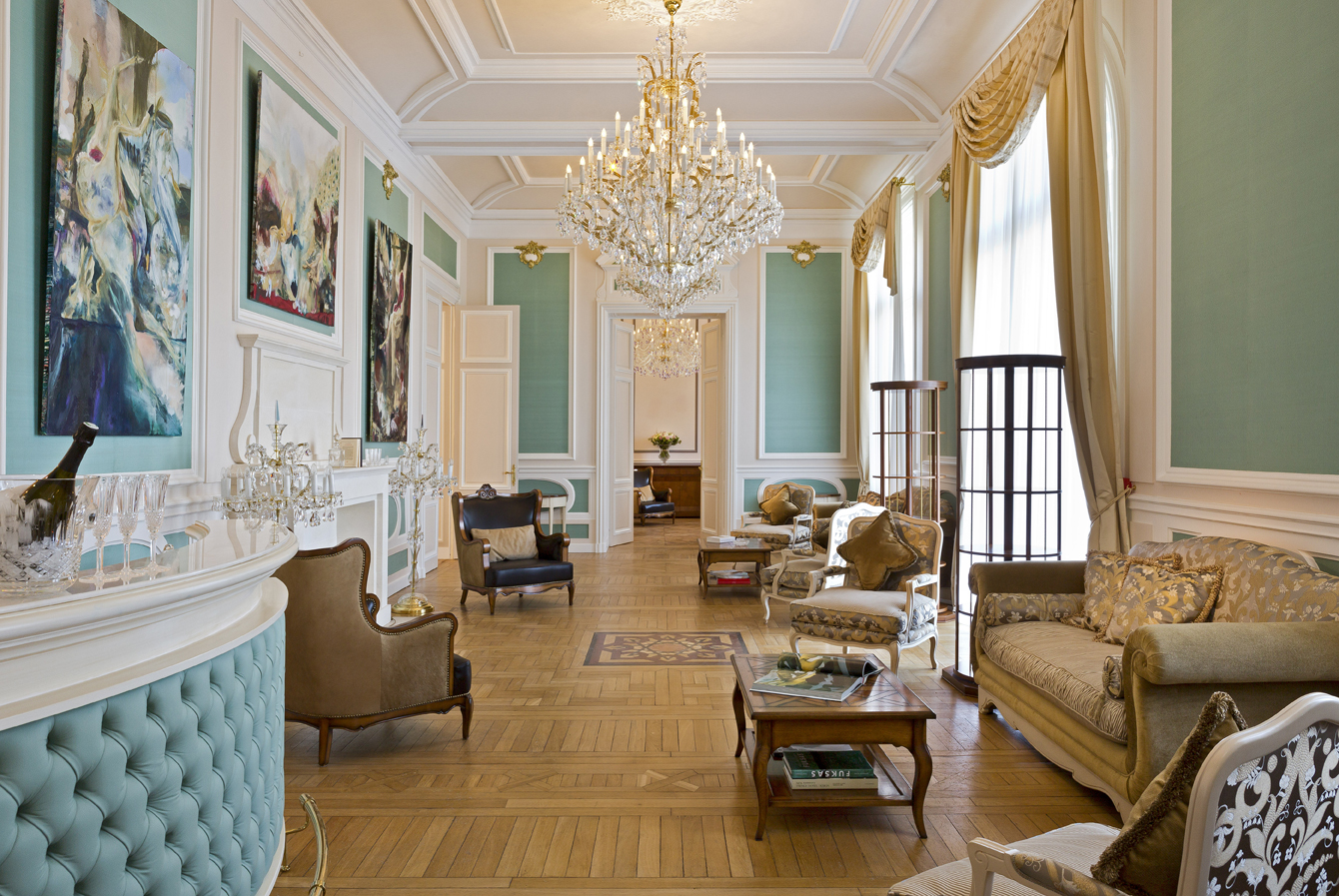
- Five reception halls totalling 320 m²: Salon des Anges (70 m², wooden bar), Dandy Lounge (52 m², Elisabeth Wela murals, 1920s aesthetic), Grand Salon (64 m², golf course view), Salon du Baron (54 m², dining room with fireplace), Salon de la Marquise (54 m², library)
- Two kitchens — 54 m² professional + 27 m² guest kitchen — and 170 m² outdoor terrace overlooking the gardens and forest
- Wedding capacity: up to 150 seated dinner / 200 cocktail; events scaling across the reception halls, terrace and grounds
- VIP guest access to the neighbouring Paris International Golf Club (18 holes, Jack Nicklaus design)
- Wi-Fi throughout, flatscreens in all rooms, bathrobes and slippers, bath products. Conference facilities with broadband; key areas accessibility-equipped
- Restored 2012 by Italian architects Augusto Busnelli and Marco Allievi, who designed bespoke furniture throughout while honouring the original 1860 Beaux-Arts structure
- Child-friendly; pet-friendly by arrangement
Check in - Check out
Check in from 14:00; check out before 12:00.
We Love
- The Baron Empain industrial heritage — the Belgian-born industrialist whose Compagnie du Chemin de Fer Métropolitain de Paris built and operated the Paris Métro from 1900 to 1945 made his French country seat at Bouffémont.
- The 1860 Beaux-Arts shell — built by the Vallée family under Napoleon III, restored 2012 by Italian architects Augusto Busnelli and Marco Allievi, who designed bespoke furniture throughout while honouring the classical structure.
- Five named reception halls — Salon des Anges (70 m², wooden bar), Dandy Lounge (52 m², 1920s aesthetic with Elisabeth Wela murals), Grand Salon (64 m²), Salon du Baron (54 m², fireplace) and Salon de la Marquise (54 m², library).
- The Paris International Golf Club view — Jack Nicklaus-designed 18-hole course directly visible from the property, with VIP guest access negotiated through the chateau.
- The 20-minute CDG and 21-minute Le Bourget proximity — the most accessible whole-property château rental to international air arrivals in the Paris orbit, with the private-jet hub closer than CDG by road.
- The cultural arc — Auvers-sur-Oise and Van Gogh's final home twenty minutes by car; Château d'Écouen and the National Museum of the Renaissance fifteen; Royaumont Abbey thirty; Chantilly's Musée Condé forty-five.
Key Features

Book Your Stay at Château Bouffémont
€346.80 for 1 Night
Location
Address
8 Rue Léon Giraudeau, 95570 Bouffémont, France
Travel Info
20 min by car from Charles de Gaulle (CDG, 26 km); 21 min from Le Bourget (LBG, 28 km) for private jet arrivals; 30 min from central Paris (30 km). Train: Transilien H from Gare du Nord to Bouffémont-Moiselles (~20 min) then short transfer. 80-vehicle on-site parking. Edge of Montmorency Forest.
Nearby Places
20 km from Charles De Gaulle airport 30km from Paris
250m
Last Updated: 2026-05-26

Expert Review
Origins
Château Bouffémont was built in 1860 under Napoleon III by the Vallée family, in the Beaux-Arts architectural style that defined French country-house design of the Second Empire. After a brief period in the hands of the Marquise de Preignes, the property was acquired by Baron Édouard Louis Joseph Empain, the Belgian-born industrialist who founded the Compagnie du Chemin de Fer Métropolitain de Paris — the company that built and operated the Paris Métro from 1900 until 1945. Major general and aide-de-camp to King Leopold of Belgium, knighted in 1907, Empain made Bouffémont the family seat through the Belle Époque and the interwar years. He built the property's monumental staircase as a structural addition in the early 20th century; three generations of Empains lived at the chateau for over half a century, with the surrounding village providing the property's manual labour and farm staff. The original estate ran to 250 hectares at the heart of the Montmorency Forest. After the Baron's death in 1946, his wife managed the property; the family eventually sold. The property was reacquired by current private owners in 2006 and underwent a full restoration completed in 2012 by Italian architects Augusto Busnelli and Marco Allievi, who reimagined the interiors and designed bespoke furniture for the chateau while preserving the Beaux-Arts shell.
Top Secret
The Dandy Lounge — Bouffémont's most unexpected room. The Busnelli-Allievi restoration paired Chesterfield sofas, unfinished industrial wooden furniture and avant-garde objects with murals by the painter Elisabeth Wela to summon the modernist effervescence of 1920s and 30s Paris in a 19th-century country chateau. Below the monumental staircase, the room functions as a late-night lounge or games room without losing the property's overall registers.
The Review
Bouffémont sits in the Val-d'Oise department of Île-de-France at the southern edge of the Montmorency Forest, 30 kilometres directly north of central Paris and 20 minutes by car from Charles de Gaulle airport. The position is unusually well-resolved for a French château rental at this scale: rural enough that the only sound from the terrace is birdsong from the forest and the wind through the gardens; close enough to Paris and to the international air gateways that arrival and departure logistics carry no friction. The Le Bourget private-jet hub is 21 minutes away — closer than CDG by car — making the property a natural arrival point for fly-in events.
The chateau itself was built in 1860 under Napoleon III by the Vallée family, in the Beaux-Arts style that French country-house architecture adopted through the Second Empire — symmetrical façade, monumental scale relative to the village, formal gardens cascading toward the forest. The property's most consequential occupant was Baron Edouard Empain, the Belgian-born industrialist whose Compagnie du Chemin de Fer Métropolitain de Paris built and operated the Paris Métro from the network's opening in 1900 through to the post-war nationalisation in 1945. The Empains lived at Bouffémont through three generations and over half a century; the entrance hall's monumental staircase, added by the Baron himself in the early twentieth century, anchors the lobby today.
The 2012 restoration was led by Italian architects Augusto Busnelli and Marco Allievi, who reimagined the interiors floor by floor without disturbing the Beaux-Arts structure. The architects designed bespoke furniture for the chateau and atmospheric lighting throughout; crystal chandeliers and original wood paneling were preserved or restored. The contemporary register sits comfortably alongside the historic — Tiffany-blue walls in one of the ground-floor reception halls, the modernist Dandy Lounge below the staircase with Chesterfield sofas and murals by painter Elisabeth Wela, against the original Belle Époque framework on the ground and second floors.
The 2,000 m² distributes across four floors with lift access throughout. The garden level holds the Salon des Anges (70 m² with an elegant wooden bar) and the Dandy Lounge (52 m² with the Wela murals and 1920s aesthetic). The ground level holds the three principal day rooms: the Grand Salon (64 m² with a view to the golf course), the Salon du Baron (54 m² dining room next to a large fireplace), and the Salon de la Marquise (54 m² with a library that handles reading, study or impromptu chess), plus the 27 m² Reception Hall with its grand fireplace as the entrance. The first and second floors hold the nine bedrooms — the 70 m² Master Suite with fireplace and forest-view private terrace on the second floor, the 45 m² Central Suite with golf-course views, and seven further rooms from 34-47 m², all en-suite, each configurable for emperor / queen / twin beds depending on the party.
Service runs through general manager Sarp Gogebakan, who trained at the Cartier Chair-founded Institut Supérieur de Marketing du Luxe in Paris. The team includes a live-in butler and housekeeper, maîtres d'hôtels, cleaning and maintenance staff, with a private chef arrangeable for the entire stay (no self-catering — kitchen access is to a 27 m² guest kitchen rather than the 54 m² professional kitchen the chef uses). Concierge, chauffeur and round-the-clock guardianship operate 24 hours. Sarp also runs the property's active media programme, the "Château Bouffémont Live" interview series featuring wedding-industry vendors — useful operational signal of the property's wedding-and-events orientation.
The grounds are 5 hectares of greenery across three formal garden levels, opening to the surrounding 15 hectares of private forest. The Paris International Golf Club (18 holes, Jack Nicklaus design) sits directly adjacent, with VIP guest access negotiated through the chateau. Tennis, horse riding (Room 1's private terrace overlooks the Private Horse Club next door), cycling through the forest, and a goat farm nearby for chèvre-making workshops complete the activity inventory.
Worth the journey for: wedding parties of 30 to 150 wanting whole-property exclusive hire within 20 minutes of CDG and Le Bourget; multi-generational family groups using the property's nine-suite capacity for milestone reunions; corporate retreats and brand events handled by the property's wedding-grade infrastructure with the same Beaux-Arts theatricality. Editorial/photographic shoots — the property's Tiffany-blue reception hall, the Dandy Lounge murals, and the Grand Salon's golf-course view are recurrent settings in the fashion and wedding press. Less so for: visitors wanting a hotel-style stay with public dining and bar service (this is a private residence with staff, not a hotel — meals and bar are private to the booking group); travellers prioritising central-Paris culture as the primary draw (the property is rural by intent, and the 30-minute Paris commute is functional but not casual).


