

€346.80 for 1 Night





24/7 Support
 Looking for help choosing or for a property we don't list? Message our Private Rates Concierge on WhatsApp for member rates and insider knowledge on the right stay
€346.80/ Night
24/7 Support
Looking for help choosing or for a property we don't list? Message our Private Rates Concierge on WhatsApp for member rates and insider knowledge on the right stay
Château Diter — a Florentine-Renaissance estate on seven hectares above Grasse, with EBTS-prize gardens, two helipads and the Côte d'Azur close.
Collection:
Need To Know
- A Renaissance-style estate sleeping up to 36 guests across the chateau's suites, on seven hectares of grounds above the Saint-Jacques neighbourhood of Grasse, with olive groves, vineyards and themed gardens cascading toward Mediterranean panorama
- Whole-property exclusive hire — the chateau is reserved for one party at a time, with the gardens, pools, and reception infrastructure entirely private
- The gardens won the EBTS International Association Special Jury Prize in 2013 — themed planting across multiple levels with fountains, ornamental ponds, Roman columns, antique statues, an orchard and a productive olive grove yielding AOC olive oil
- Two private helipads on the property for Cannes / Nice / Monaco / Saint-Tropez transfers
- Reception infrastructure scales from intimate to substantial — multiple salons, a large cloister capable of seating 600 for events, palatial dining rooms, library with a 15th-century antique fireplace at the entrance
- Decorative inventory includes Venetian chandeliers, Italian-painter frescoes, antique columns sourced from Tuscany, salvaged stone arches and entrances, walk-in closets the scale of small apartments, and marble bathrooms throughout
- Architectural set pieces: a domed templion, a cloister, a colonnaded gallery, a Moorish pavilion, a turret, a dovecote, and a wine cellar with tasting room
- Heated outdoor swimming pool under the bell tower's evening lighting, plus ornamental water features throughout the gardens
- Vineyard producing wine on the property; orchard and olive grove producing AOC olive oil
- Full air-conditioning, indoor elevator, computer-controlled security system, closed internal garage, exterior parking
- Library, TV room, professional kitchen overlooking the Italian garden
- Featured as Villa Carmella in Sky Atlantic's "Riviera" television series (Julia Stiles, Lena Olin, Anthony LaPaglia) — used as a filming location for fashion shoots, music videos and editorial photography
- Wedding and event capacity: up to 600 in the cloister; smaller seated dinners and corporate events scale across the reception halls and terraces
- Child-friendly; pet-friendly by arrangement
Check in - Check out
Check in from 14:00; check out before 12:00.
We Love
- The Florentine-Renaissance build — Château Diter is a contemporary homage to the Tuscan palazzo tradition, with old stones, antique columns and chimneys sourced from Italy, Italian painters delivering the frescoes, salvaged stone arches throughout.
- The EBTS-prize gardens — themed plantings across multiple levels with Roman columns, fountains, antique statues and ornamental ponds. The 2013 Special Jury Prize from the European Boxwood and Topiary Society acknowledges the landscape achievement.
- The geographic position — Diter sits at the centre of the Côte d'Azur. Cannes 25 min south, Monaco 50 min east, Saint-Tropez under 90 min west, Nice 30 min east. Few Riviera estates command the full coast in this configuration.
- The two helipads — direct helicopter arrival from Nice Côte d'Azur airport, Cannes-Mandelieu airport, or the Mediterranean ports. The transfer eliminates the 30-50 minute road journey that dominates Côte d'Azur ground logistics in summer.
- The "Riviera" filming credential — used as Villa Carmella, the Clios family home, across all three seasons of Sky Atlantic's flagship drama (2017-2020). Recognisable to viewers who choose to stay where Julia Stiles and Lena Olin worked.
- The cloister and reception scale — Diter's cloister handles 600 guests, with the gardens, terraces and salons absorbing the wider movement of a substantial event. The infrastructure runs to wedding-grade scale with rare design ambition.
Key Features



Book Your Stay at Château Diter
€346.80 for 1 Night
Location
Address
500 Route de Pégomas, 06130 Grasse, France.
Travel Info
Two private helipads on-site for Cannes / Nice / Monaco / Saint-Tropez transfers. Nice Côte d'Azur (NCE) 35 km / 35 min by car; Cannes-Mandelieu (CEQ) 25 min; Cannes train station 17 km / 30 min; Monaco 50 min; Saint-Tropez approximately 90 min. Closed internal garage and external parking on-site.
Nearby Places
There are 2 x private helipads onsite for private travel. Nice Cote d’Azur (NCE) airport is 35km away (35 minutes’ drive), Cannes train station is 17km away (approx. 30 minutes’ drive).
250m
Last Updated: 2026-05-19

Expert Review
Origins
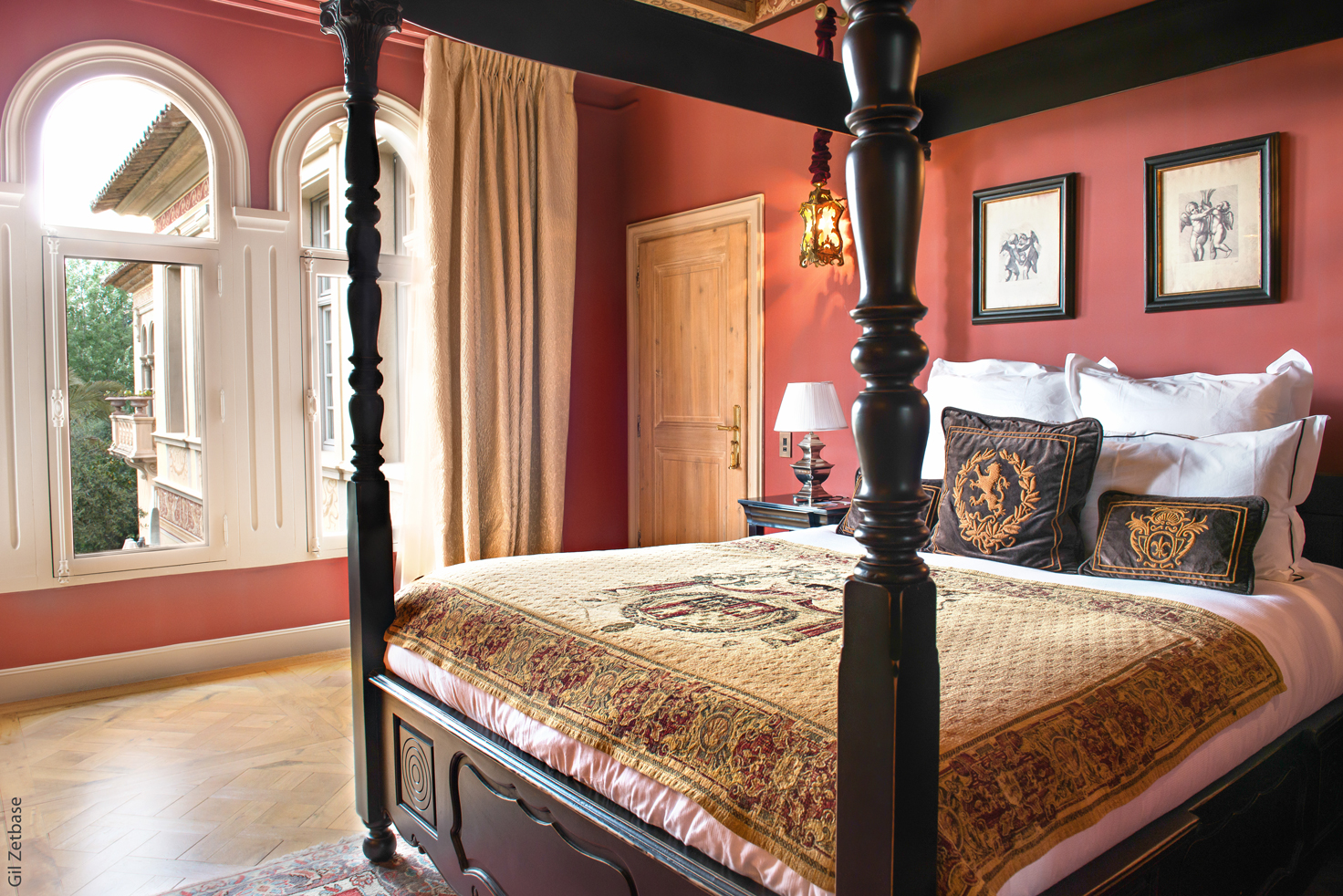
Château Diter draws its architectural register from the Florentine country palazzo — the Tuscan tradition that built private estates across the Italian Renaissance, with rusticated stone, monumental staircases, frescoed interiors and gardens cascading down hillsides toward distant horizons. The interior follows in this tradition: old stones, antique columns and large chimneys were sourced from Tuscany; Italian painters delivered the frescoes; Renaissance-style furniture arranges across rooms separated by salvaged stone entrances; rooms open one to the next through looping arches and double-height ceilings adorned with carvings and paintings. The position above Grasse — at the edge of the Couloubrier locality, in the Saint-Jacques neighbourhood at the border with the village of Auribeau-sur-Siagne — places the property in a natural amphitheatre of olive groves and cypresses, with terraced gardens descending toward a Mediterranean horizon visible on clear days. The architectural ambition is unusual on the Côte d'Azur, which more typically reads in the Provençal vernacular or in contemporary villa modernism. Diter sits firmly in the Italian palazzo tradition, closer in feeling to a Florentine country estate than a French Riviera villa.
Top Secret
The library's 15th-century antique fireplace at the room's threshold — large enough to walk into, salvaged from elsewhere and installed as the library's anchor. The room itself functions as a transitional space between the chateau's living salons and the more theatrical reception halls — the kind of room that handles morning reading, afternoon study, or evening conversation depending on the party. Few estates on the Côte d'Azur surface a single decorative element of this historical specificity.
The Review
Grasse sits in the hills behind Cannes in the Alpes-Maritimes department of the Côte d'Azur, the perfume capital of France since the seventeenth century, with Grasse-trained noses still composing for the major Parisian houses today. The town's elevation — 325 metres above the Mediterranean — places it consistently above the coastal humidity, with cleaner air, better light and a longer flowering season than the coast below. The Saint-Jacques neighbourhood sits on the western edge of the commune, in the Couloubrier locality, where olive trees and cypresses give way to terraced gardens and Mediterranean horizon views toward the sea. Château Diter occupies a hillside position in this neighbourhood, on seven hectares of private grounds bordering the village of Auribeau-sur-Siagne.
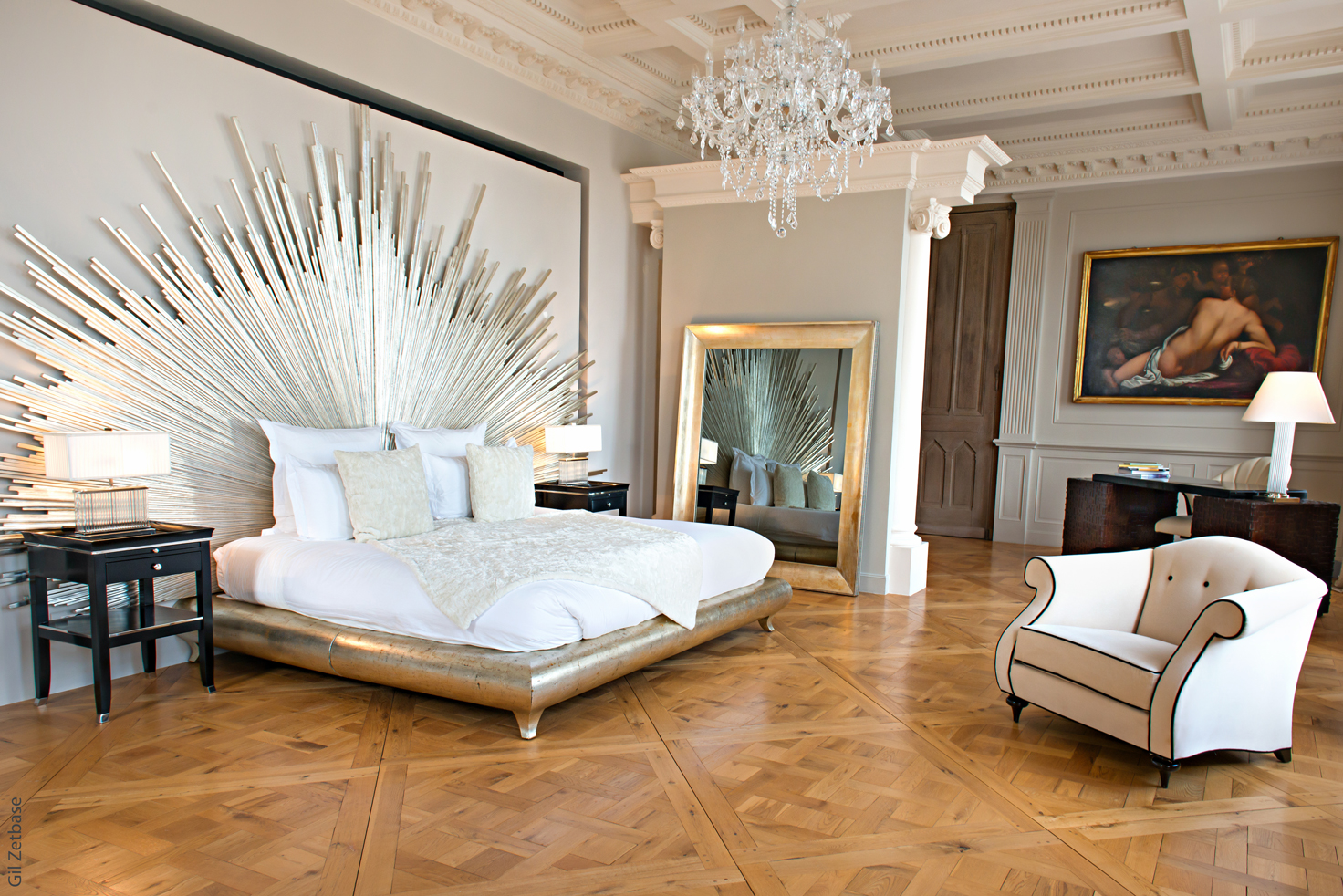
The estate is a Florentine-Renaissance composition — the Italian palazzo tradition transposed to a Provençal hillside, with the architectural elements sourced and arranged to summon the Tuscan country estate rather than the Riviera villa. Old stones, antique columns and large chimneys came from Italy; Italian painters delivered the frescoes that anchor the principal reception rooms; Renaissance-style furniture and salvaged stone arches and entrances run throughout the interior. Venetian chandeliers and crystal lighting punctuate the ceilings; marble bathrooms in varying scales of opulence punctuate the suites; walk-in closets in the principal suites scale to the size of small apartments.
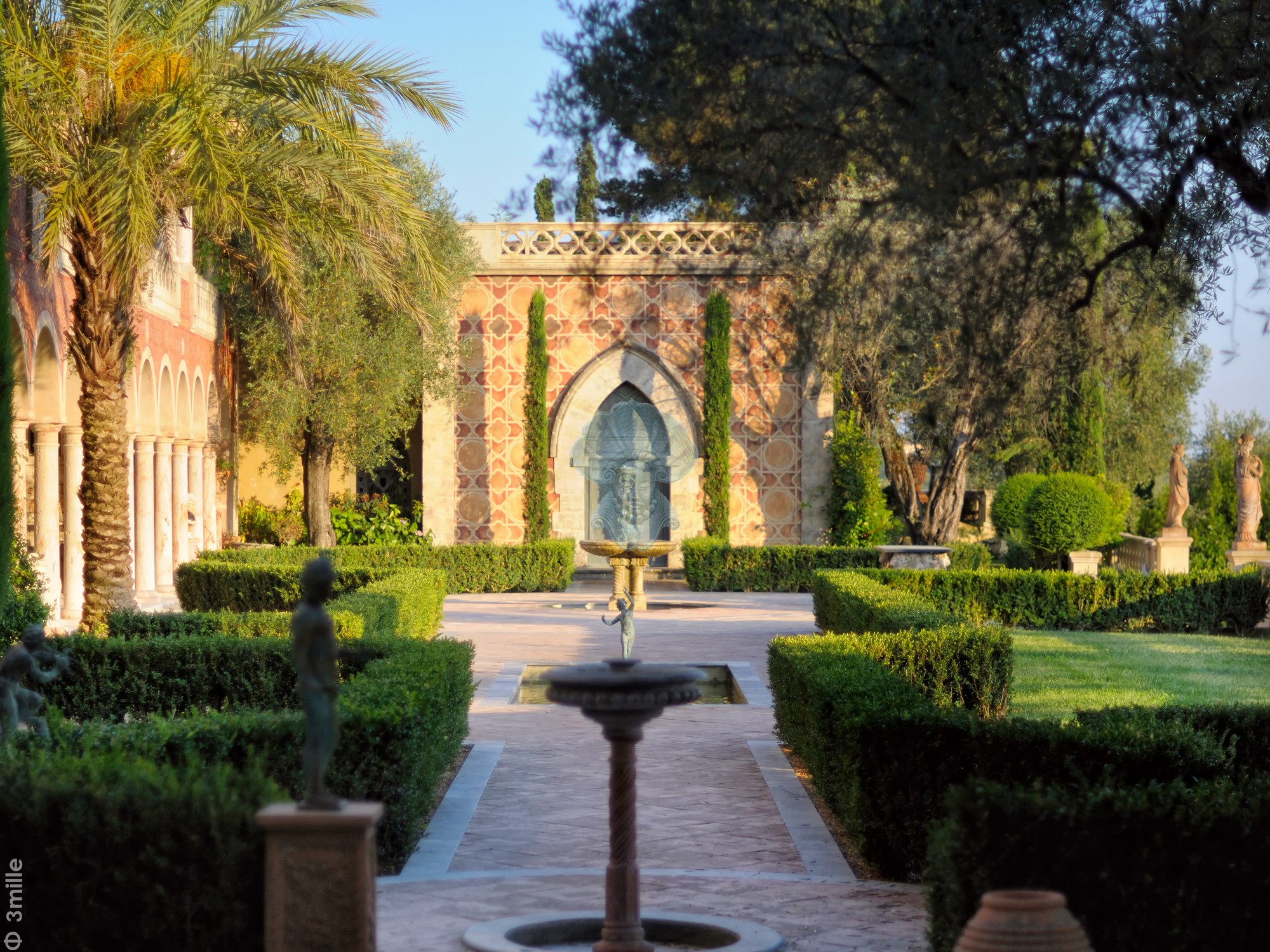
The gardens are the property's most decorated achievement. The European Boxwood and Topiary Society's International Association awarded the gardens its 2013 Special Jury Prize — a landscape recognition that distinguishes the planted environment from the architectural shell. The gardens distribute across multiple levels, themed by section and connected by terraces, with Roman columns, fountains, ornamental ponds, antique statues and water features arranged across the descent. An olive grove producing AOC olive oil and a vineyard producing house wine sit on the property, with an orchard delivering seasonal fruit. The garden's signature evening view is the heated outdoor swimming pool under the bell tower's lighting, framed by the chateau silhouette and the protected hillside beyond.
The interior architecture is composed in scenes. The principal reception hall opens to comfortable lounges and a library; the library leads to the dining rooms; a salon of curiosities holds decorative pieces collected by the property's owners; a TV room and a wine cellar with tasting room sit below the principal floor. A cloister capable of seating 600 guests handles substantial events; a colonnaded gallery runs alongside the formal gardens; architectural follies — a Moorish pavilion, a turret, a dovecote, a domed templion — distribute across the grounds as both decorative set pieces and intimate event spaces. Two private helipads sit on the property for Cannes, Nice, Monaco or Saint-Tropez transfers. A closed internal garage holds vehicles; external parking handles larger arrivals.
The estate has been used as a filming location for the Sky Atlantic drama series "Riviera" (2017-2020), where it served as Villa Carmella, the Clios family home, across all three seasons of the show. The series — created by Neil Jordan and starring Julia Stiles, Lena Olin and Anthony LaPaglia — was Sky's most successful original drama at the time of its 2017 premiere, with 2.3 million viewers per episode in the first season. The chateau's distinctive Renaissance silhouette, gardens and reception halls are recognisable to viewers of the series. The property has also hosted fashion shoots, catwalk events, music videos and editorial photography for the international press.
Service runs through a full team coordinating events, catering, housekeeping and guest experience. The principal kitchen — professional-grade, overlooking the Italian garden — is staffed by chefs delivering Provençal, Mediterranean or international menus by arrangement; a guest kitchen sits separately for self-directed catering between formal meals. The reception infrastructure scales from intimate dinners in the library or salons to the cloister's 600-guest capacity, with the gardens, multiple terraces and architectural follies absorbing the wider footprint of weddings, corporate events and milestone celebrations. The property handles the full event spectrum from elopement-scale ceremonies to multi-day celebrations with helicopter arrivals.
Worth the journey for: parties wanting whole-property exclusive hire on the Côte d'Azur with the geographic position to handle Cannes, Monaco and Saint-Tropez as day trips from a single base; wedding and event groups wanting a single estate that scales from intimate to substantial (the cloister handles 600; the gardens and terraces handle the wider movement); helicopter and private-jet arrivals via Nice or Cannes-Mandelieu; viewers of Sky's "Riviera" who recognise the property and want to stay where the series filmed; design-conscious travellers drawn to the Italian palazzo register on a Provençal hillside, distinct from the Riviera's more typical vernacular. Less so for: travellers prioritising hotel-style stays with public dining and bar service (this is a private estate, with all dining and bar private to the booking party); travellers wanting minimalist contemporary design (the property's character is Florentine-Renaissance maximalism — Venetian chandeliers, frescoes, antique columns, ornate marble — which is the editorial point of difference); ski-season Côte d'Azur visitors (the gardens and outdoor entertainment infrastructure are at their best in late spring through early autumn).


