€0.00 for 1 Night





24/7 Support
 Looking for help choosing or for a property we don't list? Message our Private Rates Concierge on WhatsApp for member rates and insider knowledge on the right stay
€0.00/ Night
24/7 Support
Looking for help choosing or for a property we don't list? Message our Private Rates Concierge on WhatsApp for member rates and insider knowledge on the right stay
Two 19th-century villas united on leafy Piazza d'Azeglio, one family's hotel since 1960 — Chini stained glass, breakfast under the magnolias, the Duomo ten minutes off.
Collections:

Free extra on us
Complimentary room upgrade on arrival (subject to availability)
Need To Know
- Rooms and suites across the two united villas, from Superior doubles to the 90 m² two-bedroom Penthouse
- Our Favourite Rooms: the Junior Suites on the upper floors with terrace access — the square's plane trees one way, the garden courtyard the other; the interior standard doubles miss the garden quiet, so aim higher
- The Executive and Penthouse Suites sit in the annexe villa, reached without a lift — glorious, but pack accordingly
- No spa, pool or gym: this is classic-villa hospitality, deliberately
- Children welcome; the Family Suite sleeps five
- Restaurant closed 4–25 August; Sunday and Monday evenings the Bistrot serves hotel guests only
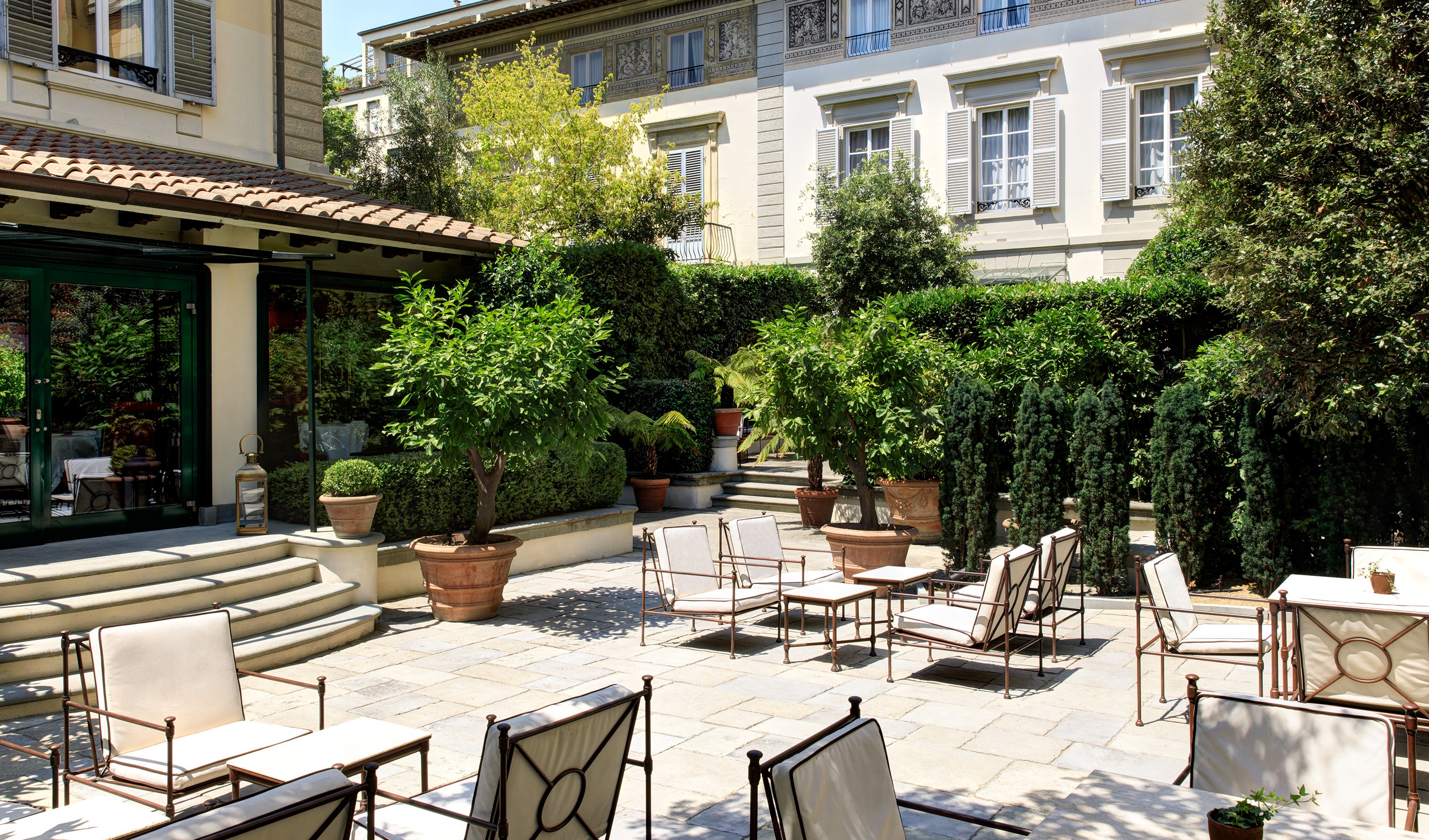
- Breakfast in the garden in fair weather
Check in - Check out
Check in from 14:00; check out before 12:00.
We Love
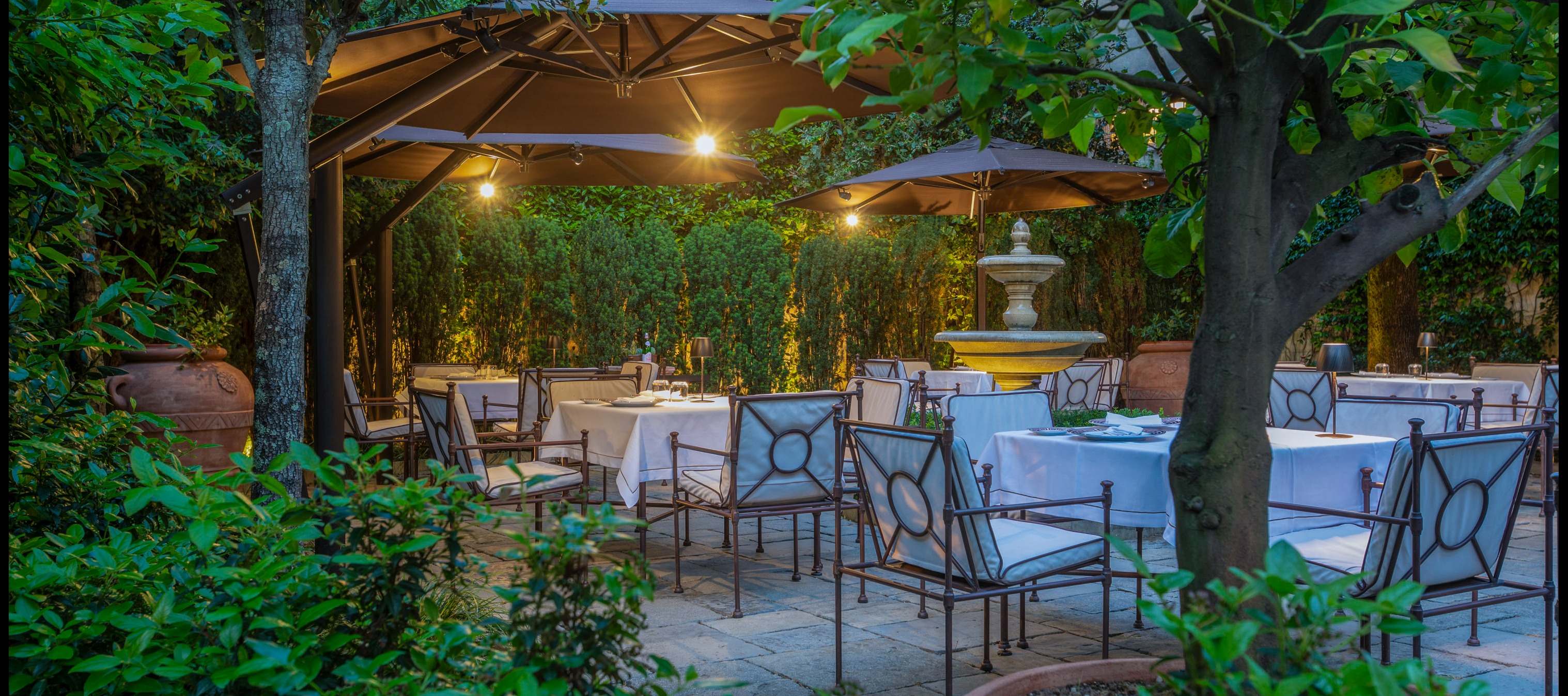
- Breakfast in the walled garden courtyard under the magnolia trees — a quietness almost no city-centre Florence hotel can offer, two streets from Sant'Ambrogio market.
- The Tito Chini stained glass in the Veranda Room — 1932 work from the celebrated Chini decorative workshop, glowing over dinner; the painted ceilings survive with it.
- Chef Claudio Lopopolo's tasting menus at Relais Le Jardin, Tuesday to Saturday in the Veranda Room — Tuscan foundations, contemporary technique, the garden beyond the glass.
- Il Salotto Lounge Bar — the Italian bar as living room: morning espresso, afternoon tea, and a properly made evening aperitivo among the antiques.
- Piazza d'Azeglio itself — the leafy square built for ministers when Florence was Italy's capital, untouched by the day-tripper routes yet ten minutes from the Duomo.
Key Features









Book Your Stay at Hotel Regency
€0.00 for 1 Night
Location
Address
Piazza Massimo D’Azeglio 3, 50121 Florence, Italy
Travel Info
Florence airport about 25 minutes by car; Santa Maria Novella station 10 by taxi. Hotel parking on request — central Florence is heavily ZTL-restricted, so arrive informed. On foot: Sant'Ambrogio market 2 minutes, Santa Croce 5, the Duomo 10.
Last Updated: 2026-06-04


Expert Review
Origins
Piazza d'Azeglio is a square with a precise pedigree: it was laid out when Florence was the capital of Italy, between 1865 and 1871, and its villas were built for the ministers and high officials of the new state. Two of the finest were commissioned by the banker James Servadio, and the architect Henry Kleffler united them in the neo-Quattrocento style — a nineteenth-century homage to Florence's golden age, built in the quarter where the government of Italy briefly lived.
The house's second flowering came in 1932, when Tito Chini of the famous Florentine decorative dynasty dressed the interiors: his stained-glass windows still light the Veranda Room and his painted ceilings survive above the dining rooms — among the better-preserved Chini workshop interiors left in Florence. In 1960 the Ottaviani family converted the villa into a hotel, and it has never left their hands; the late Amedeo Ottaviani ran it together with the Lord Byron in Rome as a private pair, on the conviction that the two should feel like his homes opened to guests.
That conviction is still the operating manual. The Regency keeps a small front desk, period furniture and deep colours rather than facilities; its courtyard garden, arched windows and wrought-iron balconies are the original architecture doing the work; and the square outside remains what it was built to be — leafy, residential, and a world apart from the crowds ten minutes away.
Top Secret
The Tito Chini stained glass in the Veranda Room is not signposted — ask, and look up: the workshop's painted ceilings survive in the dining rooms too, and the Regency's are among the better-preserved Chini interiors anywhere in Florence. Book the Veranda for dinner and you eat inside the artwork.
The Review
The Regency is the Florence stay for travellers who want the city quiet. Piazza d'Azeglio sits four streets from the Sant'Ambrogio market and ten minutes north of Santa Croce — a leafy nineteenth-century square the day-tripper routes never find — and the villa runs with the rhythm of a family house that happens to take guests: small front desk, no spa, no pool, and a walled garden where breakfast is laid under the magnolias.
The interiors are aristocratic in the unforced sense. Polished parquet, antiques the family actually collected, Carrara marble in the bathrooms, deep colours in the rooms above. Suites face either the courtyard or the square: the courtyard side has terraces and absolute quiet, the piazza side catches morning light through the plane trees, and the annexe villa holds the grandest quarters — the two-bedroom Penthouse among them — upstairs the nineteenth century never imagined needing a lift.
Relais Le Jardin is the strongest asset after the address. Claudio Lopopolo's tasting menus run Tuesday to Saturday in the Veranda Room under the Chini glass — Tuscan in foundation, the bistecca done properly, the primi turning with the seasons, the contemporary touches landing on technique rather than fashion — while the Bistrot in the Zodiaco Room covers lunch and the easier evenings, and Il Salotto pours the aperitivo. For travellers who want Florence as it was before the volume arrived, the Regency earns its keep: the Duomo and the Uffizi are ten minutes' walk, the market is two, and the square outside stays as calm as the ministers once required.