Destination, hotel name or experience

Boutique and Luxury Hotels Florence

Introducing Florence

Boutique hotels in Florence sit across a city that is, by general consent of art historians, the place where the modern Western imagination was invented. Brunelleschi's Duomo, Michelangelo's David, the Uffizi's Botticellis, the Medici villas in the surrounding hills — Florence packs more first-rank European art into its three square kilometres of historic centre than any city its size. The trade-off is the crowds. Florence in July gets nine million visitors a year onto streets designed for fifteenth-century pedestrian traffic, and the central squares around the Duomo and the Ponte Vecchio have lost some of their atmosphere to the day-trip volume.


The way to stay in Florence well is to choose a quieter quarter — the residential streets east of Santa Croce, the Oltrarno across the river, or the hills above the city — and use the centre as the destination rather than the base. The Piazza Massimo D'Azeglio in the Santa Croce quarter is one of the city's best-kept addresses: a leafy aristocratic square ten minutes' walk from the Duomo, with the Sant'Ambrogio market two streets away and the centre quiet enough at night to remember what Florence was before the bus tours arrived.


Santa Croce — the eastern quarter


The neighbourhood east of the Piazza della Signoria takes its name from the Basilica of Santa Croce, the burial church of Michelangelo, Galileo, Machiavelli and Rossini, and one of Florence's defining Gothic structures. The Sant'Ambrogio market two streets north is where Florentines actually shop. The Piazza Massimo D'Azeglio, four streets further east, is a quiet aristocratic square that escaped most of the nineteenth and twentieth-century redevelopment.


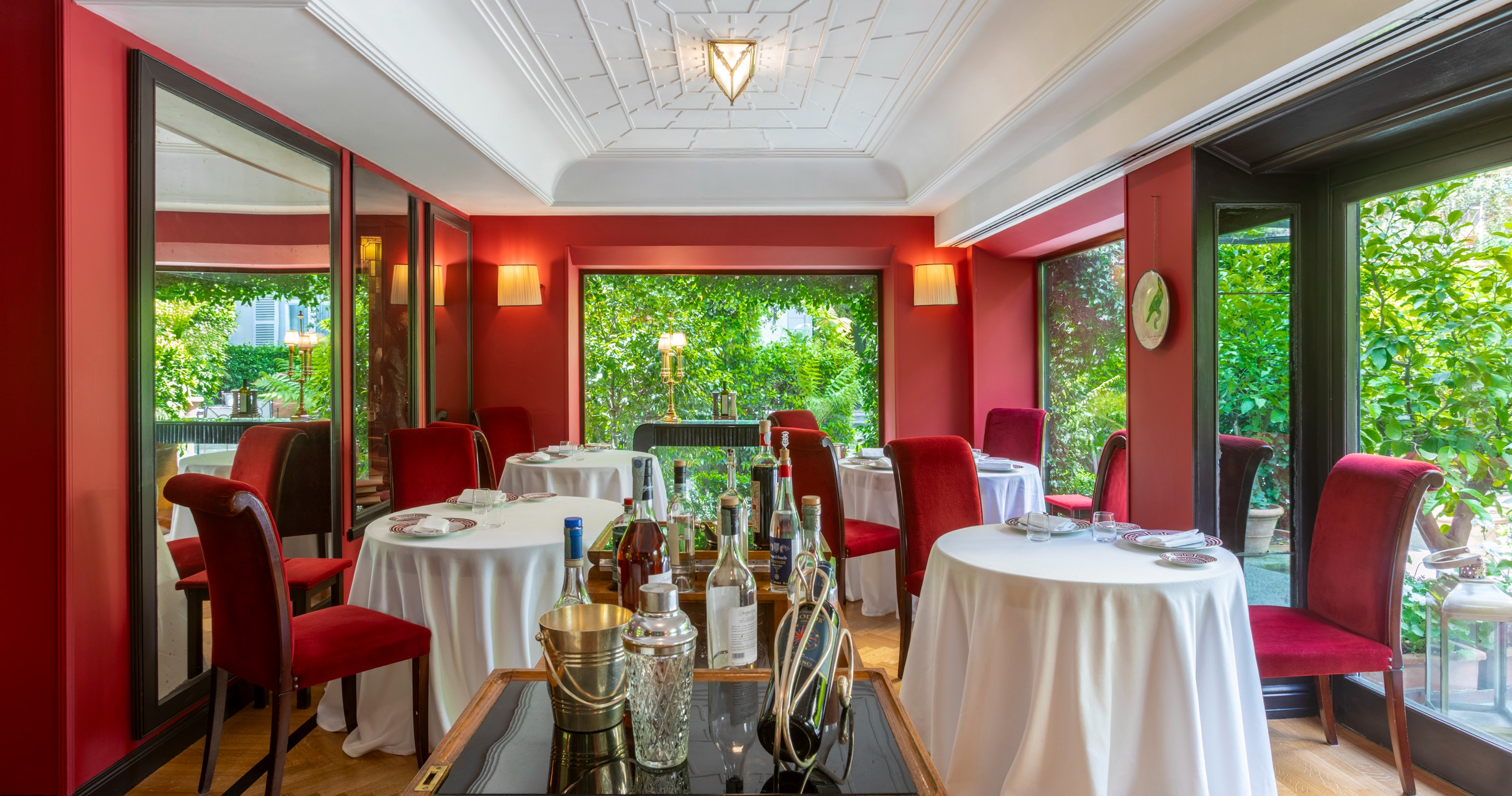
Hotel Regency occupies a nineteenth-century villa on the Piazza Massimo D'Azeglio — once a noble residence, restored by the late Amedeo Ottaviani (whose collection of two personal residences also includes Hotel Lord Byron in Rome) as a private home that opens to guests. The dining room carries stained-glass windows by Tito Chini — nephew of the Italian decorative master Galileo Chini and one of the inheritors of the family's early-twentieth-century workshop. Chef Claudio Lopopolo runs the Relais Le Jardin restaurant against an inner garden courtyard; the Bistrot menu in the Zodiaco Room covers the lunches.


Members access exclusive rates not listed publicly or on any booking platform.

Browse on Map — Florence

Explore 1 exceptional boutique hotel hand-picked in Florence. Click a pin to discover each property.

Hotels in Florence

Fine dining space featuring crimson walls and white-clothed tables

Italy, Florence

Hotel Regency

Florence Guide

When to go

Florence's seasonal pattern is sharper than Rome's. April and May are the city's best months — the wisteria over the Boboli Gardens at peak, the Arno river at its clearest, the historic centre still walkable in the afternoons. Mid-September to October is the second window: harvest produce arriving in the markets, the light at its strongest, the day-tripper volume tailing off.


June through August are punishing. Daytime temperatures regularly cross 35°C with no breeze through the centre's narrow streets, and the city receives roughly half of its annual visitor volume in these three months. Hotel rates peak and the Uffizi queues become a serious time investment. Italians themselves leave Florence in August; many small trattorias close for two to three weeks around ferragosto.


November through March is the underrated window. Florence in January and February is cold (sometimes near freezing in the mornings) and damp, but the Uffizi and the Accademia are at their quietest, the rates fall by half, and the trippa and bistecca are at their best.

How to actually see Florence

The hard rule for Florence: book the Uffizi and the Accademia in advance. Walking up to either without an advance ticket means a three-hour queue minimum in season. Reservation slots fill 7-14 days out for peak months; book before flights if possible.


Two full days is the working minimum for Florence's headline sights. Day one: the Uffizi (allow three hours), then the Duomo complex (the cathedral itself is free; the dome climb requires a separate ticket and books out months ahead). Day two: the Accademia for the David, then the Bargello (Florence's overlooked sculpture museum, far less crowded than the Uffizi, with Donatello and the early Michelangelo). A third day adds the Oltrarno — Pitti Palace, Boboli Gardens, and the small artisan workshops on Via di Santo Spirito.


Florence is walkable end-to-end in twenty minutes. The buses cover the surrounding hills (essential for getting to Fiesole, Piazzale Michelangelo or San Miniato al Monte). Taxis from licensed white ranks only.

What to eat — and where the Florentines actually go

Tuscan cooking is austere and direct: olive oil, beans, bread, beef, the canonical primi (ribollita the bread-and-vegetable soup; pappa al pomodoro the bread-and-tomato soup; pici cacio e pepe the hand-rolled pasta). The headline secondo is bistecca alla fiorentina — the T-bone grilled rare over chestnut wood, salt only, two fingers thick, ordered by the kilo. Tripe sandwiches (lampredotto) from the street carts are Florence's working-class lunch.


The market test for any Florentine restaurant: do they serve bistecca properly rare? If they ask "how would you like it cooked?" they are catering to tourists. Proper places serve it one way.


For bistecca done right: Trattoria Mario near the Mercato Centrale (lunch only, no reservations, queue early); Trattoria Sostanza (oldest in the city); Buca Lapi. For Tuscan cooking at the elevated end: Cibrèo, Enoteca Pinchiorri (three Michelin stars, advance booking essential). For lampredotto sandwiches: the Nerbone stall inside the Mercato Centrale, or Da' Vinattieri near the Bargello. For Sant'Ambrogio neighbourhood lunches close to Hotel Regency: Cibrèo Caffè, Trattoria Cibrèo, or the market itself for produce and schiacciata (Tuscan flatbread sandwiches).

Where the day-trippers don't go

Most of Florence's day-trip volume concentrates in roughly a six-hectare zone — from the Duomo south to the Ponte Vecchio and across the Pitti Palace. Stepping outside this zone changes the experience meaningfully.


The Oltrarno (across the Arno, south of the Ponte Vecchio) is the artisans' Florence — gold leaf workshops, frame-makers, restoration studios still working with techniques unchanged for centuries. Via di Santo Spirito and Borgo San Frediano are the streets to walk.


The Santa Croce quarter (around the Piazza Santa Croce, east of the Bargello) keeps a residential character — Sant'Ambrogio market, neighbourhood trattorias, the basilica itself, and the quiet leafy Piazza Massimo D'Azeglio further east.


The hills above the city change the perspective entirely. Piazzale Michelangelo is the famous viewpoint but crowded at peak hours; San Miniato al Monte (the medieval church on the hill above) is the quieter alternative with the same view. Fiesole, a fifteen-minute bus ride north of the city, is the Etruscan-Roman hilltop town where Florentines retreat in summer — the Roman theatre, the Bandini museum, and the views back across the Arno valley to the Duomo dome.


The single most-skipped major site: the Bargello sculpture museum, which holds the early Michelangelo Bacchus, Donatello's bronze David, and Verrocchio's David (the model Leonardo trained in). Smaller crowds than the Uffizi, half the queue, possibly the most important sculpture museum in Italy.

Icon of Here for You
Here for You
Icon of Free Extras on Arrival
Free Extras on Arrival
Icon of Best Price Guarantee
Best Price Guarantee
Icon of Personally Approved Hotels
Personally Approved Hotels
Icon of Exclusive Offers
Exclusive Offers
Icon of New Finds Every Month
New Finds Every Month