

€0.00 for 1 Night





24/7 Support
 Looking for help choosing or for a property we don't list? Message our Private Rates Concierge on WhatsApp for member rates and insider knowledge on the right stay
Monastero Santa Rosa Hotel & Spa
€0.00/ Night
24/7 Support
Looking for help choosing or for a property we don't list? Message our Private Rates Concierge on WhatsApp for member rates and insider knowledge on the right stay
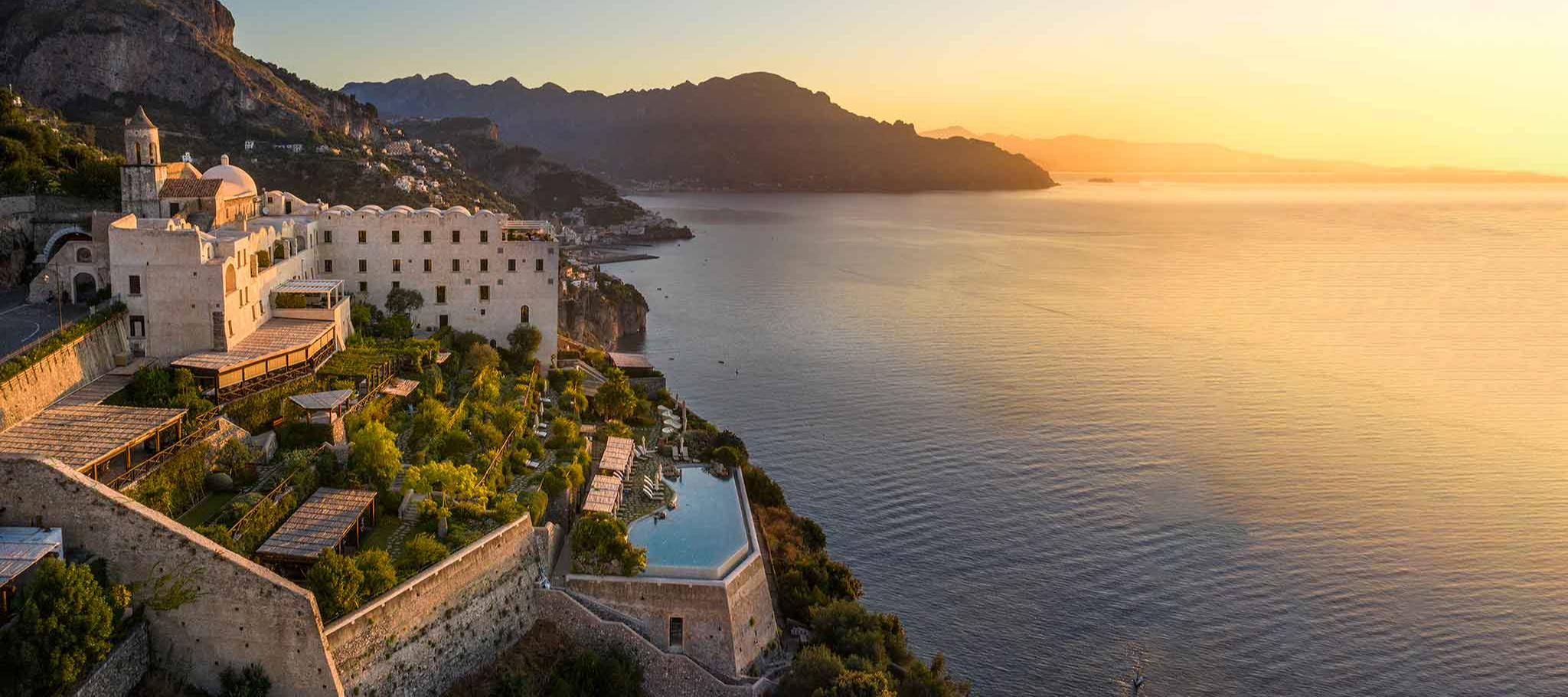
A 1681 cliff-top monastery above Conca dei Marini, reborn as a 20-room adults' hotel — a cantilevered infinity pool, terraced gardens, a spa in vaulted cells.
Collection:
Need To Know
- Twenty sea-view rooms and suites (eight suites) in the restored monastery, each named for a herb from the nuns' garden
- Adults-oriented: guests aged 16 and over only; no extra beds or cots, no pets
- Open seasonally, spring to autumn; rates usually include breakfast
- Our Favourite Rooms: the Laurus open-space suite in a former refectory; the Citrus premium terrace suite; the two-level Rosa Suite
- Michelin-starred Il Refettorio, poolside Mezzogiorno café, La Brocca library bar and wine cantina; spa, heated infinity pool, four garden levels, outdoor fitness
- Free shuttle to Amalfi; transfers from the ferry or bus on request
Check in - Check out
Check in from 14:00; check out before 12:00.
We Love
- The cliff-edge infinity pool — heated, cantilevered over the Gulf of Salerno and reckoned the most precipitous on the Amalfi Coast, reached at the foot of four descending levels of garden.
- Il Refettorio — Chef Alfonso Crescenzo cooking Campanian produce, much of it from the hotel's own terraced kitchen garden, on a terrace suspended over the sea; the kitchen holds a Michelin star.
- The spa in the original cells — Santa Maria Novella treatments under 17th-century vaults, a double-height Spa Suite, thermal rooms free to guests, and a treatment garden under a pergola.
- The birthplace of the sfogliatella — the cream-filled pastry the Dominican nuns first baked in this refectory, served still at breakfast, before the recipe ever reached Naples.
- Twenty sea-view rooms, each named for a herb the nuns grew — from the Laurus suite in a former refectory to the two-level Rosa Suite with its fireplace and bar.
Key Features











Book Your Stay at Monastero Santa Rosa Hotel & Spa
€0.00 for 1 Night
Location
Address
Monastero Santa Rosa Hotel & Spa Via Roma 2 84010 Conca dei Marini Italy
Travel Info
Naples Capodichino (NAP) about 60 km, roughly 1 hour 30 minutes by car. Conca dei Marini sits between Amalfi and Positano; a free shuttle runs to Amalfi. Approach is by cliff steps from the road; staff meet ferry and bus arrivals on request.
Nearby Places
Naples International Airport
60km
Parco Regionale dei Monti Lattari
28km
Teatro Verdi
27km
Last Updated: 2026-06-03


Expert Review
Origins
Monastero Santa Rosa began as a vow. In the late seventeenth century Sister Rosa Pandolfi, of the noble Pontone di Scala family, was given the ruined church of Santa Maria di Grado on the cliff above Conca dei Marini; she funded a convent beside it for the cloistered "sacred virgins," and in 1681 it was completed and dedicated to St Rose of Lima. Dominican nuns took up residence, and for close to two centuries the monastery ran as a self-contained world on the rock — gardens, an apothecary mixing remedies from herbs grown on the terraces, and a kitchen.
It is that kitchen the world remembers. In the refectory the nuns first baked the sfogliatella — the layered, cream-filled pastry made, by one account, to settle the Mother Superior's stomach — and named it for their monastery. The recipe stayed behind the walls for a century and a half before reaching a Naples pastry-maker in 1818 and, from there, the whole of Italy. The sisters also gave the village its water, funding an aqueduct from Mount Vocito to the square below, where a plaque still marks the gift.
The convent became a hotel in 1924, then drifted. Its second life began in 2000, when Bianca Sharma saw the building from a boat in the Gulf of Salerno and resolved to have it. A long restoration kept the monastic bones — the vaulted cells, the stone, the terraces — and in 2012 Monastero Santa Rosa reopened as a twenty-room hotel, with Prince Albert of Monaco among its first guests. Condé Nast Traveller's readers named it the best hotel in Italy in 2019; Tatler called its spa the best new one anywhere.
Top Secret
The infinity pool is heated, cut to the cliff's edge and cantilevered over the Gulf of Salerno — by common reckoning the most precipitous on the Amalfi Coast. It is reached last, at the foot of four descending levels of garden.

The Review
There are showier addresses on the Amalfi Coast and louder ones, but few that trade so completely on stillness. Monastero Santa Rosa sits above Conca dei Marini, the small fishing village between Amalfi and Positano that the crowds mostly skip, and the quiet is the point. The approach is down steep steps from the road rather than up a grand drive, and what waits at the bottom is a 17th-century monastery that has kept its plainness: stone, vaulted ceilings, twenty rooms where nuns once lived, and gardens falling away to the sea. It takes only adults, and it feels designed for the kind of guest who wants the coast without its clamour.
The restoration's intelligence was in what it left alone. The twenty rooms are the old cells, linked and opened out but still themselves, each named for a herb the nuns grew and each facing the water; the grandest, the Rosa Suite, runs over two floors with a fireplace and a bar, while the Laurus suite keeps the shape of the refectory it once was. The spa occupies more of the original vaults and runs on Santa Maria Novella preparations — a Florentine apothecary almost as old as the convent, which is a rhyme the hotel is too composed to point out. The four terraced gardens, citrus and jasmine and rose, are worked as a kitchen garden as much as a view, and much of what reaches the table at Il Refettorio is grown on them. That restaurant, under Alfonso Crescenzo, holds a Michelin star and a terrace hung over the gulf.
What the place is really selling is a particular kind of removal — the sense, rare on this coast in season, of being above the fray rather than in it. Days run to the rhythm the nuns would know: the garden, the long lunch, the pool at the cliff's edge, the bay turning gold and then dark. Steinbeck, writing of this coast in 1953, called it a dream place that becomes real only once you have gone. Conca dei Marini is the part that stays dreamlike longest, and the monastery is the best seat in it.


