

€0.00 for 1 Night





24/7 Support
 Looking for help choosing or for a property we don't list? Message our Private Rates Concierge on WhatsApp for member rates and insider knowledge on the right stay
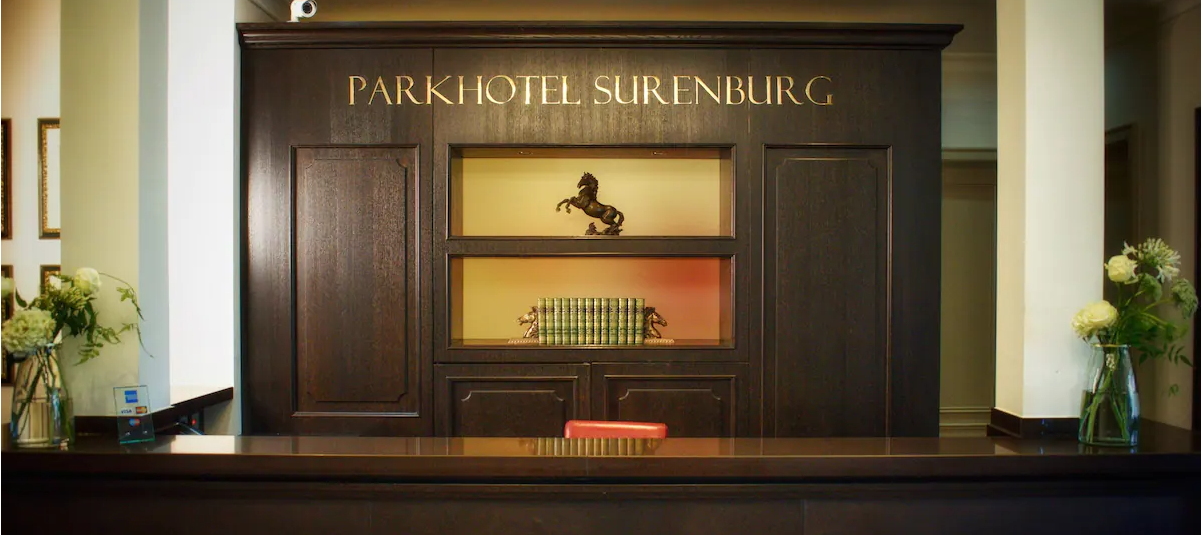
Parkhotel Surenburg
€0.00/ Night
24/7 Support
Looking for help choosing or for a property we don't list? Message our Private Rates Concierge on WhatsApp for member rates and insider knowledge on the right stay
4-star Parkhotel Surenburg — 30 rooms in Münsterland adjacent to the Heereman family's moated Surenburg Castle, with a chef-led gourmet restaurant and three-sauna spa.
Collection:
Award Winner 2013
NEWCOMER

Free extra on us
A delicious aperitif on arrival – a Muensterland Amérie which is a raspberry liqueur, topped up with prosecco.
Need To Know
- 30 rooms across three categories (Comfort, Comfort Plus, Premium) in a Schirmacher-family-operated 4-star hotel in Hörstel-Riesenbeck, on land bordering the Heereman family's moated Surenburg Castle at the foot of the Teutoburg Forest
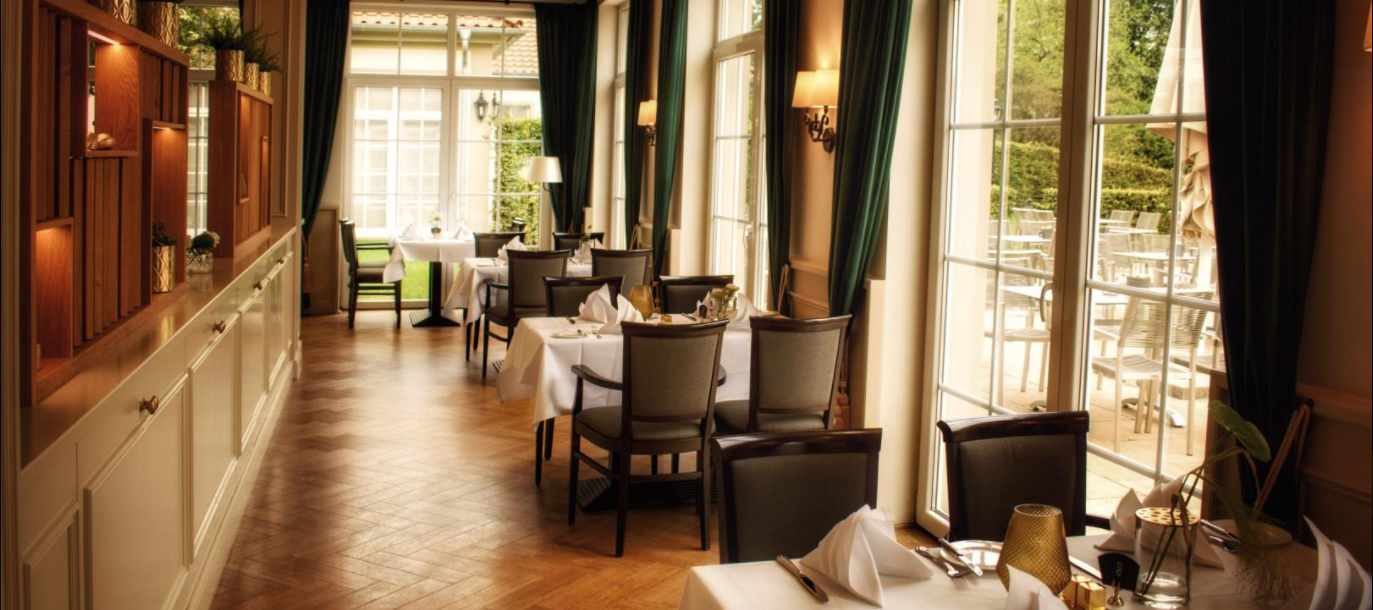
- Westfälische Stube gourmet restaurant under chef Andreas Stroot — multi-course "land and sea" menus served and explained course-by-course by the chef and his kitchen brigade. Advance booking essential. Restaurant Surenburg handles the main hotel dining; Zum Goldenen Reiter beer garden for traditional Westphalian fare and exceptional beers; President's Bar with Heereman family heirlooms and a working fireplace
- Surenburger Schloss Spa — three named saunas (Finnish wood, mist / steam, Himalayan-salt-stone), generously sized indoor pool, experience shower, pool bistro, outdoor terrace, relaxation room with king-size loungers, in-house cosmetics and massage team
- Equestrian partnership — borders the Reit- und Fahrverein Riesenbeck (riding and driving club); guests may bring their own horses and stable them at the facility next door. Ludger Beerbaum's Riesenbeck International equestrian centre in the village
- Bicycles available for guests; meeting rooms with conference technology; wedding-grade event capacity. Pet-friendly; family-friendly; barrier-free access
Check in - Check out
Check in from 14:00; check out before 12:00.
We Love
- The Heereman family heritage adjacency — the hotel borders the Heereman family's moated Surenburg Castle, with the family still living on the working estate. Baron Constantin (the late Bauernpräsident, 1969-1997) animates the President's Bar today.
- The Westfälische Stube — chef Andreas Stroot and his brigade serve every course personally with menu commentary. Truffled dumplings with loin of lamb, paired with the regional cellar, are the recurrent editorial standout.
- The three saunas — Finnish kelo-wood sauna (80-105°C), mist sauna (50°C, 100% humidity), Himalayan-salt-stone sauna (60-65°C), each with distinct treatment registers, plus the indoor pool with countercurrents.
- The equestrian access — the Reit- und Fahrverein Riesenbeck directly bordering the property, with guest-horse stabling possible. The wider Münsterland riding-route network runs through the surrounding forest.
- The Münsterland water-castle setting — Surenburg is one of over 100 Wasserschlösser across the region. The hotel sits on the southern slope of the Teutoburg Forest — locally known as the "Balcony of Münsterland".
- The President's Bar — Heereman family heirlooms on the walls, working fireplace, regional showjumpers and the Baron's circle of friends mixing with hotel guests at the bar in the evenings.
Key Features






Book Your Stay at Parkhotel Surenburg
€0.00 for 1 Night
Location
Address
Surenburg 13, 48744 Hörstel - Riesenbeck
Travel Info
Münster Osnabrück Airport (FMO) 24 min by car / 14 km — transfers arranged. Free shuttle to local train station. A30 motorway exit Hörstel 5 min. Münster and Osnabrück 35 km each. Hörstel village centre 3 miles for restaurants, shops and the local rail connection.
Nearby Places
Munster Osnabruck International Airport
15200m
Maxi Erlebnistherme Bad Hamm
6500m
Last Updated: 2026-05-21

Expert Review
Origins
The Parkhotel Surenburg sits on the southern slope of the Teutoburg Forest in Hörstel-Riesenbeck, in the heart of Münsterland — the German region of moated water castles (Wasserschlösser), with over a hundred surviving examples across the surrounding landscape. The hotel borders Schloss Surenburg, one of these water castles and the working ancestral seat of the Barons Heereman von Zuydtwyck — a family who continue to live on and manage the castle estate today. The late Baron Constantin Freiherr Heereman von Zuydtwyck was President of the German Farmers' Association (Bauernpräsident) from 1969 to 1997 — one of the most powerful figures in German agriculture across nearly three decades — and served in the Bundestag from 1983 to 1990 as MP for the region. The original Schlosshotel (predecessor to the contemporary Parkhotel) hosted German political figures, top-tier showjumpers including Ludger Beerbaum, and the local aristocratic neighbours at the Baron's table. The Heereman name is, as the property's own materials describe, "inseparably linked with the Parkhotel Surenburg and known far beyond the borders of Münsterland." The hotel itself is family-run by the Schirmacher family under managing director Linda Schirmacher.
Top Secret
Ask if any equestrian legends are at the President's Bar in the evening — Ludger Beerbaum (Germany's most-decorated Olympic showjumper), Philipp Weishaupt, Christian Kukuk and Richard Vogel train at the village's Riesenbeck International facility and frequent the bar. The atmosphere combines the late Baron Constantin's local circle, Beerbaum's professional set, and the hotel guests in a way that feels editorially out-of-time — a working aristocratic-equestrian salon as the property's emotional centre.
The Review
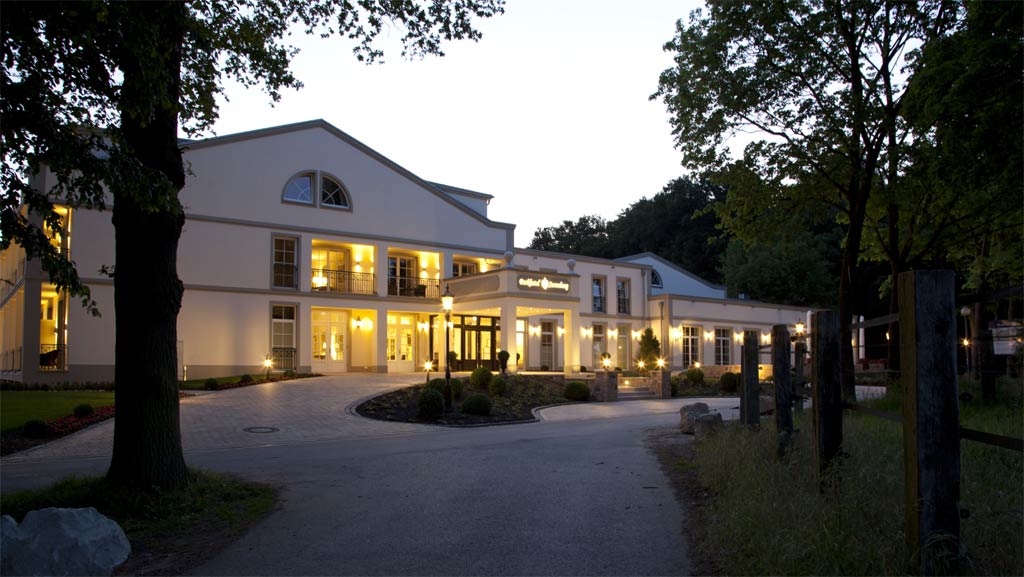
The Parkhotel Surenburg is the calmest of country-house retreats: an avenue of tall trees marks the approach, the wooded parkland of the hotel runs into the wider forest of the Heereman estate, and the Münsterland farmland beyond carries the regional pattern of meadows, hedgerows, hamlets and water castles for which this corner of Germany is editorially distinctive. Schloss Surenburg — the moated castle that gives the hotel its name — sits 200 metres from the front door, with the Heereman family still in residence and the wider estate operating as a working forest and farm. The hotel's position is local but unobtrusive: 22 miles from both Münster (the 1648 Treaty of Westphalia city) and Osnabrück, 24 minutes from Münster Osnabrück Airport, with the A30 motorway exit at Hörstel 5 minutes away by car.
The 30 rooms distribute across three categories — Comfort, Comfort Plus, and Premium — across the property's main building, with modern amenities (free Wi-Fi, satellite TV, in-room safe, hairdryer) layered on the country-house architectural shell. Some rooms have balconies and garden views. The rooms read as comfortable rather than design-led; the editorial energy of the property sits in the public spaces and the surroundings rather than the bedrooms.
The Westfälische Stube is the property's gastronomic anchor. Chef Andreas Stroot and his kitchen brigade serve each course personally and explain the menu's progression to the table — a "land and sea" multi-course concept that runs across regional Westphalian fundamentals, game from the Heereman forest, herbs from the property's own gardens, and the wider European fine-dining vocabulary. Advance booking is essential; the restaurant operates as a destination occasion within the wider hotel rather than a daily walk-in. The truffled dumplings served alongside loin of lamb, paired with the regional cellar's depth on the Italian and German lists, recur as the property's editorial culinary signature. Restaurant Surenburg — the main hotel dining room, recently renovated in gold and muted greens — handles the daily international and regional service, with breakfast 07:00-11:00. Zum Goldenen Reiter — the outdoor beer and wine garden — handles traditional Westphalian fare with the regional brewing tradition. The President's Bar under the fireplace, with Heereman family heirlooms on the walls and the late Baron Constantin's image present, runs the bar register of the property — bartender-prepared cocktails, vintage spirits, and the kind of evening conversation that ranges across the agricultural calendar, the showjumping circuit and the broader Münsterland politics.
The Surenburger Schloss Spa is the property's wellness and relaxation infrastructure. Three saunas operate the principal treatment register: the Finnish wood sauna at 80-105°C with a Finnish kelo-wood ceiling (the dead pine wood naturally dried over decades in the polar climate, prized for its thermal stability and absence of resin); the mist sauna at 50°C with 100% humidity (the steam-bath tradition running back to the Roman caldarium, the Turkish hammam, the Japanese sento and the Russian banya); and the salt sauna with walls covered in Himalayan salt stones at 60-65°C, 15% humidity, with the heated salt stones producing negative ions and the salty air supporting the respiratory system. The generously sized indoor pool runs countercurrents for swimming exercise. The experience shower handles post-sauna cooling. The pool bistro, the outdoor sun terrace and the relaxation room with king-size loungers complete the spa infrastructure. The in-house cosmetics, massage and health-spa team delivers treatments bookable as standalone appointments or within wellness packages.
The equestrian dimension distinguishes Parkhotel Surenburg from most other Münsterland country-house hotels. The property borders the Reit- und Fahrverein Riesenbeck (the local riding and driving club) directly, with a hotel-club partnership permitting guests to bring their own horses and stable them at the facility next door — unusual for a 4-star hotel of this scale. Ludger Beerbaum's Riesenbeck International equestrian centre — Germany's principal Olympic-level showjumping facility, where Beerbaum (multiple Olympic gold medallist, the most decorated German rider of his generation) trains alongside Philipp Weishaupt, Christian Kukuk and Richard Vogel — sits in the same village. The Münsterland Riding Route — the regional bridleway network spanning hundreds of kilometres through forest, farmland and water-castle estates — runs past the property. Bicycles are available for guests preferring the cycling alternative; the 100 Schlösser Route (the 960 km Münsterland cycling route through the region's 100 water castles) crosses the area.
Worth the journey for: travellers drawn to the Heereman family heritage and the working aristocratic-political adjacency that defines the property; equestrian-orientated guests wanting to stable their own horses in the village of Ludger Beerbaum's training facility; gastronomy travellers attracted to chef Andreas Stroot's Westfälische Stube experience; wellness travellers drawn to the unusual three-sauna depth and the dedicated cosmetic / health-spa programme; cultural travellers using the property as the Münsterland base for the regional water-castle circuit, the 100 Schlösser cycling route, and day-trips to Münster (1648 Treaty of Westphalia heritage) and Osnabrück. Less so for: travellers expecting 5-star contemporary design hotel standards (this is a comfortable 4-star country-house hotel with a country-house aesthetic rather than a design statement); guests prioritising urban culture (the property is rural Münsterland; the 35 km drives to Münster or Osnabrück are practical but not casual); travellers without German-language ability who require entirely English-language service (the property is family-run with German as the working language, though the team carries English and the international guest experience is straightforward).


