

€236.20 for 1 Night





24/7 Support
 Looking for help choosing or for a property we don't list? Message our Private Rates Concierge on WhatsApp for member rates and insider knowledge on the right stay
€236.20/ Night
24/7 Support
Looking for help choosing or for a property we don't list? Message our Private Rates Concierge on WhatsApp for member rates and insider knowledge on the right stay
A working Monferrato wine estate with six suites named for its own labels — a 17-metre UNESCO-listed cellar below, a panoramic pool in the vines, and the family in residence.
Collection:
Need To Know
- Six suites, each named for one of the estate's wines and individually decorated; Salidoro runs over two floors with its own entrance, Setecàpita keeps a private spa
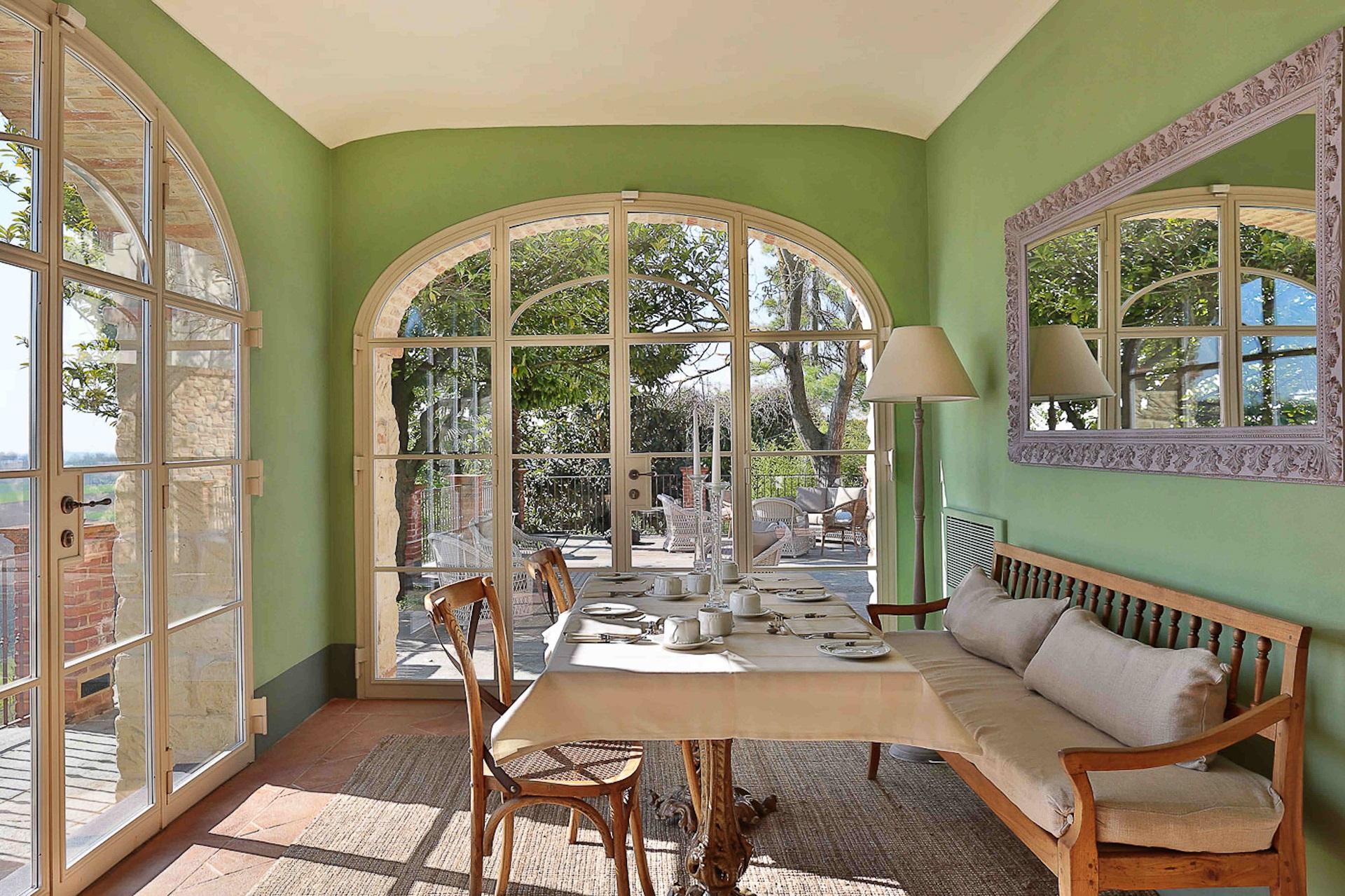
- A working wine estate — this is a relais and B&B, with breakfast of local produce in the fireplace hall or on the panoramic terrace
- Our Favourite Rooms: Salidoro for the house-within-a-house; Vignalina for waking up facing the vines it is named after
- Seasonal outdoor pool; library lounge and burgundy salon; tasting room in the old cellar
- Vineyard tours, guided tastings, truffle hunts, cooking lessons, e-bikes, riding and 36-hole golf nearby arrange at the desk
- Free parking at the estate
Check in - Check out
Check in from 14:00; check out before 12:00.
We Love
- The suites as wine list — six rooms named for the estate's labels: duplex Salidoro with its own front door, Navlè in the blue and red once reserved for a house's finest room, Setecàpita with a private spa.
- The Infernòt — a vault dug 17 metres into the tuff, part of Monferrato's UNESCO inscription, where the family keeps a private collection of over 5,000 Italian wines.
- Tasting in the restored stables — the estate's own Barbera, Freisa, Grignolino and whites, poured by the people who grow them, with the brick-vaulted historic cellar below.
- The seasonal pool above the vines — and the path through aromatic herbs to a small lake kept by a pair of grey herons, fireflies in the summer dusk.
- The Monferrato itself — UNESCO-listed vineyard hills where the Alps and Monviso hold the horizon, with the Sacro Monte di Crea fifteen minutes away.
Key Features








Book Your Stay at Relais Tenuta Santa Caterina
€236.20 for 1 Night
Location
Address
Via Marconi 23 14035 Grazzano Badoglio (AT) Italy
Travel Info
A 70–90 minute drive from Turin or Milan airports, in the village of Grazzano Badoglio between Asti and Casale Monferrato. Free parking at the estate; the hills themselves are best explored by car or the relais's bikes.
Nearby Places
Turin Airport
55km
Mole Antonelliana
49km
Last Updated: 2026-06-05

Expert Review
Origins
The estate began as a fort. In 1737 the Plebano brothers took the stronghold that had guarded Grazzano's Benedictine abbey and turned it into a patronal palazzo — porticoes, Italian gardens, stables, houses for the estate's workers — and beneath it all the Infernòt, a cellar dug 17 metres into the tuff. The village above keeps older company still: in the small monastery on the hill rest the remains of Marchese Aleramo, the founder of Monferrato, dead since 961. These hills do not do shallow history.
By the late twentieth century the estate had decayed through many hands. Guido Carlo Alleva, a Milan lawyer whose mother's family came from these lands, acquired it in the early 2000s and spent a decade bringing it back — palazzo, porticoes, gardens, stables, the brick-vaulted historic cellar and the Infernòt, today inscribed by UNESCO among the vineyard landscapes of Langhe-Roero and Monferrato. The vines returned with the buildings: native Grignolino, Freisa, Barbera and Nebbiolo, farmed organically with the estate's own indigenous yeasts, every wine a single cru. Alleva now presides over the Monferace association, eleven producers resurrecting the aged Grignolino that was once this region's noble red.
The relais opened in 2015, in the superintendent's old residence, so that visitors could live inside the winery rather than visit it — six suites, each named for one of the family's labels, with Alleva's daughter Giulia managing the house. The names carry the family with them: Vignalina honours his mother and grandmother, both named Lina; Arlandino is the old Piedmontese nickname for Grignolino itself.
Top Secret
Ask to be shown the Infernòt — the vault dug 17 metres into the Monferrato tuff, part of the region's UNESCO inscription, where the family keeps a private collection of more than 5,000 Italian wines. Then take the evening path through the aromatic herbs to the small lake: a pair of grey herons lives there, and in summer the fireflies come out.

The Review
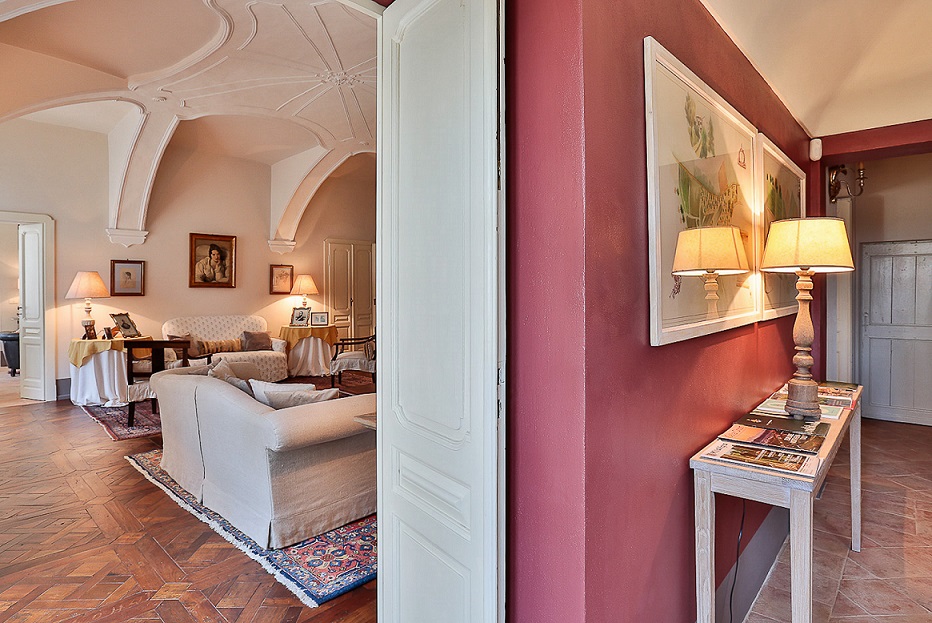
Wine has been made in these hills since antiquity, and the estate wears that depth lightly. The old gate opens onto the patronal courtyard, the Italian gardens, and a view that runs across vineyard rows to the Alps — on clear spring days the pyramid of Monviso stands on the horizon, and to the east the rice paddies of the plain flood into a silver inland sea. Inside, the Piedmontese Baroque survives in the vaulted plaster ceiling of the central salon, restored parquet underfoot, a fire in the grate and a burgundy lounge beside it for the quieter hour.
The six suites read like the cellar list. Salidoro is the prize — a house within the house, two floors and its own front door; Navlè wears the blue walls and red furnishings that Monferrato tradition kept for a home's most important room; Silente sits dove-grey and calm; green Vignalina looks straight into the vines it is named for; Arlandino is the snug alcove; and Setecàpita answers with a private spa. Steam showers and antique pieces run through the house — comfort built from the estate's own history rather than imported polish.
Days here organise themselves around the winery. Walk the rows with the people who farm them, then taste in the restored stables: the Barberas, the Freisa, the Grignolino young and aged, the whites, the sparkling made from Chardonnay the family argues belongs in these limestone hills as much as in Burgundy. Beyond the gate, the relais arranges truffle hunts with a trifolau and his dog, cooking lessons in the Monferrato repertoire, riding, e-bikes and golf — and the breakfast of local produce, taken by the fireplace or on the terrace, sends you out properly. The pool above the vines holds the afternoon; the silence, which the house was restored to protect, holds everything else.


