

€255.00 for 1 Night





24/7 Support
 Looking for help choosing or for a property we don't list? Message our Private Rates Concierge on WhatsApp for member rates and insider knowledge on the right stay
€255.00/ Night
24/7 Support
Looking for help choosing or for a property we don't list? Message our Private Rates Concierge on WhatsApp for member rates and insider knowledge on the right stay
A 1563 estate in the Ruché hills of Monferrato — 16 rooms and suites, a saltwater infinity pool over the vines, and a Latin-named cellar poured nightly at the chef's table.
Collections:

Award Winner 2023
Romantic Hotels

Free extra on us
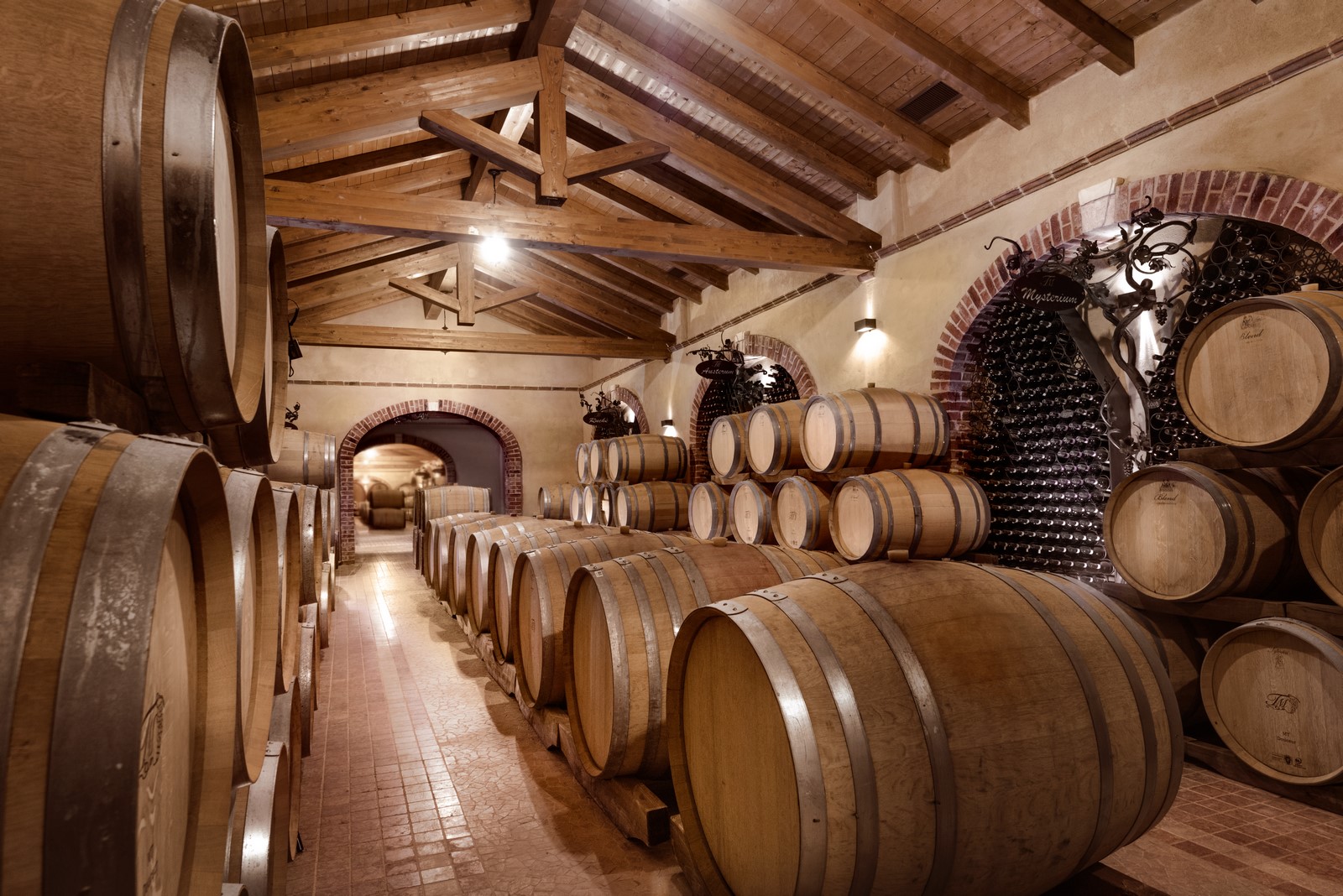
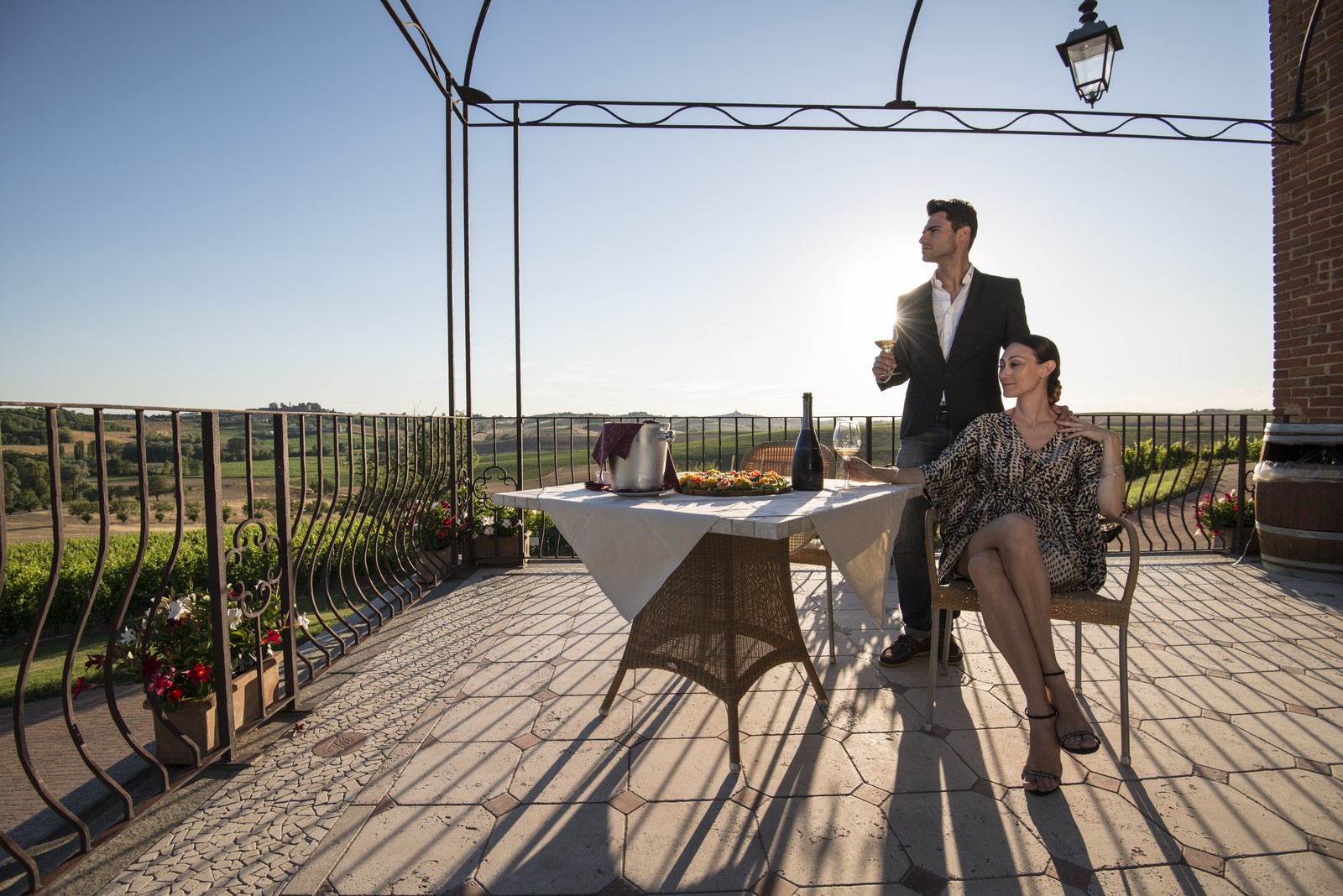
A very special wine cellar visit and then an aperitif at sunset, with Tenuta's locally produced wine, on the hotel's beautiful terrace.
Need To Know
- 16 rooms and suites: nine rooms and seven suites, Classic Rooms in the 19th-century tower, some suites with in-room hot tubs
- Open seasonally — the estate closes for winter
- Families and pets welcome
- Our Favourite Rooms: a vineyard-facing suite for the balcony and the long view
- La Civetta sul Comò serves a nightly-changing tasting menu paired with the estate's wines; chef's tables and a casual Bistrot run alongside
- The Adhara spa suite (sauna and treatments) books privately; saltwater infinity pool in season
- Cellar visits, guided tastings, vineyard massages and e-bikes arrange at the desk; free parking
Check in - Check out
Check in from 14:00; check out before 11:00.
We Love
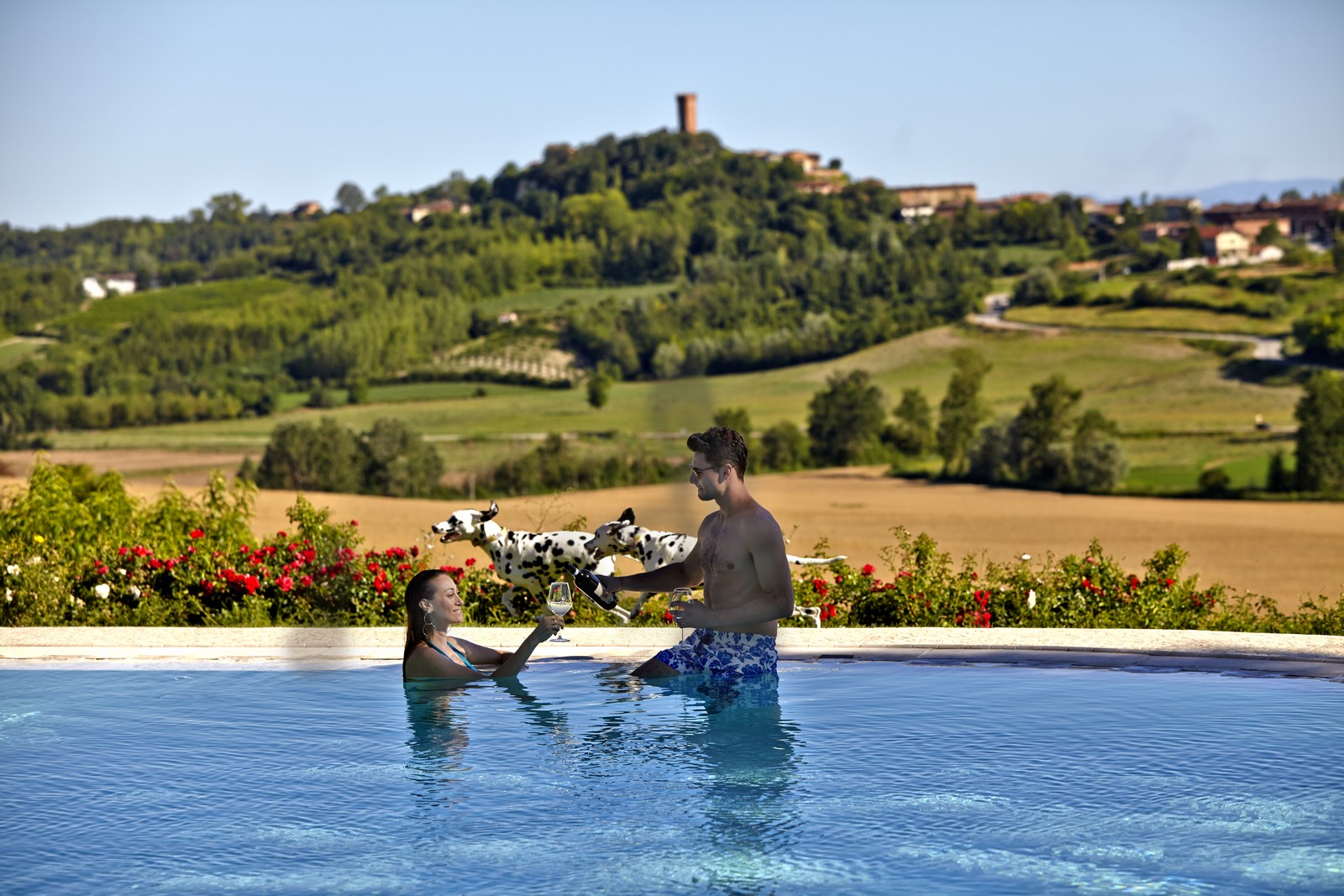
- The saltwater infinity pool — set above the rows with the Monferrato rolling away below, and on clear mornings the snow line of the Alps standing on the horizon.
- The cellar of Latin names — Invictus and Nobilis from Ruché, a grape grown in just seven communes including this one; Solis Vis from rare Timorasso; Mysterium from Barbera vines past eighty years.
- Dinner at La Civetta sul Comò — Chef Giampiero Vento folds Sicily into Piedmont on a tasting menu that changes nightly, each course paired from the estate, a pianist playing Tuesday to Saturday.
- The rooms in the old walls — floor-to-ceiling windows opening to balconies over the vines, antique pieces under beamed ceilings, the Classic Rooms up in the 19th-century tower.
- The estate as experience — massages among the vines, e-bikes to the medieval villages, tastings in the historic cellar, and the Adhara spa suite booked privately.
Key Features










Book Your Stay at Tenuta Montemagno Relais & Wine
€255.00 for 1 Night
Location
Address
Via Cascina Valfossato, 9 Montemagno, Asti 14030, Italy.
Travel Info
Roughly an hour and a quarter from Turin, Milan or Genoa airports, in open country outside Montemagno village; Asti is around 20 minutes. Free private parking at the estate — a car is essential, and the Monferrato's hill villages are the reward.
Nearby Places
Turin Airport
59900m
Piazza Vittorio Veneto
52300m
Mole Antonelliana
52500m
Last Updated: 2026-06-05

Expert Review
Origins
Napoleonic maps kept in Montemagno's council hall show this commune making wine in the sixteenth century, and the estate's main farmhouse dates to 1563 — a noble residence whose arches, fireplaces and vaulted ceilings survived four centuries of working life in the Monferrato hills. The land kept its habits: clay and limestone, south-west light, the 45th parallel running through the vines.
Tiziano Barea, a Lombard industrialist with a conviction about this hill, bought the estate in 2005 and rebuilt it twice over — the farmhouse into a 16-room relais of antique furniture and beamed ceilings, and the vineyard into one of the area's most deliberate cellars. With oenologist Gianfranco Cordero he planted the Monferrato's own grapes and gave the bottles Latin names of his own devising: Invictus and Nobilis from Ruché, the perfumed red grown in only seven communes on earth, this one included; Solis Vis — the force of the sun — from Timorasso, a white rare even in Piedmont; Mysterium, a Barbera Superiore from vines past eighty years, holder of Gambero Rosso's top Tre Bicchieri; even a metodo classico sparkler raised from Barbera. Around 17 of the hundred hectares carry vines; the grapes are hand-picked, the yeasts native, the sulphites low, the production deliberately small.
The result is a particular kind of wine estate: one where the cellar is the architecture, the menu and the address at once — and where the family's philosophy, fewer wines but truer ones, sets the pace of the whole house.
Top Secret
Find Marco, the marketing manager — and one of only around thirty qualified olive-oil experts in Italy, in a corner of Piedmont where olives won't grow. Ask him for a tasting lesson: he'll teach you to find artichoke and tomato skin in a good oil, and it may be the most unexpected hour of your stay.
The Review
Ask the staff why they stay and the answer is one word: nature. The estate sits alone among sunflower fields, hazelnut orchards and vines, medieval villages on the hilltops around it, and on clear days the morning mist lifts to put the snow-capped Alps on the horizon. The saltwater infinity pool on the terrace is built for exactly that reveal.
The farmhouse keeps its 1563 bones — arches, beams, vaulted ceilings — and dresses them gently: natural colours, grape carvings, lavender on the pillows, floor-to-ceiling windows that open onto balconies above the rows. The nine rooms and seven suites run from the 19th-century tower's Classic Rooms to suites with hot tubs in the room, and the Adhara spa suite downstairs books by the hour, privately, with sauna and treatments using the house's own vine-based cosmetics.
Evenings belong to La Civetta sul Comò at the top of the estate, where Chef Giampiero Vento works Sicilian instincts into the Piedmont larder on a tasting menu that changes nightly — each course paired with the Latin-named bottles from downstairs, a sommelier explaining the ground each one grew from, a pianist playing Tuesday to Saturday. By day, the estate arranges what a wine estate should: cellar visits among the frescoed vaults, massages set among the vines, e-bikes out to the villages. But nobody will blame you if the day amounts to the pool, the view and a glass of Ruché — the house was built for precisely that.


