

€17,940.00 for 1 Night





24/7 Support
 Looking for help choosing or for a property we don't list? Message our Private Rates Concierge on WhatsApp for member rates and insider knowledge on the right stay
Villa Astor
€17,940.00/ Night
24/7 Support
Looking for help choosing or for a property we don't list? Message our Private Rates Concierge on WhatsApp for member rates and insider knowledge on the right stay
Villa Astor: William Waldorf Astor's cliff-top Sorrento estate, restored by Jacques Garcia — six suites, Roman antiquities throughout, a grotto pool cut to the sea.
Collection:

Award Winner 2017
Europe’s Best Private Villa
Need To Know
- Six suites in the main villa, sleeping twelve; the separate Torre sleeps a further eight, to a maximum of twenty
- Whole-villa exclusive use only; minimum stay three nights low season, seven in high season
- Private chef, daily housekeeping and concierge included; events to two hundred guests, seated dinners to seventy
- Botanical garden, grotto sea-pool with private jetty, garden swimming pool, library, music room, home cinema and basement wellness floor
- Refundable security deposit held against the stay
Check in - Check out
Check in from 14:00; check out before 12:00.
We Love
- The Bagno dei Frati grotto pool — a bathing pool cut into the cliff inside a natural grotto, with its own stepped passage down to a private jetty and open water. You swim under rock, then out into the bay.
- The botanical garden — some five acres of olive and orange terraces Astor planted over a former monastery, threaded with Roman columns, urns and sarcophagus fragments, much of it dug from Pompeii.
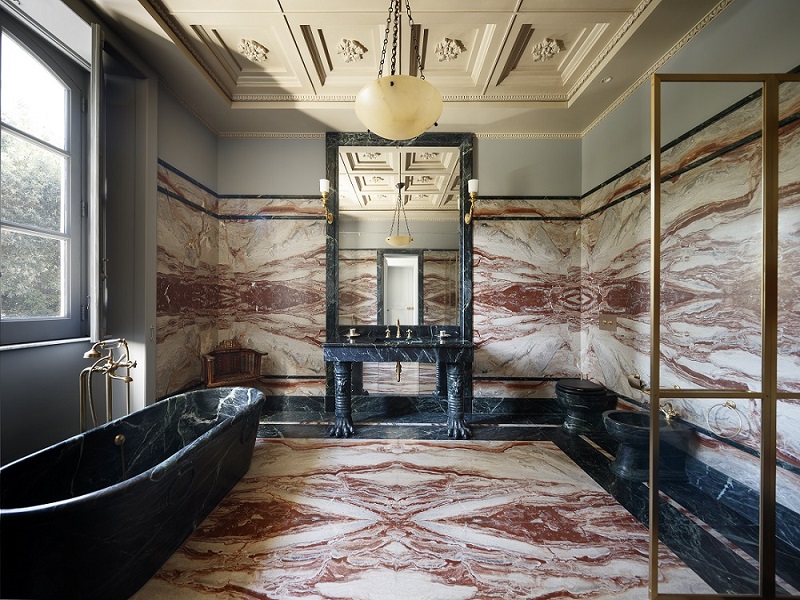
- Jacques Garcia's six suites — each designed alone, period pieces from Sotheby's and Christie's set against Astor's antiquities, marble bathrooms, balconies to garden or sea.
- The 270-degree outlook — Marina Grande and Marina Piccola below, Vesuvius and the gulf ahead, read from the terrace, the roof or a glass-walled portico built to leave the view whole.
- Whole-villa exclusive use — main house and the Torre, a private chef, library, the room Croce once worked in, and garden dinners under a wisteria pergola for up to seventy seated.
Key Features



Book Your Stay at Villa Astor
€17,940.00 for 1 Night
Location
Address
Within walking distance from Marina Grande di Sorrento. A short taxi ride to the Marina Piccola ferry service for trips to Naples, Capri, Ischia, Positano, Amalfi and Salerno
Travel Info
Naples Capodichino (NAP) 50 km, about 1 hour 15 minutes by car. Sorrento centre a five-minute walk; Marina Grande within walking distance. Marina Piccola ferries serve Capri, Positano, Amalfi and Naples. Old-town lanes are narrow; no on-site parking.
Nearby Places
50 km from centre of Naples or Naples Capodichino airport
250m
Last Updated: 2026-06-03

Expert Review
Origins
Villa Astor stands on a rocky promontory above Sorrento, on a site with Roman remains beneath it and a view that runs the full width of the Bay of Naples. The villa took its present shape under one owner. William Waldorf Astor — at the time among the wealthiest men alive, a former United States minister to Italy who had already restored Cliveden and Hever Castle in England — bought the property in 1905 and spent the years to 1908 enlarging it, laying out its garden and filling both with antiquities.
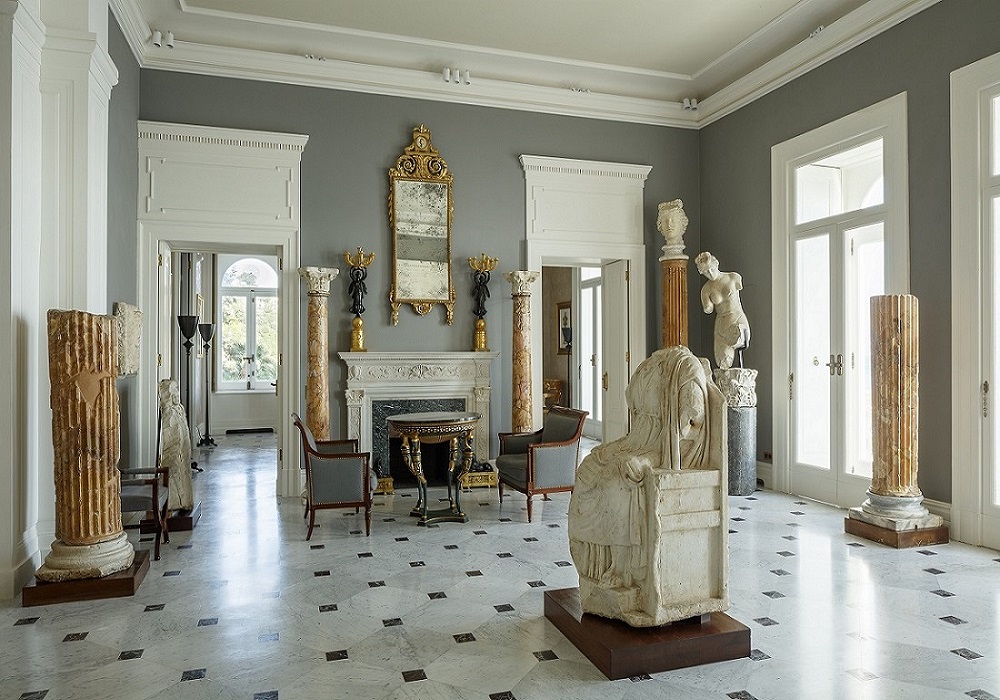
That collection is the spine of the place. Astor set Roman and Renaissance sculpture through a botanical garden of roughly five acres: columns, urns, busts ranged along a carved Siena-marble balustrade, fragments of sarcophagi, much of it lifted from Pompeii. Arched openings in the seaward wall frame the water and Vesuvius beyond. On the grounds he raised a Pompeiian annexe with Ionic columns and neo-classical frescoes by the Roman painter Mario Spinetti, and turned it into a private museum for the overflow. Forbes later wrote that walking in feels like entering a wing of New York's Metropolitan Museum.
The house has held its grip on remarkable people ever since. After Astor's death in 1919 the Italian state declared the sculptures and gardens culturally protected, bound permanently to the villa. The philosopher Benedetto Croce worked here through the Second World War, when Allied forces requisitioned the property; in the 1970s the shipping magnate Mariano Pane and his wife Rita drew Princess Margaret, Gregory Peck and Rudolf Nureyev up the hill. In 2012 new owners gave the French decorator Jacques Garcia several years and a free hand to restore it, the result recorded in the Rizzoli book Villa Astor: Paradise Restored on the Amalfi Coast.
Top Secret
Cut into the cliff below the house is the Bagno dei Frati — a bathing pool inside a natural grotto, with its own stepped passage out to a private jetty. You swim under rock, then into the open bay.
The Review
Sorrento is the gateway to the Amalfi Coast rather than the coast proper, and Villa Astor sits at the flattering end of that distinction: five minutes on foot from the town's morning life, yet sealed behind its own gates on a cliff with the whole gulf below. The arrival makes the case before a word is spoken. A private drive drops through the garden to a marble hall ranged with white columns and Roman fragments, the sea showing through three French doors to the terrace, two living rooms and a library — one of them the study where Croce wrote — opening off it.
Garcia's achievement was to leave Astor's antiquities in full view and still make the villa feel lived in rather than catalogued. He built six suites around the collection across the first and second floors, each its own composition of period furniture sourced from Sotheby's and Christie's, marble bathrooms, balconies onto garden or water; the master takes a fireplace, a dressing room and a boudoir. The communal rooms do the entertaining, chief among them a glass-walled portico laid for dinner so that nothing interrupts the bay, and a roof terrace that gives the 270-degree sweep the house is known for. When a party outgrows the main villa's twelve, the Torre alongside carries it to twenty.
Astor built this for the slow Sorrentine day, and that is still what it does best — a morning in the grotto pool, a long lunch under the wisteria among the busts and columns, the afternoon spent doing very little among the orange terraces. The coast keeps its distance until you want it: the villa's own jetty puts a boat at Capri, Positano or Amalfi within the hour, and Pompeii and Ravello sit a short drive inland. The point of the place, though, is that you need not leave it at all. It is a private piece of the Bay of Naples, let to one party at a time, exactly as its first owner meant it to be.


