Destination, hotel name or experience

Boutique Hotels in Crete

Introducing Crete

Crete doesn't read as one place. Greece's largest island stretches 250 kilometres east to west across four administrative regions — Chania, Rethymno, Heraklion and Lasithi — and the cultural distance between them is real. The west belongs to the Venetian-Ottoman old towns and the Lefka Ori; the centre to King Minos and the Knossos palace complex that defined Europe's earliest civilisation; the east to the long coastline that runs out toward Spinalonga. Our editors generally suggest picking one Crete and staying there.
 
The anchors run deep. The Minoan civilisation (3000-1100 BC) left palace complexes at Knossos, Phaistos, Malia and Zakros, with the Heraklion Archaeological Museum — the world's most important Minoan collection — anchoring the centre. Four and a half centuries of Venetian rule (1204-1669) left Chania and Rethymno as two of the best-preserved Venetian old towns in the Mediterranean. The Lefka Ori hold the Samaria Gorge — the longest in Europe.
 
Chania and Heraklion both have international airports. Most travellers fly into one and out of the other.

Browse on Map — Crete

Explore 2 exceptional boutique hotels hand-picked in Crete. Click a pin to discover each property.

Hotels in Crete

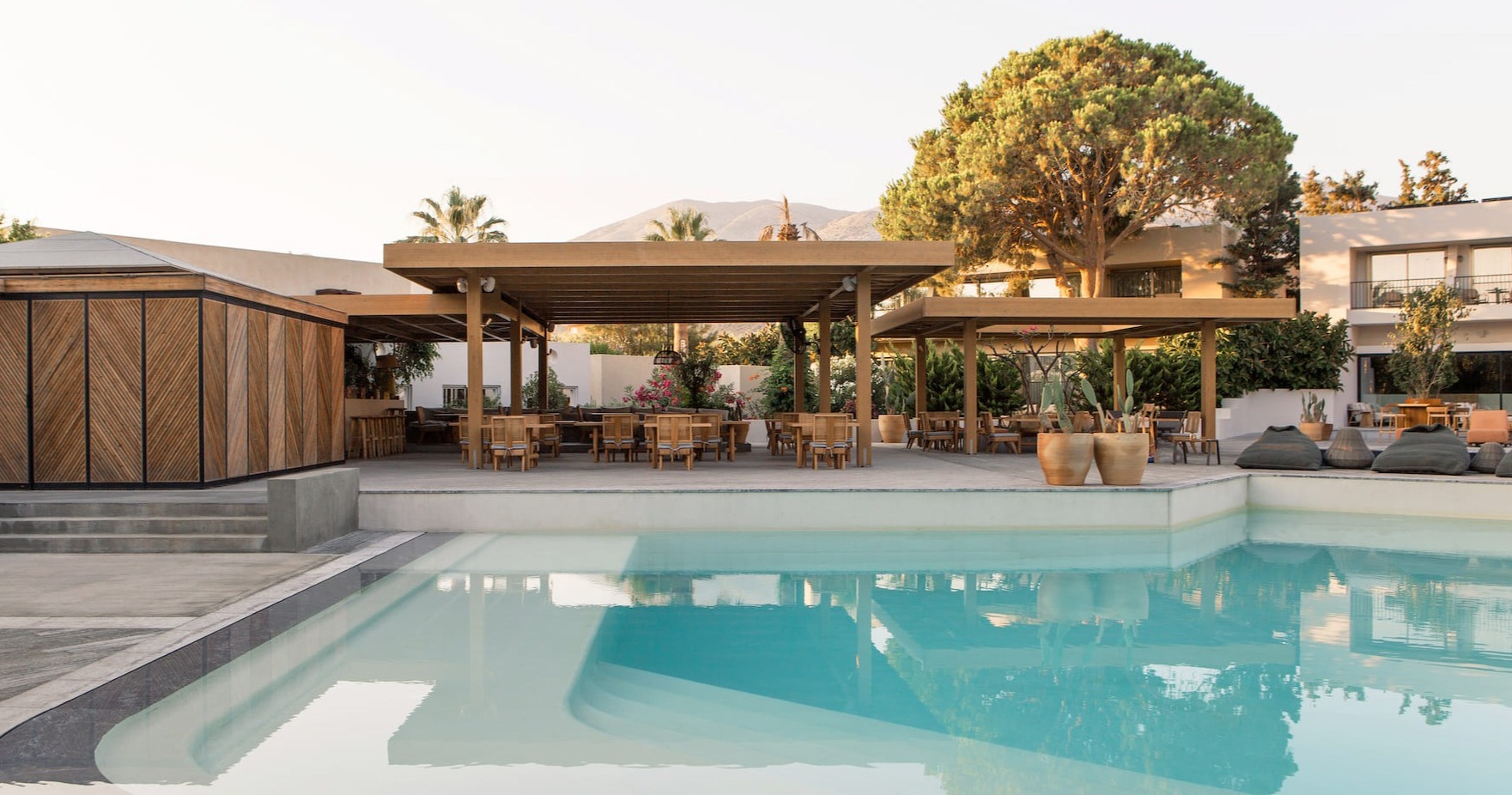
Phāea Cretan Malia

Greece, Crete

Phāea Cretan Malia

Phāea Cretan Malia — resort property in Malia, northern coast of Crete. Listed in Condé Nast Traveller (Best Family Hotels in Europe). 8…
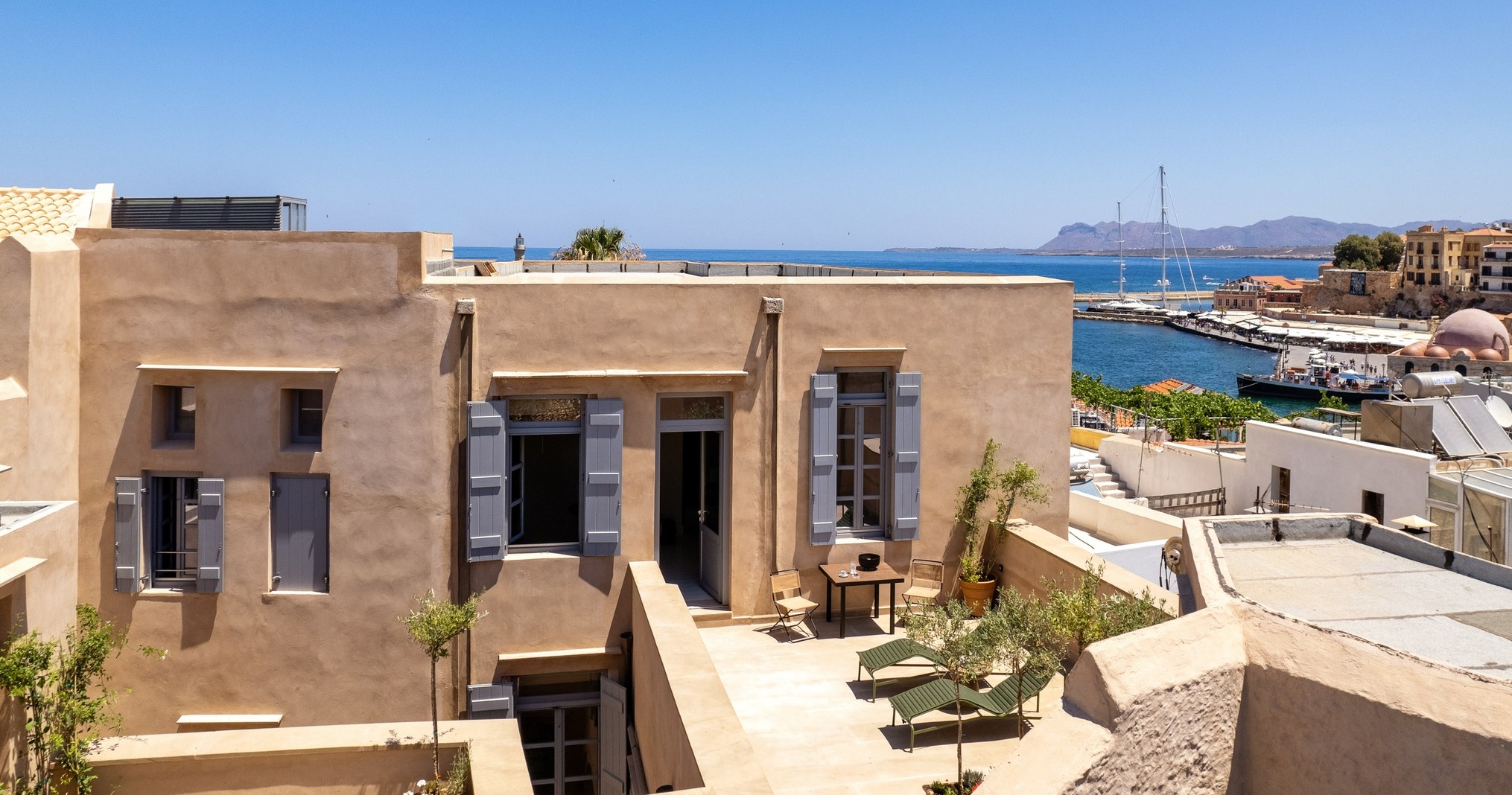
Azade Chania

Greece, Crete

Azade Chania

Azade Chania — 9 suites and rooms in a restored 1640 Venetian-Ottoman villa in Old Town Chania, Crete. Former residence of poet Charles Henri…

Crete Guide

Chania and the west
Chania Lighthouse on its Venetian stone breakwater at the entrance to the Old Harbour, Crete 📍

Chania and the west

Chania anchors western Crete — the Venetian Old Town wraps the Old Harbour beneath the 16th-century Lighthouse (one of the oldest standing in the world); the Splantzia quarter carries the Ottoman trace; the Maritime Museum sits inside the Firkas Fortress. Inland, the Lefka Ori (White Mountains) dominate, with the Samaria Gorge — sixteen kilometres from the Omalos plateau down to the south-coast village of Agia Roumeli — running through the national park. The west coast reaches Balos Lagoon and Elafonisi (the pink-sand beach); the south coast holds Loutro (accessible only by boat or foot) and Sfakia. Azade Chania anchors the BHC inventory in the Old Town — a stone-mansion conversion behind the Venetian harbour.


Rethymno and the Venetian Middle

Rethymno sits between Chania and Heraklion — its Venetian Fortezza crowns the headland above one of Crete's best-preserved Venetian old towns, with wooden Ottoman balconies layered over Venetian foundations, narrow cobblestone lanes and the long sandy beach along the eastern waterfront. South of the city, the Preveli Monastery sits above a palm-lined river gorge meeting the Libyan Sea; the Arkadi Monastery holds the most significant site of the 1866 Cretan Revolt. The interior reaches toward Anogia and the foothills of Mt. Ida.

Heraklion, Knossos and Malia

Heraklion anchors central Crete — the Heraklion Archaeological Museum holds the world's most important Minoan collection (the Phaistos Disc, the Snake Goddess figurines, the Knossos frescoes); the Koules Fortress guards the Venetian harbour, and the Morosini Lions Fountain anchors the central square. Five kilometres southeast, Knossos — the largest Minoan palace and arguably Europe's oldest city — covers Bronze Age archaeology with restored frescoes, the ceremonial Throne Room and the legendary labyrinth of King Minos. Phāea Cretan Malia anchors the BHC inventory at Malia east of Heraklion — a beachfront resort with a substantive spa programme on the north-central coast.

The east — Lasithi and the Elounda coast

The Lasithi region holds Crete's quieter east. Agios Nikolaos sits around its picturesque Lake Voulismeni (the inland lake that connects to the sea); Elounda anchors the high-end resort coast above the Mirabello Gulf. The Venetian fortress island of Spinalonga — the 20th-century leper colony popularised by Victoria Hislop's The Island — sits offshore from Plaka. The Lasithi Plateau sits inland, dotted with traditional villages and the white-sailed windmills of an older Crete; Vai Beach anchors the far eastern tip with its native date-palm grove.

When to visit

Crete's season runs longer than the rest of Greece. April-June delivers wildflowers, mild temperatures and the swimming season's start. July-August is hot (35-40°C) and busy but holds the village festivals and the Rethymno Renaissance Festival. September-October matches spring for weather with the added warmth of the Cretan Sea and the olive harvest running into November. December-March is quiet — the snow-capped Lefka Ori, the wood-fired tavernas, raki served warm at the village kafenios.

Frequently Asked Questions about Crete

Icon of Here for You
Here for You
Icon of Free Extras on Arrival
Free Extras on Arrival
Icon of Best Price Guarantee
Best Price Guarantee
Icon of Personally Approved Hotels
Personally Approved Hotels
Icon of Exclusive Offers
Exclusive Offers
Icon of New Finds Every Month
New Finds Every Month