

€132.60 for 1 Night





24/7 Support
 Looking for help choosing or for a property we don't list? Message our Private Rates Concierge on WhatsApp for member rates and insider knowledge on the right stay
Chateau le Cagnard
€132.60/ Night
24/7 Support
Looking for help choosing or for a property we don't list? Message our Private Rates Concierge on WhatsApp for member rates and insider knowledge on the right stay
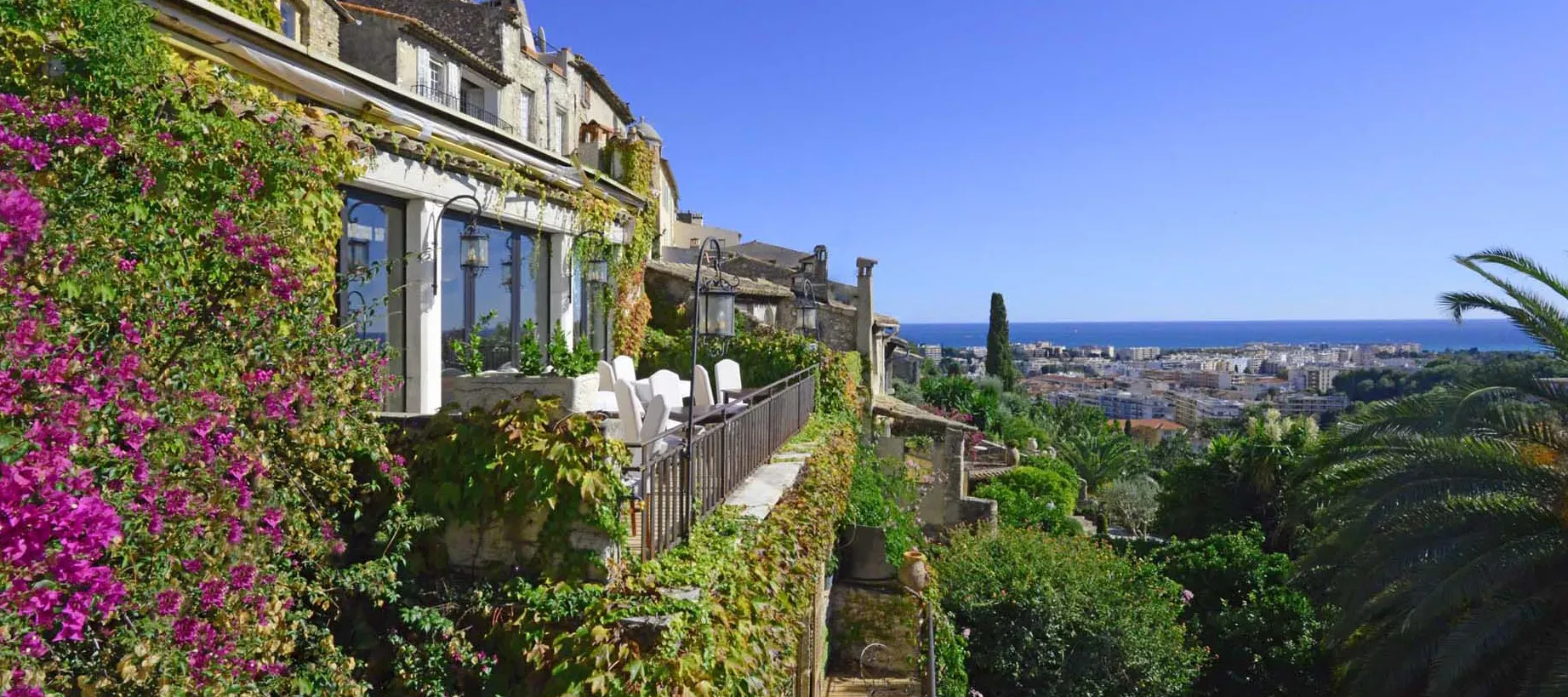
The 13th-century Château Le Cagnard above Cagnes-sur-Mer — a 30-room boutique hotel inside Haut-de-Cagnes's medieval defensive walls, with rooms named for the Renoir-era painters who lived locally.
Collection:

Award Winner 2013
Europe’s Best Romantic Retreat

Free extra on us
Built in the 13th century
Need To Know
- 30 rooms and suites across the main building and scattered village annexes a few minutes' walk through the medieval lanes; higher categories with sea-view balconies sit in the main building, the Superior categories in nearby village houses.
- Closed for the season from November to March — open April through October only.
- Our favourite rooms: the Prestige Suites (around 80m²) for the largest proportions and the strongest views toward Cap d'Antibes; the Junior Suites with terrace for couples wanting balcony access in a more compact footprint. Avoid the Superior rooms if a sea view is essential — these face onto the village pedestrian streets.
- Children welcomed: under 2 free in parents' room with complimentary baby cot; ages 4-12 extra bed €70/night supplement; not all rooms accommodate a third guest, request at booking.
- Pet-friendly with arrival welcome including essentials for the pet; €20/night per pet.
- Free village shuttle (Cagnes-sur-Mer line 44) runs every 15 minutes 07:00-22:30 from the village base to the train station and town centre; the hotel also operates its own twice-daily shuttle to Cagnes-sur-Mer historic centre by advance reservation.
- Restaurant operates as a destination dining room in its own right under Swedish restaurateurs Axel Ohlson and Anton Surtell; breakfast 07:30-10:30, drinks and light bites 11:00-18:00, dinner 18:00-23:00.
- Front desk staffed daily 07:30-23:30; arrivals after 23:00 require advance notice.
- Valet parking essential — Haut-de-Cagnes has regulated car access and narrow medieval streets that only the smallest vehicles can navigate. Guests park at the nearby Planastel public car park (with car lift access from the lower village) and the hotel runs a free shuttle to the property door.
Check in - Check out
Check in from 14:00; check out before 12:00.
We Love
- A genuine 13th-century defensive structure built into Haut-de-Cagnes's original medieval city walls, commissioned by Rainer I of Monaco — the principality's first sovereign — to defend the neighbouring Grimaldi Castle.
- The restaurant ceiling — 200 hand-painted panels by Wery, a contemporary of Matisse, beneath a 1980s sliding mechanism that retracts the ceiling to the sky. The room itself was the former Guard Room with a 14th-century fireplace.
- Every guest room is named for a painter drawn to Cagnes-sur-Mer — Renoir spent his last twelve years at Les Collettes; Soutine, Modigliani, Foujita, Derain and Klein arrived as pilgrims to the Riviera's Montmartre.
- The library beside the fireplace — used for evening drinks in cooler months, with a cannonball from the Battle of Waterloo on display beneath a portrait of Napoleon.
- The new indoor wellness space — 26°C heated whirlpool pool with massage jets, counter-current swimming and swan-neck spout, tiled terrace with loungers, and an intimate Mediterranean garden.
- The Swedish-operated kitchen: restaurateurs Axel Ohlson and Anton Surtell run the dining room with French Riviera ingredients and Nordic kitchen discipline, an unusual combination that has worked at this property since their arrival.
Key Features












Book Your Stay at Chateau le Cagnard
€132.60 for 1 Night
Location
Address
54 Rue Sous Barri, Cagnes-sur-Mer
Travel Info
10 km / 15 min by car from Nice Côte d'Azur Airport (NCE). Cagnes-sur-Mer train station 1 km from the village base, with free shuttle 44 every 15 min. Valet parking from the nearby Planastel car park (medieval streets restricted to very small cars only). Walk to Château-Musée Grimaldi.
Nearby Places
Cote D'Azur Airport
4900m
Phoenix Park
6km
Marineland Antibes
6km
Provencal Market
9600m
Last Updated: 2026-05-19


Expert Review
Origins
Château Le Cagnard occupies part of the original 13th-century defensive wall of Haut-de-Cagnes, the medieval hilltop village above modern Cagnes-sur-Mer. The structure was commissioned by Rainer I, Lord of Cagnes and the first sovereign of Monaco, to defend the neighbouring Grimaldi Castle (now the Château-Musée Grimaldi). The ground-floor Guard Room dates to the 14th century and retains its original arched fireplace; in 1928 the same room received its still-extant elephant-motif fresco. The hotel is owned by Phoenix Hotel Group and has accumulated, across the centuries, a guest list including Renoir, Soutine, Foujita, Brigitte Bardot, Greta Garbo, Simone de Beauvoir, Antoine de Saint-Exupéry, Marcel Pagnol, The Beatles, Robert De Niro and several heads of state.
Top Secret
The restaurant ceiling carries 200 hand-painted panels by Wery, a contemporary of Matisse — and the entire painted ceiling sits on a 1980s engineered sliding mechanism that retracts the ceiling to open the dining room to the sky. Two layers of craft stacked: early-modernist hand-painting from a contemporary of Matisse, and late-20th-century engineering that lets the room dine under stars when the weather is settled.

The Review
Haut-de-Cagnes is the medieval hilltop village that escaped the Côte d'Azur's late-20th-century resort transformation. The cobbled lanes climb toward Château-Musée Grimaldi at the village summit; the modern resort sprawl of Cagnes-sur-Mer sits below at the coast, with a clear architectural and cultural separation between the two. Through the early decades of the 20th century, the village functioned as the Riviera's Montmartre — Renoir lived out his last twelve years at Les Collettes on the village's edge, painting through advanced rheumatoid arthritis; Soutine, Modigliani, Foujita, Derain, Klein and a roster of School of Paris painters came on what amounted to artistic pilgrimage.
The building is genuine medieval architecture. Commissioned in the 13th century by Rainer I of Monaco to defend the neighbouring Grimaldi Castle, the structure forms part of the original city wall. The ground-floor Guard Room with its 14th-century arched fireplace and 1928 elephant-motif fresco serves as the lobby. The dining room above carries the property's signature feature — a hand-painted 200-panel ceiling by Wery, a contemporary of Matisse, engineered in the 1980s with a sliding mechanism that retracts to open the room to the sky.
30 rooms and suites distribute across the main château and small village annexes a short walk through the medieval lanes. Higher categories sit in the main building with balconies opening toward Cap d'Antibes; Superior rooms occupy village houses facing onto pedestrian streets. Each room is named for one of the painters drawn to Cagnes-sur-Mer. Interior detailing runs heritage: heavy drapery, period furniture, antique pieces, hand-painted detail, with contemporary infrastructure (heated floors, stone sinks, full air conditioning) carried through where it isn't visible. Room footprints are compact by modern luxury standards — this is a medieval building, not a purpose-built hotel.
The restaurant runs under Swedish restaurateurs Axel Ohlson and Anton Surtell, pairing French Riviera ingredients with Nordic kitchen discipline. The bistronomic menu changes seasonally; the wine list runs heavily Provençal with Bandol Rouge and Bellet whites as the local picks; the terrace setting on the medieval ramparts opens to a panoramic Mediterranean view. The library beside the lobby fireplace holds a Battle of Waterloo cannonball under a portrait of Napoleon (briefly imprisoned in nearby Nice in 1796).
The indoor wellness space is recent: 26°C heated whirlpool pool with massage jets, counter-current swimming and swan-neck spout, tiled terrace with loungers, Mediterranean garden. The property closes November through March and reopens in April; winter trips are not possible.
Worth the journey for: travellers who want a genuine medieval-village stay on the Côte d'Azur rather than the beach-resort proposition that dominates the coast; art-and-architecture travellers attracted by the Renoir-Soutine-Modigliani inheritance. Less so for: beach-only visitors (Cagnes-sur-Mer's beach is five minutes away but the property's centre of gravity is the hilltop village, not the coast), mobility-restricted guests (Haut-de-Cagnes is steep, cobbled and challenging on foot), and travellers wanting a contemporary design hotel.


