

€309.80 for 1 Night





24/7 Support
 Looking for help choosing or for a property we don't list? Message our Private Rates Concierge on WhatsApp for member rates and insider knowledge on the right stay
€309.80/ Night
24/7 Support
Looking for help choosing or for a property we don't list? Message our Private Rates Concierge on WhatsApp for member rates and insider knowledge on the right stay
An art-filled design hotel on Tjuvholmen, Oslo's waterfront art quarter — 119 balconied rooms over the fjord, a curated contemporary collection, a Nordic spa and a rooftop bar.
Collection:
Award Winner 2014
Spa Hotels
Need To Know
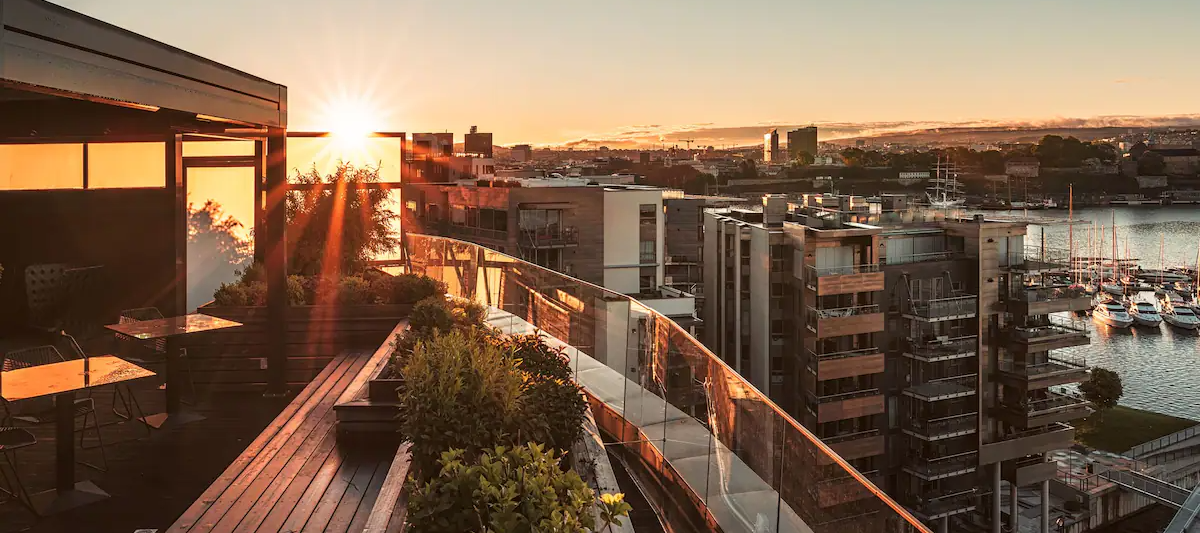
- 119 rooms and suites, all with private balconies; the best with floor-to-ceiling views over the Oslofjord
- A contemporary art collection curated room by room, with works by Warhol, Prince, Gormley and Hirst
- Fru K, the hotel's restaurant for modern Norwegian seafood; a food bar, a champagne bar, and a seasonal rooftop bar (spring to autumn)
- A Nordic spa with a 12-metre heated pool, sauna, steam and sensory showers, plus a cold dip in the fjord
- Complimentary entry to the neighbouring Astrup Fearnley Museum of Modern Art
- On the islet of Tjuvholmen in central Oslo, a footbridge from Aker Brygge; gym, room service, pet-friendly
Check in - Check out
Check in from 14:00; check out before 12:00.
We Love
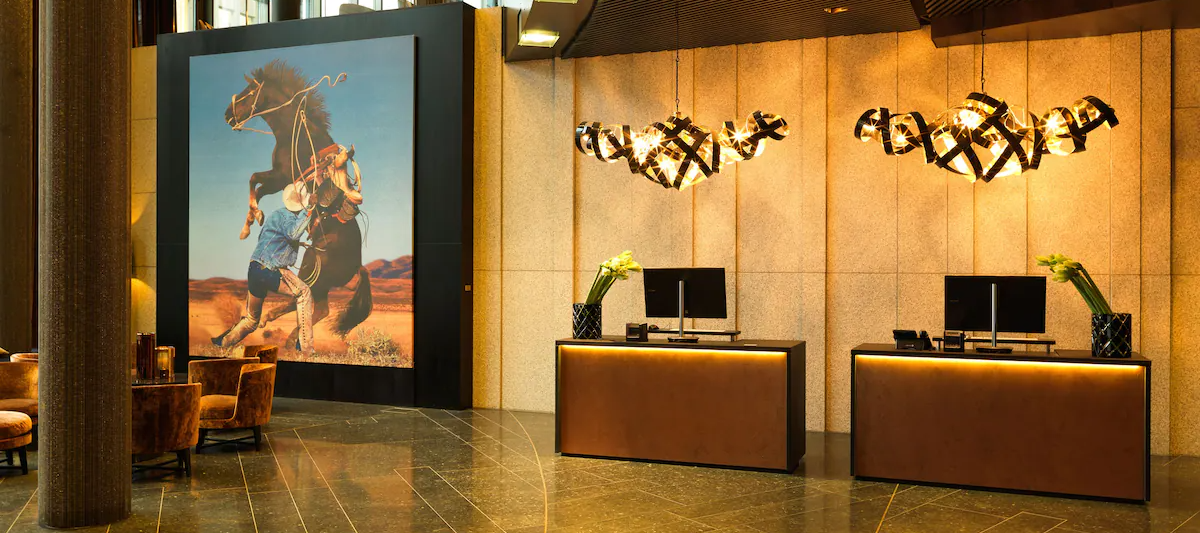
- The art — a contemporary collection curated room by room by Sune Nordgren, former head of Norway's National Museum, with works by Warhol, Richard Prince, Antony Gormley and Damien Hirst, and a Prince cowboy piece in the lobby.
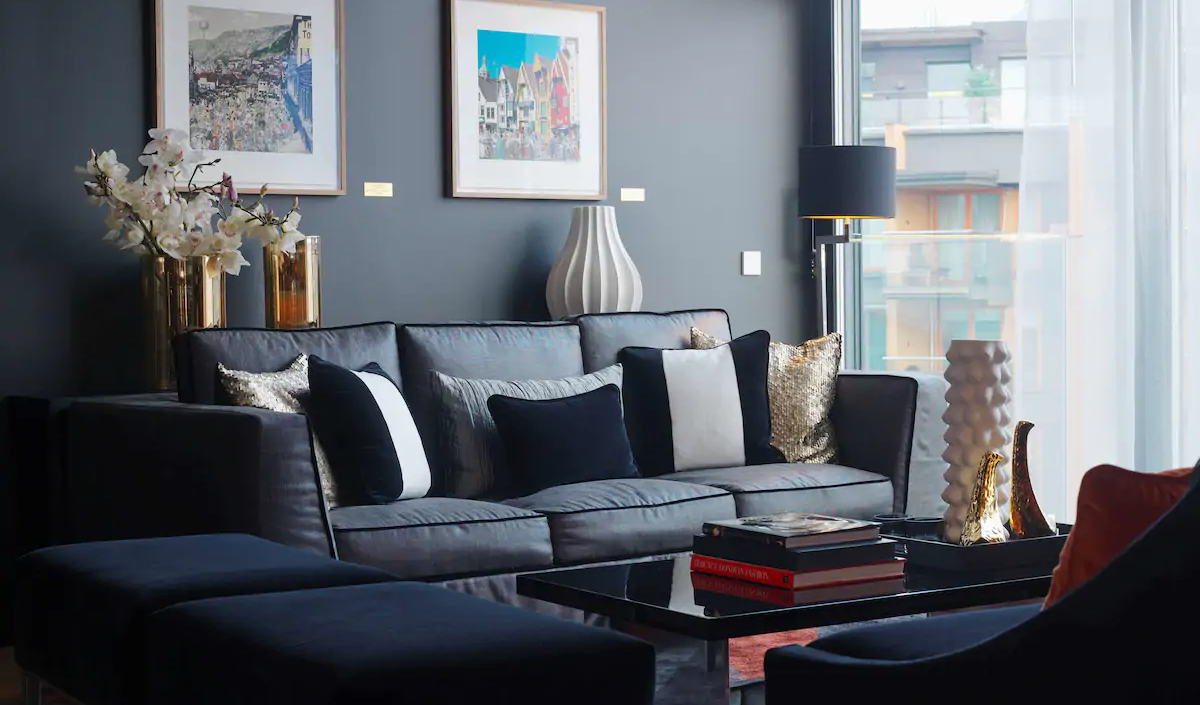
- The design — interiors by Anemone Wille Våge, drawing on Riva motor yachts and Jean-Michel Frank, all dark wood, brass and shadow; the building itself by Mellbye Architects, curved along the water.
- The rooms — all 119 with private balconies and floor-to-ceiling windows, the best looking straight out over the Oslofjord, each hung with its own original artwork.
- The spa — a fjord-side Nordic spa with a heated pool, sauna, steam and sensory showers, and the option of a cold dip straight into the Oslofjord a few steps away.
- The setting — on Tjuvholmen, Oslo's waterfront art quarter, beside the Renzo Piano-designed Astrup Fearnley museum (tickets included) and a footbridge from the Aker Brygge restaurants.
Key Features








Book Your Stay at The Thief
€309.80 for 1 Night
Location
Address
Address: The Thief, Landgangen 1, 0252 Oslo, Norway
Travel Info
The Thief sits on the islet of Tjuvholmen in central Oslo, at the water's edge and a footbridge from the Aker Brygge waterfront. The Airport Express train reaches Oslo Central in about 22 minutes, the hotel a short taxi or 15-minute walk on; by car the airport is around 45 minutes.
Nearby Places
Car: It’s a 50 minutes drive from Oslo Airport to The Thief Hotel. Train: The Airport Express Train runs six times an hour and brings you to Oslo Central Station in 22 minutes, from there it is about a 15 minute walk to the hotel.
250m
Last Updated: 2026-06-10

Expert Review
Origins
Tjuvholmen — Thief Islet — earned its name in the eighteenth century, when this scrap of Oslo waterfront was the haunt of smugglers, thieves and the city's outcasts; executions were once carried out here. For two centuries it was the part of town nobody wanted. Then, in one of Norway's boldest pieces of urban renewal, the islet was remade as a waterfront quarter of galleries, sculpture and modern architecture, with Renzo Piano's Astrup Fearnley Museum of Modern Art at its tip.
The Thief opened in 2013 as the district's hotel, and it took its identity from its neighbours. The building, a curved nine-storey form at the water's edge, is the work of Mellbye Architects; the interiors are by Anemone Wille Våge, who looked to the lines of Riva motor yachts and the restrained luxury of the designer Jean-Michel Frank — dark woods, brass, deep shadow and sudden light. The name is the only thing it keeps from the islet's disreputable past; everything else is deliberate, polished and contemporary.
What makes it more than a handsome design hotel is the art. In partnership with the Astrup Fearnley next door, the hotel's curator Sune Nordgren — once director of Norway's National Museum — chose original work for every one of the 119 rooms and for the public spaces: Warhol, Richard Prince, Antony Gormley, Damien Hirst, Peter Blake. A Prince cowboy hangs in the lobby; the stairwells are hung floor by floor. It is less a hotel with art on the walls than a gallery you can sleep in, on an islet that has turned its history precisely on its head.
Top Secret
The art is not confined to the public rooms — every one of the 119 bedrooms has its own original piece, chosen individually, so no two stays look quite alike; and every guest gets complimentary run of the Renzo Piano-designed Astrup Fearnley museum next door. The other secret is the water: from the spa you can walk a few steps to the edge of the islet and take a cold dip straight into the Oslofjord, the most bracing way imaginable to end a sauna.
The Review
The Thief is the hotel of Tjuvholmen, the once-disreputable Oslo islet — named for the thieves who haunted it — now remade into the city's waterfront art quarter. Opened in 2013, it is a design hotel in the fullest sense: a curved, nine-storey building by Mellbye Architects, interiors by Anemone Wille Våge that take their cues from Riva yachts and Jean-Michel Frank, all dark wood, brass and play of shadow and light. It looks and feels like a piece of the art district it sits in.
That is the point of the place. In partnership with the Astrup Fearnley museum next door — Renzo Piano's building, whose entry is included for guests — the hotel's curator hung original contemporary work in every room and throughout the public spaces, from Warhol and Richard Prince to Antony Gormley and Damien Hirst. All 119 rooms have private balconies and floor-to-ceiling windows; the ones worth booking look straight out over the Oslofjord. Below, the Nordic spa runs to a heated pool, sauna and sensory showers, with a cold plunge into the fjord itself a few steps away; Fru K handles modern Norwegian seafood, and a rooftop bar opens to the water from spring to autumn.
It suits design-minded travellers and art lovers who want to be in the middle of contemporary Oslo rather than its old centre — on the water, beside the galleries, a footbridge from the Aker Brygge restaurants and a short ride from the city proper. It is polished and urban rather than intimate or rustic, and none the worse for it: an art hotel that earns the name, in a quarter that has rewritten its own past.


