

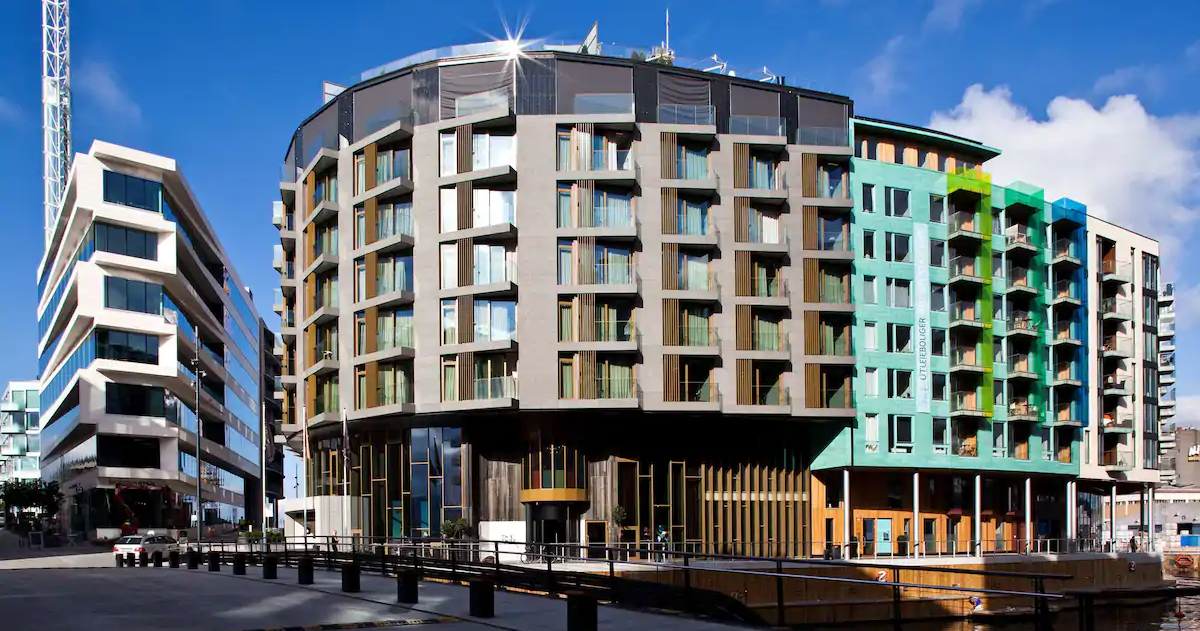
On the waterfront and in the centre
Oslo's transformation has been a waterfront story, and the harbour is where to start. The Opera House, by the local firm Snøhetta, rises out of the fjord as a slope of white marble you are meant to walk up; beside it stands the Munch museum, thirteen storeys devoted to Edvard Munch and his Scream. Along the water, the Astrup Fearnley Museum of Modern Art — a Renzo Piano building of glass and sail-like roofs on the Tjuvholmen islet — sits at the heart of the city's contemporary-art quarter, with a sculpture park and a small beach at its tip.
Inland, the centre rewards a wander. Karl Johans gate runs from the central station up to the Royal Palace, past the cathedral and the National Theatre; the rebuilt National Museum, the largest in the Nordics, gathers the country's art under one roof and holds another version of the Scream. Akershus Fortress guards the harbour from its headland; Vigeland Park fills with Gustav Vigeland's massed human sculptures; and Aker Brygge and the neighbouring Tjuvholmen supply the waterfront restaurants and bars. It is a lot of culture in a small, walkable area.


