Destination, hotel name or experience

Boutique Hotels in Frankfurt am Main

Introducing Frankfurt am Main

Frankfurt is continental Europe's financial capital — home of the European Central Bank, the Deutsche Bundesbank, the Deutsche Börse stock exchange, and the headquarters of most of Germany's major commercial banks. The skyline — Germany's only major skyscraper cluster, locally nicknamed "Mainhattan" — sits across the Main River in the city centre, anchored by the Commerzbank Tower and the Messeturm.


The contemporary financial city is layered onto a medieval foundation. Frankfurt Cathedral (Kaiserdom) — the 14th-15th-century Gothic cathedral where the Holy Roman Emperors were elected from 1356 and crowned from 1562 — anchors the historic core. The Römerberg — the medieval town hall square with the half-timbered Römer building — sits adjacent. Johann Wolfgang von Goethe was born here in 1749 at the Goethehaus, now preserved as a museum. The Städel Museum holds one of Germany's most important art collections from Botticelli and Vermeer through Monet to Picasso along the Museumsufer (Museum Riverbank).

Browse on Map — Frankfurt am Main

Explore 1 exceptional boutique hotel hand-picked in Frankfurt am Main. Click a pin to discover each property.

Hotels in Frankfurt am Main

Schlosshotel Kronberg

Germany, Frankfurt am Main

Schlosshotel Kronberg

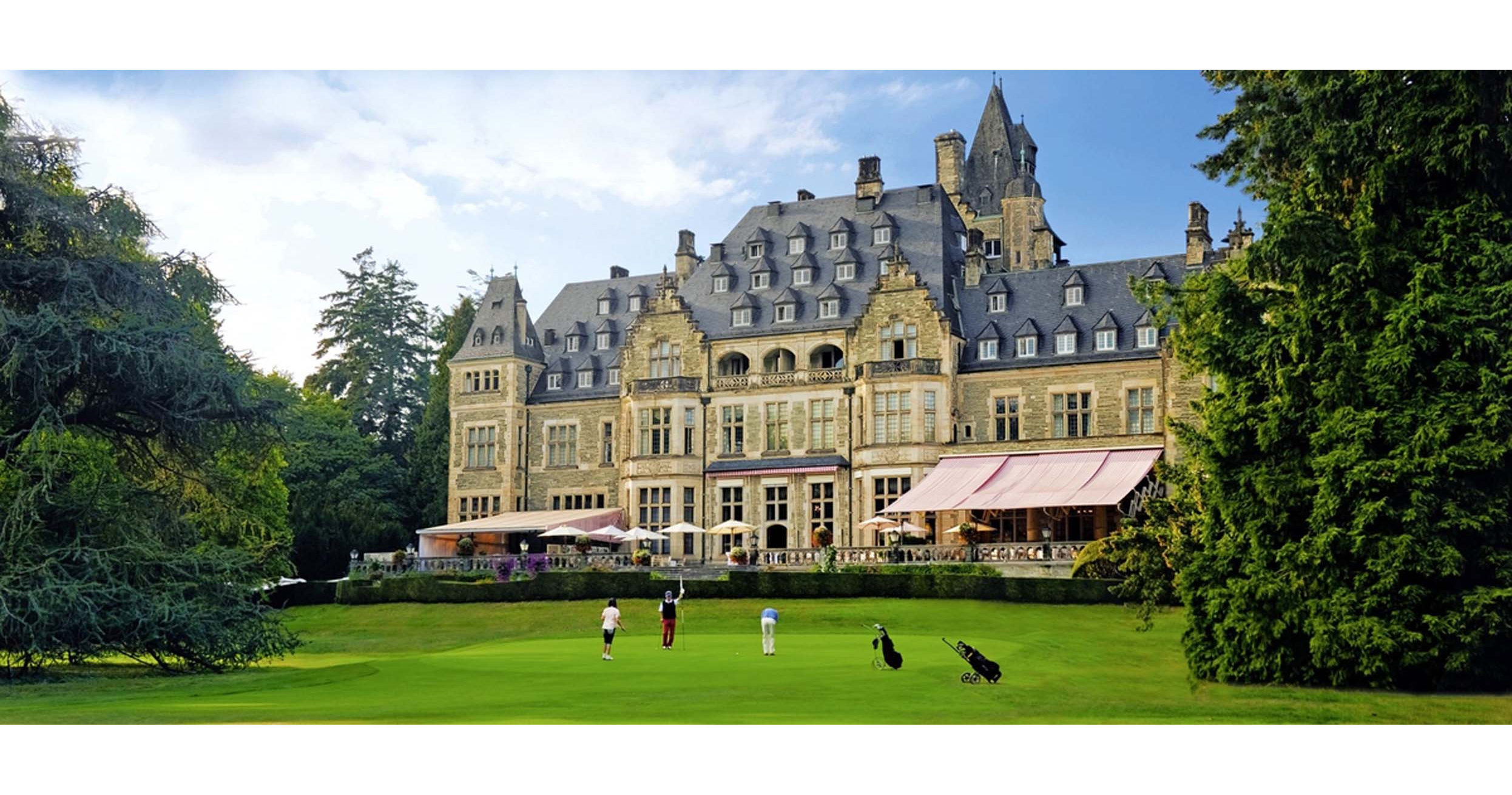
Schlosshotel Kronberg — 60 rooms in the 1893 royal castle built by Empress Victoria (Queen Victoria's eldest daughter), House of Hesse-owned…

€185.00

Price for 1 night from

Frankfurt am Main Guide

The medieval centre and the Museumsufer

The Frankfurt historic core distributes across two banks of the Main River. The Römerberg square — anchored by the half-timbered Römer town hall (Frankfurt's symbol since 1405) — sits at the centre of the Altstadt alongside Frankfurt Cathedral (Kaiserdom) and the Goethehaus (Goethe's 1749 birthplace, now a museum). The Paulskirche holds the meeting room of the 1848 German National Assembly, the country's first attempt at parliamentary democracy. Across the Main River, the Museumsufer runs a kilometre-long concentration of museums: the Städel (Old Master through contemporary collection), the Deutsches Filmmuseum, the MMK Museum für Moderne Kunst, the Liebieghaus (sculpture), the Senckenberg Natural History Museum. The annual Museumsuferfest in August is one of Europe's largest culture festivals.

Where to stay in the Frankfurt area
Schlosshotel Kronberg in Kronberg im Taunus — 1893 royal castle by Ernst von Ihne above the 58-hectare estate parkland, Hesse 📍

Where to stay in the Frankfurt area

Frankfurt itself is dense with international five-star hotels concentrated in the financial district (Bankenviertel) and along the Mainufer riverbank — appropriate for business travellers needing direct access to the ECB, the trade fair (Messe Frankfurt), or the airport. For travellers wanting genuine historic character with substantial estate scale rather than the city's contemporary financial-hotel register, the Hessian Taunus hills above Frankfurt deliver the alternative. Kronberg im Taunus sits 15 minutes by car northwest of central Frankfurt — a climatic health resort designated for its air and water quality, in the foothills of the Taunus mountains. Schlosshotel Kronberg is the Hessian royal castle hotel above the town — built 1889-1893 by Empress Victoria (Queen Victoria's eldest daughter) in memory of Emperor Friedrich III, designed by royal architect Ernst von Ihne, privately owned by the House of Hesse with 58 hectares of estate parkland, an 18-hole golf course laid out by Eisenhower during his 1946-1953 residency, and a substantial original art collection including Rubens, Titian, Frans Hals and Gainsborough.

Apfelwein and Sachsenhausen

Apfelwein — the local apple wine known as Ebbelwoi in Hessian dialect — is Frankfurt's signature drink. The Sachsenhausen district across the Main River carries the traditional Apfelwein taverns (Apfelweinwirtschaften) — Adolf Wagner, Atschel, Zum Gemalten Haus and the wider cluster around Klappergasse run the working tradition. The Bembel stoneware jug (blue-painted, German-folk-art style) and the diamond-cut Gerippte glass are the visible signatures of the tradition. Handkäs mit Musik — the regional sour-milk cheese marinated in onions and vinegar — is the canonical accompaniment.

The wider Hesse cultural arc

Frankfurt is the practical base for the wider Hessian and Rheingau cultural circuit. The Rheingau wine region — 30-45 minutes west along the Rhine — produces some of Germany's most highly-rated Rieslings; Kloster Eberbach (the 12th-century Cistercian monastery featured in The Name of the Rose film) and the village of Eltville anchor the wine route. Mainz, 30 minutes west, holds the Gutenberg Museum and the cathedral where Holy Roman Emperors were elected before Frankfurt took over the role. Wiesbaden sits 40 minutes west as the state capital with its Belle Époque casino architecture and natural thermal springs. Heidelberg is 90 minutes south with its medieval castle ruins and the Neckar river old town.

When to visit

April through October handles the principal cultural season. The Frankfurt Book Fair (Buchmesse) — the world's largest book trade fair — runs in mid-October, with the city booked out and prices peaking. The Museumsuferfest runs in late August. December delivers the Christmas markets — the Frankfurter Weihnachtsmarkt on Römerberg is one of Germany's most decorated, running through Advent into Christmas Eve. The Apfelwein Festival runs in mid-August on Roßmarkt. Shoulder months of April-May and September-early October deliver the cultural circuit without the trade-fair price premium or the August crowds.

Frequently Asked Questions about Frankfurt am Main

Icon of Here for You
Here for You
Icon of Free Extras on Arrival
Free Extras on Arrival
Icon of Best Price Guarantee
Best Price Guarantee
Icon of Personally Approved Hotels
Personally Approved Hotels
Icon of Exclusive Offers
Exclusive Offers
Icon of New Finds Every Month
New Finds Every Month